
Where to Start with Cho Nam-Joo: The Recommended Reading Path
If you are looking to dive into the powerful, thought-provoking world of Cho Nam-Joo, the best way to do so is by following the order of her English translations. Because her books are entirely standalone stories that do not share characters or a continuous fictional universe, you do not need to worry about missing plot-critical continuity. Instead, your reading sequence should focus on the progression of her style, narrative structure, and thematic depth.
Here is the recommended reading path to get the most out of Cho Nam-Joo's translated bibliography:
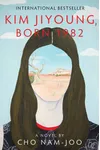
- Step 1: Start with Kim Jiyoung, Born 1982. This is her breakout international sensation. It is a short, clinical, and devastatingly precise novel that serves as the perfect introduction to her sociological style of writing. It establishes the baseline themes of systemic gender discrimination that run through all of her subsequent works.
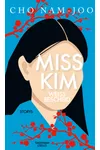
- Step 2: Read Miss Kim Knows and Other Stories. After experiencing her long-form social critique, this collection of eight short stories will show you her range. The stories focus on the lives of diverse female protagonists across generations, ranging in age from ten to eighty, highlighting how societal expectations morph over a woman's lifetime.
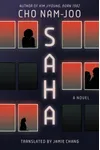
- Step 3: Progress to Saha. This is her most ambitious and structurally complex translated work. It shifts away from contemporary realism into a dystopian, speculative setting, exploring class disparities, corporate control, and societal outcasts. It is best read last because it requires a bit more investment and patience to piece its fragmented narrative together.
Cho Nam-Joo Books in English: Publication Order
For readers who prefer to tackle an author's catalog in the exact order English-speaking audiences received them, here is the list of Cho Nam-Joo's works translated into English. All three of these books were translated by Jamie Chang, ensuring a consistent tone and voice across the translations.
- Kim Jiyoung, Born 1982 (English Translation: 2020; Original Korean: 2016)
This novel follows an ordinary woman in her thirties who begins exhibiting strange symptoms, speaking in the voices of other women she knows. Through her therapy sessions, we trace her life from childhood to motherhood, highlighting the systemic gender discrimination and everyday misogyny she faces at every stage of her life.
- Saha (English Translation: 2022; Original Korean: 2019)
Set in Saha Mansion, a dilapidated apartment complex on the outskirts of a wealthy, corporate-run city-state called Town, this speculative novel shifts the focus to class warfare. When a body is found, the residents of Saha Mansion—deemed secondary citizens or "Sahas"—become targets of the oppressive regime, forcing them to confront the dark secrets of their society.
- Miss Kim Knows and Other Stories (English Translation: 2024; Original Korean: 2020)
A collection of eight stories that return to the realistic, contemporary domestic spheres of South Korea. Each story addresses different angles of modern life, including workplace harassment, aging, domestic labor, and family expectations, highlighting the quiet resilience and struggles of Korean women.
Why Kim Jiyoung, Born 1982 is the Essential Starting Point
For almost every reader, Kim Jiyoung, Born 1982 is the undisputed starting point. Cho Nam-Joo, a former television scriptwriter with a background in sociology, wrote this book in just two months, fueled by her own frustrations as a stay-at-home mother. The novel reads like a hybrid of fiction and a sociological report. Cho intentionally uses clinical prose and anchors the narrative with actual footnotes referencing South Korean government statistics, employment laws, and economic data.
This design serves a specific purpose: it prevents critics from dismissing the protagonist's struggles as mere exaggeration or isolated occurrences. By starting here, you will understand the specific literary toolset Cho Nam-Joo uses to deconstruct systemic inequalities, making it much easier to appreciate the subtext of her other works.
Chronological Caveats and Thematic Continuities
A common question readers ask is whether there is a chronological order to Cho Nam-Joo’s books. The simple answer is no. There are no shared characters, overlapping timelines, or secret cameos connecting Kim Jiyoung, Born 1982, Saha, and Miss Kim Knows. Each book exists in its own separate reality.
However, there are deep thematic connections that make reading them in sequence highly rewarding. Cho's sociology background is the common thread. In Kim Jiyoung, Born 1982, she uses real-world South Korean data to ground the fiction. In Saha, she translates these real-world systemic inequalities into a sci-fi corporate dystopia. In Miss Kim Knows, she breaks down these broad macro-sociological concepts into intimate, character-driven vignettes. Observing how she translates data and sociological trends into deeply human stories is one of the greatest pleasures of reading her work in order.
What to Know Before You Start
To fully appreciate Cho Nam-Joo’s impact, it helps to understand the massive cultural waves her writing generated. When Kim Jiyoung, Born 1982 was published in Korea in 2016, it became a lightning rod for the domestic feminist movement. The book sold over a million copies in South Korea alone and sparked widespread public debates about systemic sexism, maternity leave, and societal expectations.
The reception was highly polarized. While high-profile figures and K-pop stars publicly praised the novel, others faced severe online backlash simply for posting photos of the book on social media. Understanding this background explains why the prose in Kim Jiyoung is so clinical and direct; Cho Nam-Joo intentionally wrote the book using factual footnotes and a detached tone to establish undeniable truths.
If you enjoy the book, you may also want to seek out the 2019 South Korean film adaptation of Kim Jiyoung, Born 1982, directed by Kim Do-young and starring Jung Yu-mi and Gong Yoo. The film expands on the domestic relationships in the book and offers a slightly different, more hopeful resolution to Jiyoung's journey.
The Untranslated Korean Catalog: What Lies Ahead
If you are a bilingual reader or hoping for more translations in the future, Cho Nam-Joo has a broader catalog of work in South Korea that has not yet been widely published in English. These include:
- When You Listen (귀를 기울이면 - 2011): Cho's debut novel, which won the 17th Munhakdongne Novel Award and established her as a rising literary voice.
- For Comaneci (코마네치를 위하여 - 2016): Her second novel, which earned the Hwangsanbeol Youth Literature Award for its witty exploration of resilience.
- Her Name Is (그녀 이름은 - 2018): A highly popular Korean short story collection containing dozens of brief stories based on interviews Cho conducted with real women of various ages.
- The Taste of Tangerines (귤의 맛 - 2020): A coming-of-age young adult novel following four middle school friends as they navigate the transition to high school and make a pact to stick together.
- What We Wrote (우리가 쓴 것 - 2021): Another short story collection addressing family dynamics and contemporary social issues.