
How to Begin Reading Chris Hadfield’s Books
Chris Hadfield’s bibliography splits cleanly into two main categories: his highly realistic Cold War space thrillers (the Kaz Zemeckis series) and his inspiring, educational non-fiction writing. Choosing where to start depends entirely on what you are looking for as a reader:
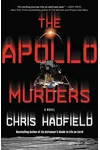
- For Thriller and Sci-Fi Fans: Start with The Apollo Murders (2021). This is the first book in his alternate-history fiction trilogy, which follows flight controller and investigator Kaz Zemeckis through high-stakes Cold War espionage in space.
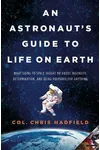
- For Memoir and Inspiration Seekers: Start with An Astronaut's Guide to Life on Earth (2013). This bestseller is part memoir, part self-help guide, detailing how Commander Hadfield's rigorous training and unique experiences in orbit can help anyone navigate everyday challenges on Earth.
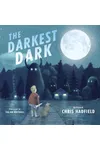
- For Younger Readers: Start with The Darkest Dark (2016). Co-authored with Kate Fillion, this beautifully illustrated picture book is perfect for kids who are afraid of the dark or dreaming of reaching the stars.
The Kaz Zemeckis Thriller Trilogy
Hadfield’s fiction is highly regarded for its meticulous attention to technical detail—which makes sense, given that the author actually flew in space, performed spacewalks, and commanded the International Space Station (ISS). The books follow Kaz Zemeckis, a former fighter pilot who lost an eye in an accident, preventing him from flying in space but leading him to work as a crucial NASA investigator and flight controller.
The series operates as a linear trilogy. You should read them in order of publication, which also matches the chronological progression of the story:
- The Apollo Murders (2021): Set in an alternate 1973. A secret military space mission is launched under the guise of the final Apollo missions (Apollo 18). Zemeckis is tasked with monitoring the mission from Earth, only to find himself unraveling a deadly Soviet plot aboard a space station. It is a tense blend of historical facts (including the Soviet Almaz space station program) and speculative spy thriller.
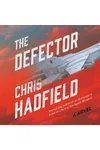
- The Defector (2023): Set in late 1973 immediately following the events of the first book. This entry shifts focus toward aerial combat and intelligence operations of the Cold War. It involves the defection of a Soviet MiG-25 pilot and the race to secure advanced military technology. Kaz Zemeckis is once again caught in the middle of a dangerous intelligence operation, dealing with the realities of military aviation and deep-state secrets.
- Final Orbit (2025): Set in 1975 during the historic, real-life Apollo–Soyuz Test Project. The joint American-Soviet mission is interrupted by a catastrophic decompression accident and the unexpected interference of a rising third global power—China. Kaz Zemeckis must navigate political tensions, orbital mechanics, and physical danger in orbit to prevent a global catastrophe.
Non-Fiction and Space Photography
Before writing fiction, Hadfield wrote non-fiction works that brought the wonders of space exploration down to Earth:
- An Astronaut's Guide to Life on Earth (2013): This book outlines his life journey from an Ontario corn farm to the ISS. Hadfield explains the counter-intuitive lessons he learned in space—such as the importance of 'sweating the small stuff', preparing for the worst-case scenario, and the value of humility. It is a warm, practical, and deeply human guide to personal growth.
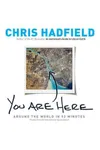
- You Are Here: Around the World in 92 Minutes (2014): Taking its name from the time it takes the ISS to orbit the Earth once, this book is a curated collection of Hadfield’s best photos taken from space. Every photo is accompanied by commentary, detailing the history, geography, and human impact visible from orbit.
Children's Books
The Darkest Dark (2016)
Co-authored with Kate Fillion and featuring gorgeous illustrations by the Fan Brothers (Eric and Terry Fan), this picture book tells the story of a young boy named Chris who dreams of becoming an astronaut but is terrified of the dark. When he watches the 1969 Apollo 11 moon landing on television, he realizes that the power and beauty of the unknown universe are worth overcoming his fears. It is an excellent read-aloud book for young children.
What to Know Before You Start
Hadfield’s fiction stands out because of its absolute technical realism. While the plots of the Kaz Zemeckis trilogy are alternate history and speculative thriller fiction, the spacecraft, orbits, physics, and historical figures (like flight director Gene Kranz and Soviet officials) are described with extreme accuracy. Reading these books feels less like fantasy and more like a peek behind the curtain of actual Cold War history.
Because of this, readers who enjoy the technical detail of authors like Tom Clancy or Andy Weir will feel right at home. However, you do not need an engineering degree to enjoy them; Hadfield’s clear, direct prose ensures the science remains accessible and the pacing stays fast.