
Where to Start with Chris McKinney
For readers new to Chris McKinney, there are two distinct and highly recommended entry points depending on your favorite genre. His work is generally divided between gritty local social realism and futuristic sci-fi noir.
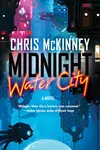
- For Dystopian Sci-Fi Fans: Start with Midnight, Water City (2021). This is the first book in his acclaimed Water City trilogy, launching you into a 22nd-century underwater world. It is the perfect introduction to his ability to blend deep speculative themes with fast-paced crime fiction.
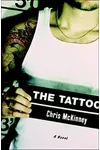
- For Gritty Crime & Realism Fans: Start with The Tattoo (1999). McKinney's debut novel remains a landmark in local Hawaiian literature. It strips away the postcard-perfect resort imagery of Hawaii to explore the raw reality of marginalized communities and criminal underworlds.
The Water City Trilogy in Reading Order
McKinney's primary series is the Water City trilogy. Unlike his standalone works, this series features a continuous narrative arc and must be read in chronological publication order. Set in the 22nd century, the story takes place in a highly advanced, stratified underwater society built to survive climate collapse. The series follows a nameless, colorblind detective with synesthesia who is tasked with solving complex mysteries in this aquatic dystopia.
- Midnight, Water City (2021) – The detective is summoned by Akira Kimura, the legendary scientist who saved humanity and created Water City. When Akira is brutally murdered, the detective must navigate corporate conspiracy and extreme class divides to find the killer.
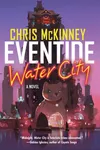
- Eventide, Water City (2023) – Set years after the events of the first book, the detective has fallen from grace and is living in the slums of Water City. When a new threat emerges involving his own daughter, he is pulled back into the dangerous politics of the city's elite.
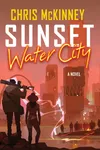
- Sunset, Water City (2023) – The high-stakes conclusion to the trilogy. The detective faces the ultimate collapse of the society he has spent his life navigating, forcing a final confrontation with the forces controlling the remnants of humanity.
Chris McKinney's Standalone Novels
Outside of the Water City trilogy, McKinney has written several standalone novels. These books do not share characters or plotlines, meaning you can read them in any order you choose. However, reading them in publication order offers a fascinating look at how his themes of class, crime, and Hawaiian identity have evolved over time.
- The Tattoo (1999) – Ken Hideyoshi is a young man entering prison who recounts his life story to a cellmate. The novel explores intergenerational trauma, cultural identity, and the harsh realities of Oʻahu's marginalized communities.
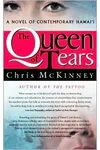
- The Queen of Tears (2001) – A family saga centered on a former Korean cinema star, known as the 'Queen of Tears,' who visits her grown children in Hawaii. The book examines the complex relationships, cultural divides, and secrets within an immigrant family.
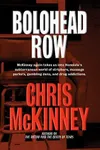
- Bolohead Row (2005) – Set in the low-income neighborhoods of Honolulu, this gritty story follows a mother running a dive bar and her three children, each struggling with addiction, escape, and survival. The plot culminates in a dramatic climax at a local cockfight.
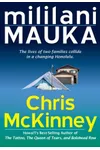
- Mililani Mauka (2009) – A powerful comparison of Oʻahu's socioeconomic extremes. It contrasts a suburban professor who believes his new home is haunted with a Native Hawaiian family forced into a beachside homeless encampment after a family tragedy.
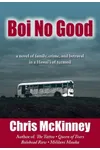
- Boi No Good (2012) – This novel follows three siblings rescued from an abusive home as children. Reunited as adults, they find themselves on wildly different paths, with one sibling's criminal past clashing against the political and social status of the others.
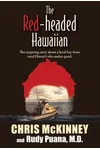
- The Red-Headed Hawaiian (2014) – Co-authored with Dr. Rudy Puana, this book is a collaborative biographical novel that details growing up in Hawaii, navigating medical school, and finding one's path amidst cultural and personal challenges.
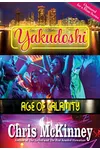
- Yakudoshi: Age of Calamity (2016) – Bruce Blanc is released from prison just as he approaches his 41st birthday—his 'yakudoshi' or traditional Japanese year of bad luck. He must navigate Honolulu's drug-fueled nightlife to locate his missing, estranged son.
What to Know Before You Start
Before diving into Chris McKinney's bibliography, it is helpful to keep a few key concepts in mind. McKinney's writing is heavily influenced by his own upbringing in rural Kahaluʻu on Oʻahu. He intentionally avoids the sanitized, tourist-friendly portrayal of Hawaii. Instead, his books address local slang (Pidgin), socioeconomic inequality, drug addiction, and the distinct multicultural reality of the islands.
His work frequently crosses genres, blending elements of classic noir, hardboiled detective fiction, science fiction, and family drama. If you are looking for light beach reads, you will not find them here; McKinney's books are unflinching, dark, and often focus on characters struggling with difficult moral choices.