
Where to Start Your Journey
If you are new to Christian Jacq, there is one undisputed entry point: the blockbuster Ramses series. Beginning with The Son of Light, this five-book saga is the perfect showcase of Jacq’s strength—combining his academic background as a doctor of Egyptology with cinematic, fast-paced historical drama. It is best to read each individual series in its internal publication order to fully appreciate the character arcs and overarching political intrigues.
The Chronological Timeline of Jacq’s Egypt
While Jacq wrote his series at different times, they span distinct eras of Egyptian history. If you want to follow the rise and fall of the pharaonic civilization chronologically across his works, follow this order:
- The Mysteries of Osiris Series: Set during the 12th Dynasty under Pharaoh Sesostris III (Middle Kingdom, c. 1878–1839 BC).
- The Queen of Freedom Trilogy: Focuses on Queen Ahhotep and the battle to expel the Hyksos invaders during the 17th Dynasty (c. 1550 BC).
- The Ramses Series: Explores the life of Ramses II during the 19th Dynasty (c. 1279–1213 BC).
- The Judge of Egypt Trilogy: A detective mystery set concurrently during the reign of Ramses II, providing a look at daily law and order.
- The Stone of Light Series: Follows the secret artisan community of Deir el-Medina starting in the final years of Ramses II's long reign.
- The Vengeance of the Gods Series: Set during the decline of Egypt under Amasis II in the 26th Dynasty (c. 528–526 BC) right before the Persian invasion.
Detailed Series Overviews
The Ramses Series
This is Jacq's signature work. Over five novels, it chronicles the epic life of Ramses the Great. You'll watch him grow from a young prince tested by his father, Seti I, to a powerful monarch defending his borders at the legendary Battle of Kadesh.
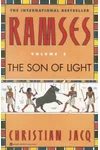
- The Son of Light (1995)
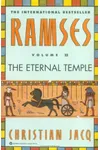
- The Eternal Temple / The Temple of a Million Years (1995)
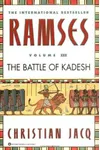
- The Battle of Kadesh (1996)
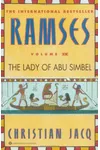
- The Lady of Abu Simbel (1996)
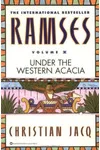
- Under the Western Acacia (1997)
The Mysteries of Osiris
Centering on the construction of the sacred Tree of Life and the conspiracies threatening the rule of Sesostris III, this series leans heavily into the mystical and spiritual aspects of ancient Egyptian theology.
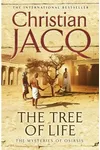
- The Tree of Life (2003)
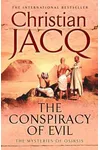
- The Conspiracy of Evil (2003)
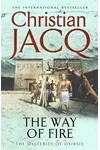
- The Way of Fire (2004)
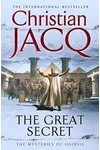
- The Great Secret (2008)
The Queen of Freedom
An inspiring trilogy depicting the war of liberation fought by Queen Ahhotep against the occupying Hyksos forces. It is a story of resistance, military strategy, and the birth of the New Kingdom.
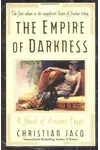
- The Empire of Darkness (2001)
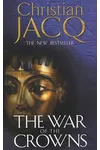
- The War of the Crowns (2002)
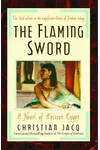
- The Flaming Sword (2002)
The Judge of Egypt
A detective series set during the reign of Ramses II. Instead of focusing on kings and queens, it features a humble judge named Pazair who uncovers a treasonous conspiracy reaching the highest levels of the empire.
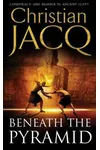
- Beneath the Pyramid (1993)
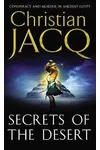
- Secrets of the Desert (1993)
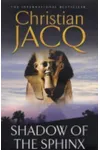
- Shadow of the Sphinx (1994)
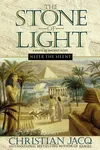
The Stone of Light
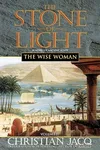
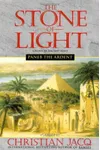
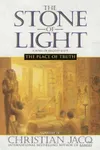
Set in Deir el-Medina (the Place of Truth), this series tracks the lives, spiritual rituals, and hardships of the master craftsmen who carved and decorated the tombs in the Valley of the Kings.
- Nefer the Silent (2000)
- The Wise Woman (2000)
- Paneb the Ardent (2000)
- The Place of Truth (2000)
The Vengeance of the Gods
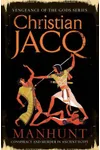
Set towards the end of ancient Egypt’s independence, this high-stakes political thriller follows the scribe Kel as he runs for his life while trying to protect a secret that could save or destroy Egypt.
- Manhunt (2006)
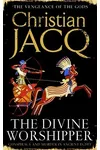
- The Divine Worshipper (2007)
Venturing Outside Egypt: The Mozart Quartet
For a change of scenery, Jacq wrote a four-part fictionalized biography of Wolfgang Amadeus Mozart. This series explores Mozart's life, his musical genius, and his deep connections to Freemasonry and ancient Egyptian mysteries through his protector, Thamos, Count of Thebes.
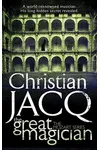
- The Great Magician (2006)
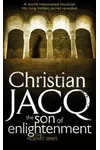
- The Son of Enlightenment (2006)
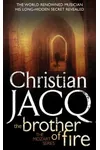
- The Brother of Fire (2011)
- The Beloved of Isis (2011)
What to Know Before You Start
Jacq’s writing style is fast-paced, direct, and heavily dialogue-driven. While his novels are highly entertaining, they are also deeply educational. Because he reads hieroglyphs and has spent decades studying archaeological records, details about daily life, religious ceremonies, and historical events are exceptionally accurate. However, readers should be prepared for a touch of magical realism, as Jacq frequently treats ancient Egyptian magic and the active intervention of their gods as reality within the universe of his novels.