


Where to Start with Christianna Brand
Christianna Brand was one of the crown jewels of the Golden Age of detective fiction. Writing alongside peers like Agatha Christie and Dorothy L. Sayers, she carved out a distinct niche characterized by incredibly tight locked-room puzzles, dark psychological undertones, and detectives who were brilliantly, hilariously fallible. If you are looking to plunge into her bibliography, you have three primary paths to choose from: the cynical, brilliant cases of Inspector Cockrill, the fashionable investigations of Inspector Charlesworth, or the magical children's world of Nurse Matilda.
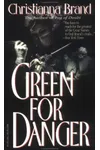
For most readers, the absolute best starting point is her undisputed masterpiece, Green for Danger (1944). Set in a military hospital during the London Blitz, it combines atmospheric wartime dread with one of the most meticulously constructed fair-play mysteries ever written. Alternatively, if you want to follow her primary detective, Inspector Cockrill, from the very beginning of his literary career, you should start with Heads You Lose (1941).
The Inspector Cockrill Series in Publication Order
Inspector Cockrill of the Kent County Police is Brand's most famous and enduring creation. Unlike the flawless detectives of many classic mysteries, Cockrill is a crusty, pocket-patting, sometimes grumpy investigator who is entirely human and capable of making mistakes. The series is best read in publication order, as the relationships between recurring characters develop and Cockrill's reputation evolves. Note that several books were published under different titles in the US, which are noted below.
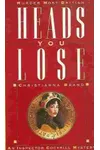
- Heads You Lose (1941) – The debut of Inspector Cockrill. A classic country house mystery set during wartime, featuring a bizarre double decapitation.
- Green for Danger (1944) – Brand's magnum opus. Cockrill is called to a military hospital to investigate a death on the operating table. The tension is high, the clues are perfectly placed, and the solution is breathtaking.
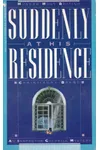
- Suddenly at His Residence (1946) – Also published in the US as The Crooked Wreath. This classic locked-room mystery features a patriarch murdered in a lodge surrounded by unbroken sand.
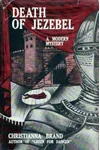
- Death of Jezebel (1949) – An impossible crime mystery set during a pageant, where the victim is killed in full view of an audience. This book features a fantastic crossover with Inspector Charlesworth.
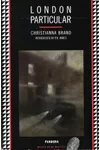
- London Particular (1952) – Also published in the US as Fog of Doubt. Cockrill investigates a murder in a house shrouded by a thick London pea-souper fog.
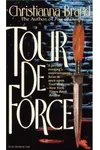
- Tour de Force (1955) – Cockrill goes on a Mediterranean holiday, only to find himself investigating a murder on an exotic island. It is one of Brand's most complex puzzles.
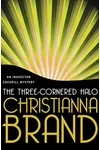
- The Three-Cornered Halo (1957) – A lighter, satirical entry set on the fictional island of San Juan el Pirata, featuring Cockrill attempting to manage a chaotic local population.
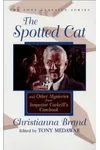
- The Spotted Cat and Other Mysteries from Inspector Cockrill's Casebook (2002) – A posthumous collection of short stories that rounds out Cockrill's career, compiling rare tales that are a treat for completionists.
The Inspector Charlesworth Series
Inspector Charlesworth is Scotland Yard's younger, more fashionable detective. He made his debut in Brand's very first novel, which was born out of her own experiences working in a retail boutique. While he only headlines two novels of his own, Charlesworth is a key figure in the Brand universe, crossing over with Inspector Cockrill in Death of Jezebel and London Particular.
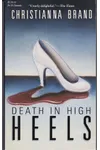
- Death in High Heels (1941) – Brand's debut novel. Set in a high-end London fashion boutique, a salesgirl is poisoned. The novel is witty, cynical, and full of sharp observations on retail life.
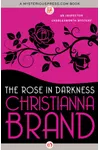
- The Rose in Darkness (1979) – Published late in Brand's career, this novel brings Charlesworth back into the spotlight to investigate a murder involving a famous actress.
The Inspector Chucky Series
Inspector Chucky is a lesser-known detective in Brand's catalog, appearing in two books that lean heavily into suspense and psychological tension. A Ring of Roses was originally published under Brand's pseudonym Mary Ann Ashe, but is now commonly cataloged under her own name.
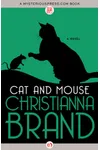
- Cat and Mouse (1950) – A gothic-infused mystery set in the wild hills of Wales, where a young woman finds herself in mortal danger after investigating a private advertisement.
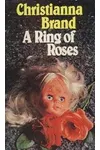
- A Ring of Roses (1977) – A dark, suspenseful mystery set in London, dealing with blackmail, poisoning, and a complex web of deceit.
The Nurse Matilda Books (The Nanny McPhee Inspiration)
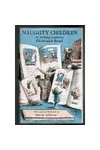
In addition to her adult crime fiction, Christianna Brand wrote a highly successful series of children's books based on bedtime stories told in her family. These books follow Nurse Matilda, a magically ugly, stern nanny who uses her magic staff to teach valuable lessons to the extremely naughty Brown children. The series was later adapted by Emma Thompson into the popular Nanny McPhee films.
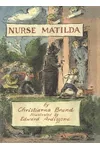
- Nurse Matilda (1964) – The original book introducing the Brown family and the mysterious, magical nanny.
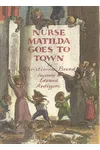
- Nurse Matilda Goes to Town (1967) – The naughty children are sent to London to stay with their domineering grand-aunt, and Nurse Matilda must follow to keep order.
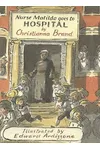
- Nurse Matilda Goes to Hospital (1975) – The final installment in the trilogy, featuring the children's antics leading them to a hospital ward.
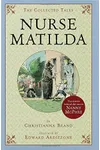
- Nurse Matilda: The Collected Tales (2005) – A complete compilation of the three original stories, perfect for modern readers.
Standalone Novels, True Crime, and Pseudonyms
Christianna Brand was a versatile writer who frequently experimented with different genres under various pen names. Notable standalones and non-fiction works include:
- The Single Pilgrim (1946) – Written under the pseudonym Mary Roland, this was a dramatic wartime novel addressing the taboos around syphilis.
- Starrbelow (1958) – Written under the pseudonym China Thompson, this is an 18th-century historical romance and mystery.
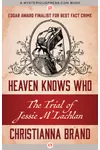
- Heaven Knows Who: The Trial of Jessie M'Lachlan (1960) – Brand's non-fiction account of a famous 1862 Scottish murder trial, showing her keen interest in real-life criminology.
- Alas, for Her That Met Me! (1976) – Published under her pseudonym Mary Ann Ashe, this historical mystery is loosely based on the real-life Madeleine Smith case.
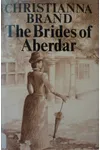
- The Brides of Aberdar (1982) – A gothic horror-mystery novel dealing with curses and dark secrets in a Victorian girls' school.