

Where to Start with Christina Dalcher
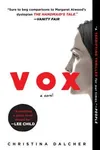
If you are new to Christina Dalcher’s unsettling speculative worlds, the absolute best place to start is her explosive debut novel, Vox (2018). Inspired by her background as a theoretical linguist, this book perfectly encapsulates her signature style: high-concept, terrifyingly plausible social premises paired with fast-paced thriller storytelling. Starting here gives you the perfect introduction to her thematic interest in the power of voice and the rapid erosion of civil liberties.
Because all of Dalcher's novels are completely standalone stories set in distinct universes, you do not need to worry about strict continuity. After reading Vox, you can freely choose whichever premise intrigues you most, or follow her publication timeline to see how her exploration of dark futures has evolved.
Christina Dalcher Books in Publication Order
Christina Dalcher's novels have all been published as standalone thrillers. Since there is no narrative crossover or shared universe, reading them in order of release is the most natural path to experience her work.
1. Vox (2018)
Set in a chillingly near-future United States, Vox presents a society where the government has stripped women of their voices. Every female is forced to wear an electrified wristband that delivers a painful shock if they speak more than 100 words a day. The story follows Jean McClellan, a cognitive neurolinguist who was once at the top of her field. When the President's brother suffers a brain injury that requires Jean's unique expertise, she is temporarily granted a reprieve from her word limit. Jean must use this brief window of influence to fight back against the oppressive regime and reclaim the voices of women across the nation.
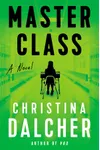
2. Master Class / Q (2020)
Published as Master Class in the United States and under the title Q in the United Kingdom, this novel explores a dystopian education and social stratification system based entirely on cognitive ability. In this world, citizens are given a "Quotient" (Q) score derived from continuous testing. Children are segregated into state-of-the-art schools or desolate boarding facilities based on their scores, while adults face career and residential restrictions. The protagonist, Elena Fairchild, is a teacher at an elite school who fully supports the system—until her own daughter underperforms on a test and is scheduled for relocation. Elena is forced to infiltrate the system to save her child, uncovering the dark eugenicist roots of the societal ranking.
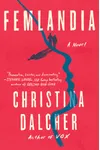
3. Femlandia (2021)
In Femlandia, Dalcher takes a dark look at the extremes of separatist movements. Set against the backdrop of a collapsed American economy, the novel follows Miranda Reynolds and her teenage daughter, Emma. With nowhere else to turn, they seek refuge in Femlandia, a thriving, self-sufficient colony created by Miranda's estranged mother. The colony is strictly women-only and promises safety from the violent chaos of the outside world. However, as Miranda settles in, she begins to realize that this supposed feminist utopia hides a sinister underbelly, proving that absolute power and fanaticism are dangerous no matter who is in charge.
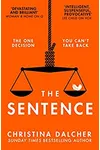
4. The Sentence (2023)
Her fourth novel, The Sentence, is a high-concept legal thriller that tackles the morality of the justice system and capital punishment. In this society, a new law has been enacted to deter wrongful executions: if a prosecutor successfully seeks the death penalty and the executed convict is later proven innocent, the prosecutor faces the death penalty themselves. The story centers on Justine Boucher, a state prosecutor who secured a death row conviction years ago. As the execution date approaches, startling new evidence suggests the convict might be innocent. Justine faces a terrifying race against time to uncover the truth, knowing her own life is on the line if she let an innocent man die.
Chronological Order vs. Publication Order
Since each of Christina Dalcher's novels takes place in its own isolated universe, there is no chronological timeline linking them. You cannot read them out of order in a way that spoils another book, nor are there any recurring characters. Each book is a self-contained narrative with a definitive ending. For this reason, we recommend sticking to the publication order as it shows her expansion from linguistic themes into broader sociological and legal dystopias.
What to Know Before You Start
Dalcher's background as a doctor of theoretical linguistics from Georgetown University plays a massive role in her writing. You will notice that her protagonists are often highly educated professional women—linguists, teachers, and lawyers—who are forced to navigate systems of control that directly impact their fields of expertise. Her writing style is fast, suspenseful, and designed to read like a blockbuster thriller, though the underlying themes raise deep philosophical and ethical questions. Readers should be prepared for intense topics including eugenics, extreme misogyny, and systemic injustice.
Short Stories and Anthologies
Before achieving mainstream success with her novels, Dalcher was a prolific writer of flash fiction, publishing over 100 short pieces in various literary journals. While she has not released a solo short story collection, she contributed to several multi-author anthologies, most notably the Vine Leaves Literary Journal of Vignettes from Across the Globe in 2017. Tracking down these journals is a great option for completionists who want to explore her early, highly condensed storytelling style.