
Where to Start with Christina Hunger’s Books
If you are curious about interspecies communication, the best way to dive into Christina Hunger's work is to follow her books in their publication order. Because her books build upon a real-life journey that transitioned from an experimental home project to a worldwide educational framework, starting at the beginning gives you the essential context you need.
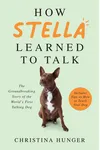
First, read How Stella Learned to Talk (2021). This book serves as both a heartwarming memoir and a conceptual introduction. It tells the story of how Hunger, a professional speech-language pathologist, noticed that her puppy Stella’s pre-verbal behaviors matched the communication milestones of the toddlers she treated in her clinical practice. It details the trial-and-error process, the emotional breakthroughs, and the foundational science of Augmentative and Alternative Communication (AAC).
Second, transition to Your Dog Can Talk: A Step-By-Step Guide to Button Training (2025). While the first book provides the 'why' and the narrative journey, this second book is the 'how.' It functions as a structured workbook and practical training guide, offering step-by-step instructions, worksheets, troubleshooting advice, and clear milestones to help you replicate Hunger’s success with your own pet.
Christina Hunger Books in Publication Order
Christina Hunger’s bibliography consists of two primary non-fiction books. Reading them in order of release matches the chronological development of her methodology:
- How Stella Learned to Talk: The Groundbreaking Story of the World’s First Talking Dog (Published: May 4, 2021 by William Morrow / HarperCollins) — The narrative foundation that introduces AAC concepts, Stella's vocabulary growth, and the initial guidelines for pet owners.
- Your Dog Can Talk: A Step-By-Step Guide to Button Training (Published: August 12, 2025 by Ten Speed Press / Penguin Random House) — A dedicated, hands-on workbook designed to guide owners through the day-to-day process of button training.
Understanding the Reading Path: Narrative vs. Practical Manual
While there are only two books, understanding their distinct purposes helps you get the most out of Christina Hunger's approach to canine language development.
Phase 1: The Narrative Foundation
In How Stella Learned to Talk, readers are introduced to the foundational concepts of Augmentative and Alternative Communication (AAC). In her day job, Hunger used AAC devices (such as boards with symbols or buttons that speak words when pressed) to help nonverbal children communicate. The book documents what happened when she applied these exact clinical techniques to her Catahoula/Blue Heeler mix puppy, Stella.
This book is crucial because it helps readers understand that button training is not a series of simple tricks, but a long-term linguistic commitment. It chronicles Stella's progression from a single button ('outside') to combining multiple buttons to express complex thoughts, such as telling Hunger she was hungry, happy, or wanted to play. Reading this first helps adjust your expectations and teaches you to observe your dog's subtle non-verbal cues.
Phase 2: The Actionable Workbook
Released four years later, Your Dog Can Talk is a direct response to the massive global community of pet owners who attempted button training after reading the first book. This release shifts away from the memoir format to focus entirely on methodology. It provides structured lesson plans, checklists, and answers to common obstacles, such as what to do when a dog displays button fatigue, how to choose the first words, and how to model button presses without forcing your pet.
Companion Resources and Talking Button Kits
To fully implement the strategies outlined in Christina Hunger’s books, she partnered with the educational toy company Learning Resources to release physical companion tools under her brand, Hunger for Words. These products are designed to align directly with the training methods described in her books:
- Hunger for Words Talking Pet Starter Set: The entry-level kit featuring four recordable buttons and an official step-by-step training guide written by Hunger. This kit is ideal to use alongside the early chapters of How Stella Learned to Talk.
- Hunger for Words Talking Pet Next Words or Vocabulary Sets: Expansion packs containing additional recordable buttons, designed for pets that have mastered their initial words and are ready to express more complex concepts. These are best paired with the workbook sections of Your Dog Can Talk.
- Official Soundboards and Mats: Non-slip mats designed to keep buttons organized in a fixed grid layout, helping pets build muscle memory as their vocabulary expands.
What to Know Before You Start
Before you begin reading Hunger's books or training your dog, keep these key points in mind:
It requires consistency and patience
Button training is not an overnight process. As Hunger explains, it took weeks of consistent modeling—where she pressed the button herself before performing an action (like pressing 'outside' every single time they went out)—before Stella made her first independent press. You must be prepared for a multi-month learning curve.
Focus on Modeling, Not Prompting
A common mistake that Hunger addresses is physical prompting (such as grabbing your dog's paw and forcing it onto the button). Hunger's methodology emphasizes 'modeling'—showing the dog how the button works in context and letting them choose to use it voluntarily. This builds genuine communication rather than conditioned obedience.
Aided Language Input is Key
Throughout both books, Hunger emphasizes 'Aided Language Input,' a concept from human speech therapy. This means you should speak the word aloud while pressing the button, ensuring the dog connects the button's recorded sound, your spoken voice, and the real-world action or object.