
How to Start Reading Christina Sharpe
Christina Sharpe’s writing is a powerful mix of academic rigor, literary beauty, and cultural critique. Rather than reading her books in a strict chronological sequence, the best path is to align your reading with your familiarity with critical theory. Her work transitions from highly academic monographs to poetic, hybrid memoirs. Here is the recommended reading path for entering her intellectual world:
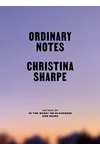
- Start with Ordinary Notes (2023): This is Sharpe’s most accessible and intimate work. Composed of 248 numbered entries, it blends personal memoir, art criticism, and reflections on maternal love. It offers an excellent introduction to her writerly voice and central questions without requiring a deep background in advanced critical theory.
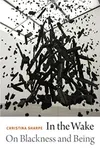
- Read In the Wake: On Blackness and Being (2016): This is her most influential and defining work, introducing the concepts of "wake work" and anti-Blackness as "weather." It is essential reading for anyone interested in modern Black Studies, literature, and art.
- Conclude with Monstrous Intimacies: Making Post-Slavery Subjects (2010): Sharpe’s debut book is a dense, academic monograph. It is highly rewarding but best approached once you have acclimated to her intellectual voice and the theoretical frameworks of Black feminism and psychoanalysis.
Publication Order of Christina Sharpe’s Books
If you prefer to follow the evolution of her academic thought, research methodology, and writing style, reading her books in order of publication is a viable path. Over her career, Sharpe has transitioned from highly structured, academic prose to a more hybrid, lyrical form that fuses personal history with cultural critique. Her published books in chronological order are:
- Monstrous Intimacies: Making Post-Slavery Subjects (Duke University Press, 2010)
- In the Wake: On Blackness and Being (Duke University Press, 2016)
- Ordinary Notes (Farrar, Straus and Giroux / Knopf Canada / Daunt Books, 2023)
Deep Dive Into Sharpe’s Major Works
Monstrous Intimacies: Making Post-Slavery Subjects (2010)
Published by Duke University Press, Sharpe's first book investigates how the trauma, sexual violence, and racialized domination of slavery continue to reverberate in contemporary Black and white subjectivities. She defines "monstrous intimacies" as those close, often violent relationships forged in the shadow of slavery that are characterized by subjection, desire, and their constant repetition in modern culture.
Sharpe uses an interdisciplinary lens, analyzing literary works such as Frederick Douglass's autobiographical narratives, Gayl Jones's Corregidora, Essie Mae Washington-Williams’s memoir Dear Senator, and Bessie Head's Maru. She also examines visual culture, including the history of Saartje Baartman (the "Hottentot Venus"), Isaac Julien's film The Attendant, and the silhouette art of Kara Walker. This work is theoretically complex, drawing heavily on psychoanalysis and post-structuralist critique to reveal how post-slavery subjects are constructed and maintained.
In the Wake: On Blackness and Being (2016)
Considered a landmark text in contemporary Black Studies, In the Wake explores what it means to live in the aftermath—or the "wake"—of transatlantic chattel slavery. Sharpe uses the multi-layered definition of the word "wake" (the track left by a ship, a watch kept over the dead, and the state of being awake or conscious) to formulate a method of living, writing, and thinking she calls "wake work."
The book is structured around four primary metaphors:
- The Wake: The ongoing, present-day reality of slavery's afterlives, which continues to shape Black life and death.
- The Ship: The physical and metaphorical presence of the slave ship, which continues to regulate and define modern Black existence.
- The Hold: The cramped, suffocating spaces of containment and violence—from historical slave ships to modern prisons, detention centers, and borders.
- The Weather: The total climate of anti-Blackness and white supremacy, which makes Black vulnerability and death normative and pervasive.
Sharpe uses personal memoir, poetry, visual art, and news media to illustrate how Black people survive, grieve, and create meaning within this climate. It is a work that has profoundly influenced artists, activists, and academics globally, offering a way to account for the "largeness of Black life" in the face of structural violence.
Ordinary Notes (2023)
Winner of the Hilary Weston Writers’ Trust Prize for Nonfiction and a finalist for the National Book Award, Ordinary Notes is a masterpiece of hybrid writing. Composed of 248 distinct, numbered vignettes, the book is a poignant exploration of loss, memory, art, language, and the beauty of Black everyday life.
Dedicated to her mother, Ida Wright Sharpe, who cultivated a love of literature and beauty in the face of systemic hardship, the book acts as an archive of maternal love and intellectual growth. Sharpe reflects on the works of writers like Toni Morrison (specifically Beloved), critiques institutional racism and the concept of "Black excellence," and discusses the representation of racial violence in memorials. The writing is highly lyrical and fragments the traditional essay structure, making it a unique and accessible read that celebrates Black resilience.
Forthcoming Projects and What’s Next
Sharpe’s intellectual project is ongoing, and she has announced several forthcoming books that expand on her core themes:
- What Could a Vessel Be?: An inventory essay exploring the metaphor and physical reality of the "vessel" as a container for survival, mourning, and care. This hybrid project draws inspiration from Ursula K. Le Guin's 1986 essay The Carrier Bag Theory of Fiction.
- Black. Still. Life.: Under contract with Duke University Press, this project plays on the double meaning of "still life" and the continuation of Black existence ("still alive") across history, examining visual culture, memorials, and artistic resistance.
- To Have Been to the End of the World: Essays on...: A forthcoming collection of essays that further interrogates contemporary Black visual culture, literature, and art.
What to Know Before You Start
Before diving into Christina Sharpe’s bibliography, it is helpful to keep a few key guidelines in mind:
- Interdisciplinary Connections: Sharpe’s work is deeply interdisciplinary. She references a wide array of visual artists (like Kara Walker, Arthur Jafa, and Lorna Simpson), writers (like Toni Morrison and Dionne Brand), and theoretical concepts from Black feminist theory. Reading her alongside these artists can enrich your understanding of her arguments.
- Academic Tone vs. Lyrical Prose: Readers should be prepared for the shifts in tone across her books. Monstrous Intimacies is written for an academic audience, whereas Ordinary Notes is written in a poetic, fragmented style that appeals to general readers.
- A Focus on Survival and Care: While Sharpe writes about heavy themes, including systemic racism, slavery, and historical trauma, her work is not merely about suffering; it is fundamentally about survival, care, and the preservation of Black humanity. She models "wake work" as a practice of looking closely, remembering, and building futures of Black possibility.