
Where to Start with Christine Poulson
If you are new to Christine Poulson’s work, your ideal starting point depends on your preferred subgenre of mystery. Poulson has created two distinct series, each with its own style, tone, and lead character. Because both series follow a linear narrative where characters evolve, reading them in order is highly recommended.
For Fans of Academic Mystery: The Cassandra James Series
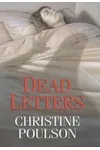
If you enjoy classic British cozy-adjacent mysteries, academic rivalries, and university settings, start with Dead Letters (published as Murder Is Academic in the United States). This series features Cassandra James, a literary historian in Cambridge who repeatedly stumbles into murder investigations. The trilogy is deeply atmospheric, using the college libraries, drafty halls, and misty Fens of Cambridge to create a sense of scholarly isolation and suspense.
For Fans of Medical and Environmental Thrillers: The Katie Flanagan Series
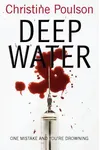
If you prefer contemporary suspense, medical ethics, corporate espionage, and extreme survival scenarios, start with Deep Water. This series follows Katie Flanagan, a sharp-witted medical researcher who uncovers dark secrets in high-pressure scientific environments. The settings shift dramatically from high-security laboratories in Devon to the frozen wastes of Antarctica, offering a faster, more thriller-oriented pace than the Cassandra James books.
The Cassandra James Series in Order
Set against the iconic and sometimes claustrophobic backdrop of Cambridge, this series is a modern take on the classic academic mystery. Cassandra James is not a professional detective; she is a lecturer and literary historian who uses her research skills to untangle complex crimes. The character's personal life and career progress significantly across the books, making publication order the best path forward.
- Dead Letters (2002): The series opener introduces Cassandra as she takes up a temporary lectureship at a women's college in Cambridge. The academic dream quickly sours when she discovers the body of her head of department. As she investigates, she is drawn into a web of professional rivalries, hidden relationships, and letters that hold deadly secrets. Note: Published in the U.S. as Murder Is Academic.
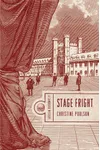
- Stage Fright (2003): In the second book, Cassandra is adapting a Victorian drama for a local theater production. The theatrical world proves just as cutthroat as academia when the lead actress vanishes under suspicious circumstances, forcing Cassandra to look behind the curtain to find the truth.
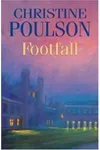
- Footfall (2006): The final book in the trilogy centers around the Cambridge Literary and Philosophical Institute. When an old friend of Cassandra goes missing and it appears someone is impersonating Cassandra herself in the archives, she must piece together a puzzling case of identity theft and historical secrets.
The Katie Flanagan Series in Order
Moving away from the humanities and into the hard sciences, this series (often referred to as the Flanagan and Marchmont series) follows Katie Flanagan as she works at the cutting edge of research—often discovering that scientific advancement comes at a high human cost. The series also co-stars patent lawyer Daniel Marchmont, whose legal investigations intersect with Katie's scientific discoveries.
- Deep Water (2016): Katie is a researcher at a biotech company who suspects that a clinical trial is being manipulated. Meanwhile, patent lawyer Daniel Marchmont is investigating a suspicious death linked to the same trial. Their paths cross as they attempt to expose corporate corruption and scientific malpractice.
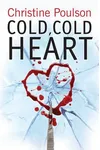
- Cold, Cold Heart (2017): Seeking a fresh start after gaining a reputation as a whistleblower in the previous book, Katie takes a job at a remote research station in Antarctica. When a storm cuts the base off from the outside world and team members begin to die, Katie realizes she is trapped on the ice with a calculated killer.
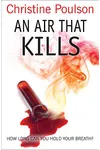
- An Air That Kills (2019): In the third installment, Katie goes undercover as a laboratory technician at a high-security research facility on a tidal island in North Devon. Investigating suspicious staff turnover, she discovers a dangerous breach of biosecurity protocols that threatens public safety.
Standalone Novels and Notable Short Stories
In addition to her series, Poulson has written standalone suspense fiction and acclaimed short stories that showcase her range as a writer.
Invisible (2014)
This standalone psychological thriller focuses on Lisa, a mother caring for her son with cerebral palsy, who maintains a secret, no-strings monthly rendezvous with a man named Jay. When Jay fails to show up for one of their weekends, Lisa begins to search for him, only to discover that his entire identity is a construct. Jay is actually under witness protection, and the secrets of his past are catching up to both of them. The story features a shift in perspective and takes readers from the English countryside to Sweden and Hong Kong.
"Accounting for Murder" (2017)
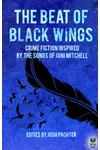
Poulson is also a prolific short story writer. Her most notable short piece is "Accounting for Murder," originally published in the CWA anthology Mystery Tour. The story is highly regarded for its experimental structure, telling the tale of a crime and an affair entirely through financial documents, receipts, and invoices. It was shortlisted for the prestigious CWA Short Story Dagger in 2018.
What to Know Before You Start
Before diving into Christine Poulson's mysteries, it is helpful to understand the background she brings to her writing. Like her protagonist Cassandra James, Poulson spent years in academia, holding a PhD in Art History and lecturing at Cambridge. This experience shines through in the authentic details of college life, research archives, and the distinct, academic culture of Cambridge. Her transition to crime fiction was inspired by real-life changes, and she brings a highly observant, intellectual rigor to all of her books. Whether she is exploring the Victorian theater in Stage Fright or biosecurity in An Air That Kills, her novels are grounded in thorough, realistic research.