

The Recommended Reading Order for the Chaos Queen Quintet
If you are ready to venture into the complex, dark fantasy world of the Sfaera, your path is straightforward. Christopher Husberg’s signature achievement is a single, continuous five-book series: The Chaos Queen Quintet. Because this is a highly serialized story with a developing narrative arc, recurring characters, and overarching mysteries, it is essential to read the books in their official publication order. Chronological order and publication order are identical for this series.
Here is the recommended reading order for Christopher Husberg’s books:
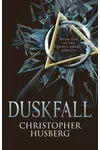
- Duskfall (2016)
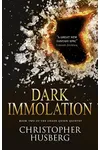
- Dark Immolation (2017)
- Blood Requiem (2018)
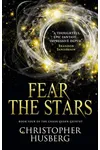
- Fear the Stars (2019)
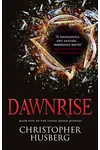
- Dawnrise (2021)
A Deep Dive into the Chaos Queen Quintet
To help you understand what lies ahead in this dark fantasy epic, here is a detailed breakdown of each book in the quintet, highlighting key plot points, character growth, and themes.
1. Duskfall (2016)
The saga begins with Duskfall, which introduces readers to the icy shores of the Gulf of Nahl. The story starts when a man named Knot is pulled from the frozen ocean, badly beaten and missing all of his memories. Though he remembers nothing of his past, his body remembers how to fight with lethal, terrifying precision. He is rescued by Winter, a young woman belonging to the Tiellan race—an oppressed, elf-like minority in the human-dominated world. As they attempt to build a quiet life together, Knot's violent past catches up with them, forcing him to flee. Meanwhile, Winter discovers she possesses dangerous, latent psimantic (magical) abilities, which she can only control by consuming a highly addictive, destructive drug known as 'frostfire'.
Simultaneously, the narrative follows Cinzia, a devout priestess of the dominant religious order, Canta. She returns to her home city only to find a heretical rebellion brewing, led by none other than her own sister, Jane Oden. As these threads weave together, they set off a chain reaction that threatens the stability of the entire world.
2. Dark Immolation (2017)
Picking up where the debut left off, Dark Immolation expands the scope of the world and deepens the political and religious conflicts. Jane Oden's rebellion gains traction as she is increasingly viewed as a prophetess, directly challenging the authority of the Church of Canta. Meanwhile, Knot struggles to come to terms with the dark truths of his past, while Winter's dangerous addiction to frostfire spirals further out of control as she searches for a way to master her powers without destroying herself. The magic system of psimancy becomes central to the conflict, demonstrating that the cost of power is often paid in blood and sanity.
3. Blood Requiem (2018)
In the third volume, the Sfaera is pushed to the brink of total war. The religious schism reaches a boiling point, and the line between holy war and heresy becomes paper-thin. Winter's transformation into a figure of immense and terrifying power—the titular Chaos Queen—begins to take shape. Knot, Cinzia, and their allies must navigate shifting alliances and face the consequences of their previous choices. This installment heavily features themes of identity, systemic oppression of the Tiellan people, and the corruption of religious institutions.
4. Fear the Stars (2019)
The stakes escalate to a cosmic level in Fear the Stars. As ancient forces awaken and threaten to tear the fabric of reality apart, the characters are forced to make desperate alliances. The narrative shifts from local political and religious struggles to a desperate fight for survival against existential threats. The relationships between the core cast are tested in new ways as they prepare for the final confrontation.
5. Dawnrise (2021)
The quintet reaches its epic conclusion in Dawnrise. Husberg wraps up the intricate plotlines that began in the icy waters of the Gulf of Nahl. The final book delivers high-stakes action, resolves the mystery of the Sfaera's origins, and brings the personal journeys of Knot, Winter, Cinzia, and Jane to a bittersweet, emotionally resonant close.
Short Fiction and Anthologies
While Christopher Husberg is best known for his novels, he has also written short fiction. His most notable short story is titled "Look Me in the Stars". Originally receiving an honorable mention in the 2013 Utah Original Writing Competition, it was officially published in the 2019 science fiction and fantasy anthology Parallel Worlds: The Heroes Within. The story takes the form of a blog written by the last surviving woman on Earth following a zombie apocalypse. Because it is set in a completely different, sci-fi/horror universe, it has no narrative connection to the Sfaera and can be read at any time as a standalone piece.
What to Know Before You Start
Before diving into Husberg's work, it helps to know what to expect from his writing style and world-building:
- Grimdark but Hopeful: Husberg's work features morally gray characters, drug addiction, violence, and heavy themes. However, unlike pure grimdark fantasy, the narrative retains a core of hope, highlighting characters who actively strive to do good despite their flaws.
- Unique Magic System: Psimancy is a magic system based on mental energy and willpower. The use of magic has severe physical and psychological costs, illustrated by Winter's dependency on frostfire to stabilize her abilities.
- Sanderson's Influence: Having studied creative writing under Brandon Sanderson at Brigham Young University, Husberg's work exhibits a similarly structured approach to magic and world-building, combined with a grittier tone reminiscent of Daniel Abraham or George R.R. Martin.