

How to Start Reading Christos Tsiolkas
Christos Tsiolkas is one of Australia's most provocative, celebrated, and unflinching contemporary authors. Because he writes standalone novels, short story collections, and essays rather than continuous narratives, there is no single mandatory sequence or chronological path to follow. However, choosing where to start depends entirely on what kind of reading experience you want:
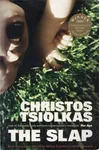
- For the cultural phenomenon: Start with The Slap (2008). This multi-perspective suburban drama is his most famous book and serves as the perfect introduction to his sharp observations of class, race, parenting, and modern morality.
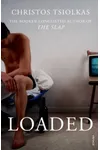
- For raw, high-energy queer fiction: Start with his debut novel, Loaded (1995). It is a short, kinetic, and gritty 24-hour journey through Melbourne's queer and immigrant subcultures.
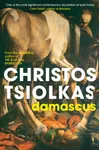
- For historical fiction: Start with Damascus (2019). This novel reimagines the rise of early Christianity through the life of Saul of Tarsus (St. Paul) and is ideal for readers who prefer immersive historical settings.
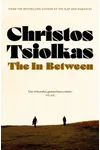
- For a tender, late-career shift: Start with The In-Between (2023). It is a mature, gentle romance about two middle-aged men finding love, a marked departure from the high-tension rage of his early works.
Christos Tsiolkas Books in Publication Order
Reading Tsiolkas in order of publication allows you to witness the evolution of his style—moving from the raw, confrontational energy of the 1990s and 2000s to the expansive social realism of his mid-career hits, and finally to the reflective, metafictional, and tender styles of his recent work.
1. Loaded (1995)
Tsiolkas's explosive debut introduces Ari, a 19-year-old gay Greek-Australian youth navigating Melbourne's suburban landscape over a single drug-fueled day and night. It explores alienation, family expectations, and sexual identity with relentless pace. It was adapted into the acclaimed 1998 film Head On.
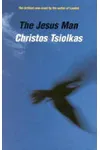
2. The Jesus Man (1999)
A dark, confrontational look at the psychological fallout of trauma within a working-class Greek-Australian family. Set in Melbourne, this novel explores domestic tragedy, urban loneliness, and the city's underbelly.
3. Dead Europe (2005)
A haunting and highly controversial gothic novel that won the Age Fiction Prize. It follows Isaac, a young Greek-Australian photographer, who travels to Europe carrying his father's ashes. He soon becomes entangled in a nightmare of historical anti-Semitism, ancestral curses, and the dark ghosts of European history. It was adapted into a film in 2012.
4. The Slap (2008)
The international breakout novel that starts at a suburban barbecue when a man slaps a child who is not his own. The fallout of this single event is told through the eyes of eight different characters, revealing the deep fissures in class, culture, parenting styles, and gender dynamics in modern Australia. It won the Commonwealth Writers' Prize and was adapted into two television miniseries (in Australia and the United States).
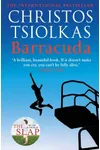
5. Barracuda (2013)
Danny Kelly is a talented teenage swimmer from a working-class background who wins a scholarship to a prestigious Melbourne private school. The novel tracks his obsessive pursuit of Olympic gold, the class clash he experiences, and the heavy burden of failure. It was adapted into a TV miniseries in 2016.
6. Damascus (2019)
A sweeping, intense historical novel that won the Victorian Premier's Literary Award for Fiction. Tsiolkas departs from contemporary Australia to reconstruct the harsh, dusty world of the first century, focusing on the fanatical, flawed St. Paul and the early believers who shaped a new religion.
7. 7 ½ (2021)
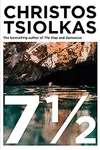
A meta-fictional novel written during the Melbourne COVID-19 lockdowns. The narrative alternates between a writer in isolation contemplating beauty and creation, and the novel he is writing about a retired gay adult film star named Paul who is seeking a simpler life on a farm.
8. The In-Between (2023)
A tender, compassionate departure from Tsiolkas's typical gritty intensity. It follows Perry and Ivan, two middle-aged gay men who meet and begin a slow, cautious romance, confronting their vulnerabilities, histories of grief, and the realities of aging.
Crucial Reading Caveats: Deceptive Multi-Author Series
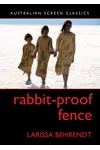
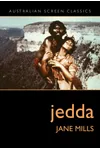
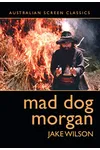
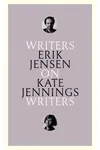
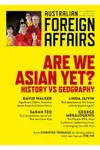
If you search for Christos Tsiolkas on automated book list websites, you will frequently see long lists of books under series like "Australian Screen Classics," "Writers on Writers," and "Australian Foreign Affairs." This is a common error caused by web scrapers. Tsiolkas did not write these series. In reality, these are multi-author collections, and Tsiolkas only contributed a single volume or essay to each:
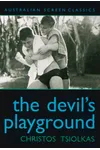
- Australian Screen Classics: Tsiolkas wrote the monograph The Devil's Playground (2002), which is a personal critical study and memoir about Fred Schepisi's 1976 film. The other books in this series (like Walkabout or Wolf Creek) are written by other Australian critics and authors.
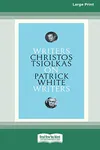
- Writers on Writers: Black Inc. publishes this series where leading authors write about their influences. Tsiolkas wrote the volume On Patrick White (2018). Other entries in the series are written by authors such as Alice Pung, Erik Jensen, and Michelle de Kretser.
- Australian Foreign Affairs: This is a foreign policy journal. Tsiolkas contributed an essay on identity politics to Issue 5, titled Are We Asian Yet? (2019). He did not write the other issues.
Short Stories, Collaborations, and Non-Fiction
Beyond his primary novels, Tsiolkas's shorter and collaborative works flesh out his career and thematic concerns:
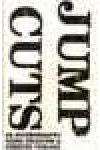
- Jump Cuts: An Autobiography (1996): Co-authored with Sasha Soldatow, this early book is structured as a series of transcribed dialogues between the two gay writers, discussing anarchist politics, identity, and the Australian literary scene.
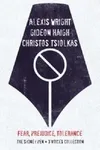
- Tolerance, Prejudice and Fear (2008): A short, non-fiction essay booklet reflecting on contemporary social anxieties.
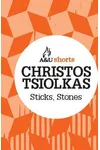
- Sticks, Stones (2012): A standalone, 18-page digital short story published by Allen & Unwin about a mother's reaction to her son's behavior toward a disabled classmate.
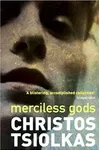
- Merciless Gods (2014): Tsiolkas's major short story collection. It contains 15 gritty, intense stories that echo the themes of family, sex, and migration found in his early novels.