

Recommended Reading Order: How to Tackle Chuck Logan’s Books
For most readers diving into the world of Chuck Logan, the central question is how to approach the Phil Broker series. Phil Broker, a former paratrooper, undercover cop, and Minnesota Bureau of Criminal Apprehension (BCA) agent, is a complex protagonist whose life unfolds across seven novels. To get the most out of Logan’s sharp, atmospheric writing, there are two primary paths you can take: publication order or chronological order.
Option 1: The Publication Order (Recommended)
Reading the Phil Broker series in publication order is the most organic way to experience the character's development. Chuck Logan originally wrote the first six books sequentially, allowing readers to grow with Broker, experience the evolution of his relationships, and discover his military past through carefully placed flashbacks. Reading in this order also lets you read Logan's debut standalone novel, Hunter's Moon, before encountering the character Harry Griffin in the main series.
Here is the publication order for the Phil Broker series:
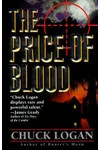
- The Price of Blood (1997)
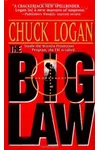
- The Big Law (1998)
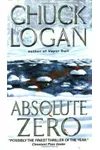
- Absolute Zero (2002)
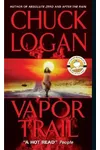
- Vapor Trail (2003)
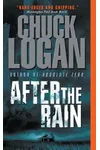
- After the Rain (2004)
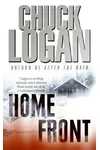
- Homefront (2005)
- Broker (2017)
Option 2: The Chronological Timeline
If you prefer to watch Phil Broker's career unfold in a strict chronological sequence from his very first undercover assignment, you should start with the 2017 novel Broker. This book serves as a prequel, going back to 1979 to establish Broker's origin story as a rookie undercover agent. While this path gives you immediate context for his later cynicism and scars, it is worth noting that Logan's writing style evolved significantly between 1997 and 2017, meaning you will experience a jump back in tone and style when transitioning from the prequel to the original debut.
Here is the chronological order for the Phil Broker series:
- Broker (2017) – Set in 1979; Broker's origin story.
- The Price of Blood (1997) – Introduces Nina Pryce and the quest for lost Vietnam gold.
- The Big Law (1998) – Deals with the fallout of the first book and Broker caring for his daughter.
- Absolute Zero (2002) – A survival thriller set in the freezing Minnesota wilderness.
- Vapor Trail (2003) – A fast-paced investigation dealing with moral ambiguity and local corruption.
- After the Rain (2004) – A deeply personal mystery that tests Broker's loyalties.
- Homefront (2005) – The climax of Broker's initial arc, as he seeks a quiet life in rural Minnesota.
Detailed Phil Broker Series Breakdown
To help you decide where to start and what to expect, here is a detailed breakdown of each book in the Phil Broker series, detailing their storylines and unique settings:
Broker (2017)
Though published last, this prequel is set in 1979 and details how a young Phil Broker gets recruited by the Minnesota Bureau of Criminal Apprehension for a dangerous undercover mission. When a former foreign agent is found dead in the woods, Broker is thrown into a web of international contraband, corruption, and danger. It serves as an excellent backstory, showing the raw, unrefined version of the protagonist before he becomes the seasoned veteran of the subsequent books.
The Price of Blood (1997)
This is the book that started it all. Phil Broker is introduced as a veteran trying to leave his past behind. He is drawn back into danger when Nina Pryce, the daughter of his late military commander, asks for his help in clearing her father’s name. Her father was dishonorably discharged over a failed Vietnam mission involving a cache of stolen gold. The search for the gold pits Broker and Nina against ruthless mercenaries and forces Broker to confront the ghosts of his military past.
The Big Law (1998)
In this direct sequel, Nina Pryce (now a Major in the Army) is deployed overseas, leaving Phil Broker to care for their young daughter, Kit (Karson). Broker’s domestic life is quickly shattered when local criminal elements and vengeful adversaries target his family. The novel blends the domestic tension of single-parenting with the high stakes of a classic Midwestern noir thriller.
Absolute Zero (2002)
Chuck Logan utilizes his Minnesota surroundings to full effect in this survival-focused entry. Plunged into a brutal, sub-zero winter wilderness, Broker must track down a group of killers while fighting the elements. The freezing forests and remote settings act as their own character, amplifying the isolation and physical toll on the characters.
Vapor Trail (2003)
Highly praised by crime fiction purists, this installment deals with a relentless pace and deep moral ambiguity. Broker investigates local corruption and small-town secrets, navigating a world where the line between the good guys and bad guys is razor-thin. It is a standout book for its grit and psychological tension.
After the Rain (2004)
Broker continues his career with another personal case that forces him to examine his loyalty, friendships, and the scars he carries from both the military and law enforcement. The book serves as a perfect build-up to the explosive events of the next novel.
Homefront (2005)
The sixth novel represents the peak of mainstream recognition for the series. Seeking to escape the violence of his past and build a peaceful life for his daughter, Kit, Broker moves his family to a quiet town in Glacier County, Minnesota. However, a minor schoolyard altercation between Kit and a local bully escalates into a full-scale turf war with a local methamphetamine dealer and his sociopathic associates. This book is notable for its incredible tension and its depiction of a father's desperate struggle to protect his child.
Standalone Novels and the Harry Griffin Connection
In addition to the Phil Broker series, Chuck Logan has written three standalone novels. While these books can be enjoyed independently, there are hidden connections that fans of the Broker universe will appreciate:
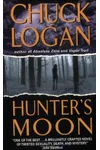
- Hunter’s Moon (1996): Chuck Logan's debut novel is a standalone thriller featuring Harry Griffin, a former Special Forces paratrooper and recovering alcoholic. During a hunting trip in the Minnesota North Woods, a tragic accident forces Harry into a fight for survival. Connection note: Harry Griffin returns as a supporting character in the Phil Broker novel Homefront, helping Broker's family settle in and find safety. Reading Hunter’s Moon first gives readers a deeper appreciation of Harry's loyalty and history.
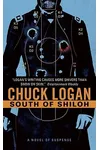
- South of Shiloh (2008): A standalone mystery that centers on a sniper targeting Civil War reenactors. The protagonist, Jenny Edin, enlists her former lover to solve her husband’s mysterious death. This book does not feature any major characters from the Phil Broker series but shares the same atmospheric, gritty Midwestern tone.
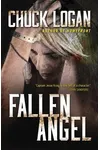
- Fallen Angel (2013): This standalone thriller centers on Morgan Jump, a government operative and sociopath who tries to cover up a military helicopter crash. It is a darker, action-heavy departure from Logan's typical rural Minnesota crime noir.
Comparing the Homefront Novel vs. the 2013 Film
Many readers discover Chuck Logan through the 2013 film adaptation of Homefront, which starred Jason Statham and was written by Sylvester Stallone. If you are transitioning from the movie to the books, there are several key differences you should keep in mind:
- Setting: The movie moves the story from the cold, rural northern Minnesota wilderness of Glacier County to a humid, small-town Louisiana bayou. This changes the entire atmosphere of the story, swapping snow and pines for swamps and heat.
- Nina Pryce's Fate: In the film, Broker’s wife (Nina Pryce) has already passed away from cancer before the story begins, leaving Broker as a widowed father. In the novel, Nina is alive, although she and Broker are dealing with severe personal struggles and marital strain.
- Broker's Characterization: Jason Statham’s Broker is a classic, high-octane action hero with an unexplained British accent who uses brute force to solve conflicts. The book's Phil Broker is a more nuanced, weathered veteran who relies on cunning, strategy, and survival instincts rather than just physical dominance.
- The Tone: The movie leans heavily into 1980s-style action cinema with stylized choreography and explosions, whereas the book is a slow-burn, atmospheric, character-driven crime thriller.
What to Know Before You Start
Chuck Logan’s writing is heavily informed by his real-life experiences. As a Vietnam veteran who earned a Bronze Star, Logan injects a sense of rugged authenticity and post-war trauma into his characters. Phil Broker is not a clean-cut hero; he is a man with physical and psychological scars who makes mistakes. Furthermore, the vivid depictions of Minnesota’s harsh winter landscapes and isolated small towns are a hallmark of Logan’s bibliography, giving his books a strong sense of place. If you enjoy authors like John Sandford, C.J. Box, or Craig Johnson, Chuck Logan’s hard-boiled Midwestern thrillers will fit perfectly on your bookshelf.