



















Where to Start with C.L. Moore
Catherine Lucille Moore (writing as C.L. Moore) was a master of rich, atmospheric pulp fiction. If you are new to her work, you should start with one of her two core foundational creations: Jirel of Joiry (the first great sword-and-sorcery heroine) or Northwest Smith (a gritty, cynical space outlaw who preceded Han Solo by decades). Because both series are comprised of episodic short stories, the best path is to read them in publication order to watch Moore's style evolve.
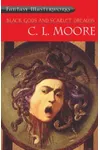
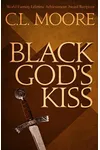
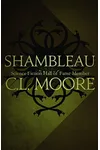
For fantasy lovers, start with the Jirel of Joiry story "Black God's Kiss" (1934). For science fiction and cosmic horror fans, begin with the Northwest Smith debut "Shambleau" (1933).
1. Jirel of Joiry Reading Order
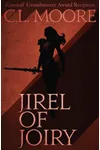
Jirel is a fierce medieval commander who defends her castle of Joiry against human invaders and otherworldly terrors. Moore's fantasy is surreal, emotional, and dark. There are six stories in total. Reading them in order of publication is highly recommended:
- "Black God's Kiss" (1934) – Jirel descends into a hellish underground world to find a weapon against an invading conqueror.
- "Black God's Shadow" (1934) – A direct sequel exploring the spiritual and emotional aftermath of the first story.
- "Jirel Meets Magic" (1935) – Jirel is transported to a bizarre wizard's realm inside a window.
- "The Dark Land" (1936) – Jirel is pulled into a nightmarish, twilight world by a strange dark god.
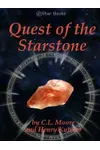
- "Quest of the Starstone" (1937) – A crossover story co-authored with Henry Kuttner, featuring both Jirel and the space outlaw Northwest Smith.
- "Hellsgarde" (1939) – Jirel travels to a haunted castle to retrieve a mysterious treasure.
2. Northwest Smith Reading Order
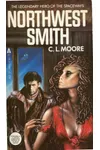
Northwest Smith is a cynical, red-space-suited smuggler and outlaw traveling a dangerous, ancient Solar System filled with Lovecraftian horrors. These stories are best read in their original publication order to appreciate the expanding solar mythos:
- "Shambleau" (1933) – Smith rescues a mysterious woman on Mars, only to discover her terrifying, alien nature.
- "Black Thirst" (1934) – Smith encounters a sinister beauty within the forbidden Venusian fortress of the Alkar.
- "Scarlet Dream" (1934) – A bizarre patterned shawl transports Smith to a deadly, surreal dreamscape.
- "Dust of the Gods" (1934) – Smith and his Venusian partner, Yarol, search for the physical remains of a dead Martian god.
- "Julhi" (1935) – Smith is trapped in a ruins-strewn Venusian dimension ruled by a cruel sorceress.
- "The Cold Grey God" (1935) – A mysterious woman recruits Smith to recover a relic in a frozen Martian city.
- "Yvala" (1936) – Smith searches for shape-shifting sirens on a wild, wooded moon of Jupiter.
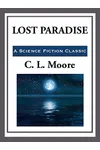
- "Lost Paradise" (2011 / written in the 1930s) – Smith experiences the tragic history of ancient Earth's moon.
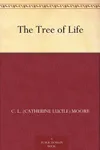
- "The Tree of Life" (1936) – Smith is drawn into a parasitic tree-like intelligence in the Martian ruins.
- "Quest of the Starstone" (1937) – The dimensional crossover co-authored with Henry Kuttner that unites Smith and Jirel.
- "Werewoman" (1938) – A dreamlike story where a wounded Smith encounters a werewolf-like cult in a mysterious forest.
- "Song in a Minor Key" (1940) – A brief, introspective vignette exploring Smith's tragic past and motivations.
3. The Baldy Books (Mutant)
Co-authored with her husband, Henry Kuttner, under their famous joint pseudonym Lewis Padgett, this series follows the "Baldies"—telepathic mutants who struggle to coexist with baseline humans after a devastating nuclear war. The five novelettes were later compiled as a single fix-up novel titled Mutant (1953):
- "The Piper's Son" (1945)
- "Three Blind Mice" (1945)
- "The Lion and the Unicorn" (1945)
- "Beggars in Velvet" (1945)
- "Humpty Dumpty" (1953)
4. Standalone Novels and Major Collections
While Moore wrote primarily in short form, her solo and collaborative longer works are key pieces of Golden Age speculative fiction:
- Earth's Last Citadel (1943) – A sci-fi collaboration with Henry Kuttner involving time travel to a dying Earth.
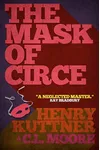
- The Mask of Circe (1948) – A mythological fantasy co-authored with Kuttner, reimagining the myth of Jason and the Argonauts.
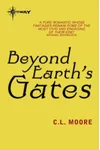
- Beyond Earth's Gates (1949) – A collaborative adventure set in a parallel world accessed through New York.
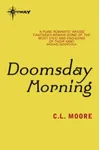
- Doomsday Morning (1957) – Moore's sole solo novel, a gritty dystopian thriller focused on rebellion, propaganda, and theater.
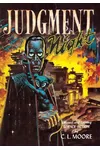
- Judgment Night (1952) – A highly regarded solo collection featuring the title novella about a dying galactic empire and "No Woman Born," a pioneering story about a cyborg dancer.
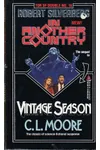
- Vintage Season (1946) – Published under the pseudonym Lawrence O'Donnell, this co-authored novella about time-traveling tourists is considered one of the absolute masterpieces of science fiction.
What to Know Before You Start
Much of Moore's best work was written in close collaboration with Henry Kuttner. After their marriage in 1940, the two wrote so seamlessly that it is often difficult to separate their individual voices, though Moore's writing is typically identified by its poetic prose, sensory descriptions, and deep focus on character psychology. Their collaborations under names like Lewis Padgett and Lawrence O'Donnell are essential reading for any C.L. Moore enthusiast.