
How to Read Claire M. Andrews's Books
Claire M. Andrews has written two distinct series: the action-packed mythological fantasy trilogy, Daughter of Sparta, and a historical mystery duology featuring the iconic Irene Adler. Because both series tell self-contained story arcs, readers can choose where to start based on their interest in either ancient Greek warfare or Victorian-era detective work.
1. Daughter of Sparta Trilogy
This young adult series reimagines the classic myth of Daphne and Apollo, transforming Daphne from a fleeing nymph into a fierce Spartan warrior tasked with recovering stolen artifacts for Olympus. The trilogy should be read in chronological order (which is also the order of publication):
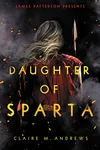
- Daughter of Sparta (2021)
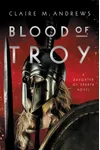
- Blood of Troy (2022)
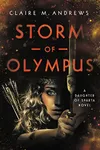
- Storm of Olympus (2023)
Where to Start: You must start with Daughter of Sparta. The sequels build directly upon the plot, character developments, and high stakes established in the first book, tracing Daphne's growth from a Spartan recruit to a key player in the legendary Trojan War and the final battle on Mount Olympus.
2. Irene Adler Duology
For readers who prefer gaslamp mysteries, historical intrigue, and Sherlockian lore, Andrews presents a duology centered around Irene Adler. Disguised as a young man to study at Oxford, Irene teams up with classmate Sherlock Holmes to solve brutal murder cases. These books should be read in order:
- A Beautiful and Terrible Murder (2025)
- A Lovely and Deadly Dance (2026)
Where to Start: Start with A Beautiful and Terrible Murder to establish how Irene adopts her secret identity at Oxford and first crosses paths with Sherlock Holmes. The sequel, A Lovely and Deadly Dance, moves the action to London and deals directly with the fallout of the first book's events.
What to Know Before You Start
Andrews's writing is highly influenced by her academic background in history and anthropology. While her stories are filled with magical creatures and fictional twists, she embeds rich, accurate period details of ancient Greek weaponry, geography, and Victorian societal constraints. Both series feature strong, proactive heroines who challenge the traditional narratives of their respective settings.