
The Recommended Reading Path
Because Clifford Stoll has written a focused set of three non-fiction books, navigating his bibliography is straightforward. However, the order in which you read them matters if you want to understand the evolution of his thoughts on technology. We strongly recommend reading his books in their absolute publication order.
By starting with his narrative memoir and then moving into his essays, you get to experience his journey from an enthusiastic systems manager caught in a high-tech dragnet to an influential contrarian warning us about the internet's social side effects.
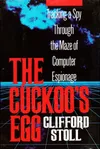
- The Cuckoo's Egg (1989) — Start here. This is a fast-paced, real-life thriller about tracking a hacker across the early internet. It establishes Stoll's technical credentials and his signature quirky, conversational writing style.
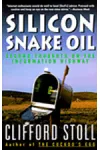
- Silicon Snake Oil (1995) — Read this second. Having seen the potential of global networks firsthand, Stoll steps back to ask whether a fully digitized society is actually a healthy one.
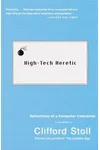
- High-Tech Heretic (1999) — Conclude with this book, which narrows his technological skepticism down to specific institutions, arguing passionately against replacing teachers and physical textbooks with computers in classrooms.
Publication Order of Clifford Stoll's Books
For quick reference, here is the complete list of Clifford Stoll's books in order of their original release:
- The Cuckoo's Egg: Tracking a Spy Through the Maze of Computer Espionage (1989)
- Silicon Snake Oil: Second Thoughts on the Information Highway (1995)
- High-Tech Heretic: Reflections of a Computer Contrarian (1999)
Detailed Book Guide and Context
The Cuckoo's Egg (1989)
This is Stoll's masterpiece and a landmark in cybersecurity literature. The story begins at the Lawrence Berkeley National Laboratory in 1986, where Stoll was tasked with resolving a minor 75-cent accounting discrepancy in the computer system's billing records. Instead of ignoring the tiny error, Stoll investigated and discovered an unauthorized user on the network. Using teleprinters, log files, and homemade honeypots, Stoll tracked the hacker over several months, eventually identifying a German espionage ring that was stealing military secrets and selling them to the Soviet Union's KGB. It is a brilliant detective story that reads like a spy novel, yet it pioneered the basic concepts of digital forensics and network security.
Silicon Snake Oil (1995)
Six years after capturing the public's imagination with internet espionage, Stoll returned with a deeply skeptical look at the digital revolution. Published as the web was entering the mainstream, Stoll questioned the grandiose promises of the "Information Highway." He argued that online interactions could never replace the physical world, citing activities like cooking, hiking, and physical library research as inherently human experiences that computers could only dilute. While some of his specific predictions (such as the failure of e-commerce) did not age well, his underlying warnings about screen time, digital isolation, and the loss of physical communities feel incredibly modern and prescient today.
High-Tech Heretic (1999)
In his third book, Stoll doubled down on his contrarian view, focusing heavily on education and the growing push to integrate computers into schools. He argued that technology in the classroom was an expensive distraction, detracting from critical thinking, physical experimentation, and face-to-face mentorship. The book is written as a series of short, passionate, and sometimes humorous essays that challenge the unquestioned adoption of gadgets at the expense of fundamental human education.
What to Know Before You Start
Before diving into Clifford Stoll's bibliography, keep these reader tips in mind:
- Technical Accessibility: Don't be intimidated by the computer science terminology in The Cuckoo's Egg. Stoll writes with the voice of an everyday astronomer explaining complex ideas to a lay audience. It requires no formal background in programming or cybersecurity to fully enjoy.
- A Time Capsule of the Early Internet: Reading these books offers a fascinating historical perspective. The networks Stoll describes in the late 1980s and early 1990s (like ARPANET and early dial-up services) are the ancestors of our modern internet, making his stories both a history lesson and an educational foundation.
- Quirky Personal Touches: Stoll is known for his eccentricities. In The Cuckoo's Egg, he famously interrupts the high-stakes hacker chase to share his personal recipe for chocolate chip cookies, reflecting the warm, human tone that defines all of his writing.
- Topological Tidbits: Beyond his writing, Stoll is a popular figure in math circles, frequently appearing on the YouTube channel Numberphile to discuss slide rules and geometry. He also runs a famous business selling hand-blown glass Klein bottles — three-dimensional mathematical shapes with only one side — which he ships from the crawlspace under his home.