













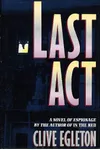
Where to Start Reading Clive Egleton
Clive Egleton was one of Britain’s most prolific espionage writers, drawing directly from his 30-year military and counter-intelligence career. Unlike the glamorous, gadget-heavy adventures of James Bond, Egleton’s novels focus on cold tradecraft, political maneuvering, bureaucratic struggles, and complex moral compromise. For readers new to his work, there are three distinct starting pathways:
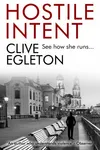
- The Realistic Post-Cold War Route: Start with Hostile Intent (1993), the first book in his 12-novel Peter Ashton series. This is Egleton's most famous and extensive series, tracing the evolution of British intelligence after the collapse of the Soviet Union.
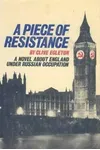
- The Dystopian/Alternate History Route: Start with A Piece of Resistance (1970). This was Egleton’s debut novel and begins a trilogy set in a grim, Soviet-occupied Great Britain.
- The Peak Cold War Route: Start with Winter Touch (1981), the entry point for the Charles Winter duology, which places the chief of the British Secret Intelligence Service right in the middle of historic Cold War crises like the Suez Canal and Cuban Missile events.
The Peter Ashton Series (Publication Order)
Following SIS operative Peter Ashton, this 12-book series must be read in publication order. The books track ongoing geopolitical shifts throughout the 1990s and early 2000s, alongside Ashton's career progression and shifting loyalties within the agency. Below is the correct chronological reading order:
- Hostile Intent (1993) – Ashton investigates the defection of a high-ranking Russian intelligence officer.
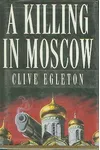
- A Killing in Moscow (1994) – A mission to verify an asset in Moscow turns deadly.
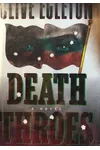
- Death Throes (1995) – Ashton deals with the fallout of the disintegrating Soviet empire in Eastern Europe.
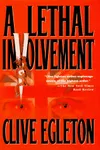
- A Lethal Involvement (1996) – Ashton is caught in a web of arms dealing and domestic political betrayal.
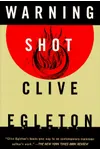
- Warning Shot (1997) – A suspicious death leads Ashton into a conspiracy reaching high-level ministries.
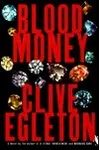
- Blood Money (1997) – Ashton uncovers financial corruption and rogue operations.
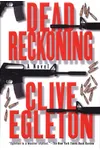
- Dead Reckoning (1999) – Published in some markets as The Warmongers.
- The Honey Trap (2001) – Ashton must clear his name and expose a double agent after a compromised mission.
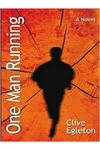
- One Man Running (2001) – Tense chase across borders to secure a high-value defector.
- Cry Havoc (2003) – Ashton uncovers a plot targeting European security.
- Assassination Day (2004) – A race against time to stop a politically motivated hit.
- The Renegades (2005) – The final entry, where Ashton faces rogue elements from within the intelligence community.
The David Garnett Trilogy
Set in an alternate-history timeline where the Soviet Union successfully occupies Great Britain, this trilogy follows David Garnett, a leader in the underground British resistance. These books are highly sought after by collectors, but buyers should note that the series suffers from significant transatlantic title confusion. The recommended reading order is:
- A Piece of Resistance (1970) – Also published in the US as Never Surrender.
- The Sleeper (1971) – Also published in the UK as Last Post for a Partisan.
- The Judas Mandate (1972) – Also published in the US as The Last Refuge.
The Charles Winter Duology
This series centers around Charles Winter, a high-ranking section chief inside the British Secret Service. The stories are meticulously researched and map fictional plots directly onto historical events of the mid-20th century. Collectors should be aware that both novels have been reprinted under completely different names:
- Winter Touch (1981) – Set during the Suez Crisis. This book was also published under the titles The Eisenhower Deception and posthumously in 2006 as The Presidential Affair.
- The Russian Enigma (1982) – Set during the Cuban Missile Crisis. This book was republished in 2008 under the title Pandora's Box.
The Major John Tarrant "Duology" and Standalones
While Clive Egleton wrote dozens of standalone thrillers, two of them share a common protagonist, Major John Tarrant of British Military Intelligence. Though written three decades apart, they form a thematic duology:
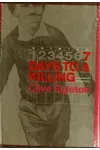
- Seven Days to a Killing (1973) – Tarrant must rescue his kidnapped son. This novel was adapted into the 1974 film The Black Windmill starring Michael Caine, and the book was subsequently republished under that movie title.
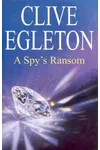
- A Spy's Ransom (2003) – A modern thriller featuring Major John Tarrant facing a high-stakes kidnapping case involving a demand for raw diamonds.
Interestingly, Egleton also used John Tarrant as a pen name to publish several historical and military thrillers. Readers should distinguish the fictional character John Tarrant from the novels written under the John Tarrant pseudonym.
Guide to Standalones and Pen Names
For readers looking to explore Egleton’s standalone work, he wrote under both his own name and two main pseudonyms. Here is how they break down:
Novels Written Under Pseudonyms
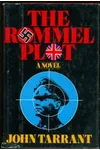
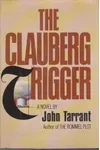
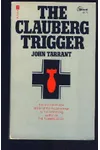
- As John Tarrant: The Rommel Plot (1977), The Clauberg Trigger (1979), and China Gold (1991).
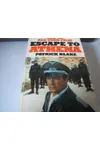
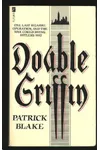
- As Patrick Blake: Escape to Athena (1979) (a novelization of the action film) and Double Griffin (1981).
Essential Standalone Thrillers
- The October Plot (1974) – A tense Cold War thriller dealing with a planned Soviet assassination plot.
- A Falcon for the Hawks (1984) – A historical adventure set during the First World War focusing on early aerial combat and Zeppelin raids.
- Troika (1984) – A fast-paced thriller set in the divided city of Berlin.
- Last ACT (1991) – A theatrical and political mystery set in the shadow of the changing European landscape.