

How to Start Reading Clyde Edgerton: The Recommended Path
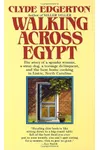
For readers new to Clyde Edgerton’s trademark brand of Southern humor, small-town charm, and gentle satire, the best starting point is his second novel, Walking Across Egypt (1987). It introduces Mattie Rigsbee, one of the most delightful and enduring protagonists in Southern literature, and establishes the warm, character-driven style that Edgerton is famous for. Additionally, starting here allows you to jump directly into its sequel, Killer Diller (1991), which follows the same character arc.
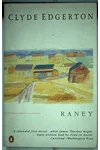
Alternatively, if you prefer to see an author's style evolve from the very beginning, start with his debut novel, Raney (1985). This hilarious, dialogue-dense exploration of a Free Will Baptist marrying a liberal Episcopalian remains a Southern classic and offers a perfect introduction to Edgerton's ear for local dialect and cultural clashes.
The Wesley Benfield Duology
While almost all of Clyde Edgerton's novels function perfectly as standalones, he did write one direct narrative duology. These two books are connected by the coming-of-age journey of Wesley Benfield:
- Walking Across Egypt (1987): The story begins when Mattie Rigsbee, an independent 78-year-old woman, decides to help Wesley Benfield, a troubled, car-stealing teenager from a nearby reform school. Their unlikely bond forms the emotional core of the novel.
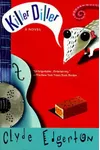
- Killer Diller (1991): Set a few years later, the story catches up with Wesley, who is now living in a halfway house called the Bales Science Center, run by a conservative Christian college. Wesley has become a guitar-playing musician, navigating romance, religion, and the comedic hypocrisies of the institution's leadership.
Clyde Edgerton’s Standalone Novels in Publication Order
If you wish to read Clyde Edgerton's fiction in the order it was written, follow the publication sequence. This pathway allows you to experience his thematic transitions, from early church-centered satires to historical landscapes and musical coming-of-age stories:
- Raney (1985): A sharp, comedic, yet affectionate look at the marriage of Raney Bell and Charles Shepherd, highlighting the friction between small-town Southern traditions and progressive urban values.
- Walking Across Egypt (1987): A heartwarming tale of aging, community, and redemption in the fictional Piedmont town of Listre.
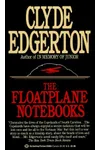
- The Floatplane Notebooks (1988): A multigenerational family saga centering on the Copeland clan. Shifting between comedy and tragedy, it features the family's annual graveyard cleanings and incorporates Edgerton's own experiences as a pilot during the Vietnam War.
- Killer Diller (1991): The hilarious, satirical sequel to Walking Across Egypt.
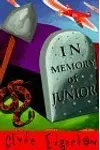
- In Memory of Junior (1992): A family drama told from multiple perspectives, focusing on legacy, cemetery plots, and the inheritance disputes surrounding an aging couple.
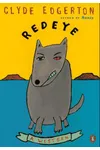
- Redeye (1995): A satirical Western set in 1892 Colorado, featuring a cast of eccentric characters, a red-eyed dog, and a critique of historical expansionism.
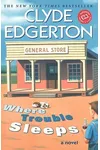
- Where Trouble Sleeps (1997): Set in a small North Carolina town during the summer of 1950, this novel examines the local reaction to a mysterious stranger and themes of childhood innocence, faith, and doubt.
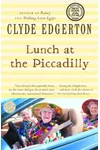
- Lunch at the Piccadilly (2003): An upbeat, humorous look at life inside a nursing home, where a group of spirited seniors reclaim their independence and agency.
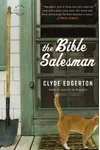
- The Bible Salesman (2008): A post-World War II picaresque tale following Henry Dampier, a naive young Bible salesman, who gets unwittingly caught up in a car-theft ring led by the charismatic criminal Preston Clearwater.
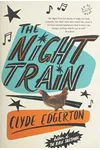
- The Night Train (2011): Set in the 1960s South, this novel explores the racial divide, coming-of-age, and the unifying power of soul and blue-eyed soul music.
Clearing Up the 'Shannon Ravenel Books' Imprint Discrepancy
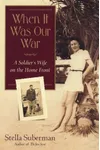
Readers browsing online database catalogs for Clyde Edgerton might encounter a collection called the "Publication Order of Shannon Ravenel Books," which lists titles like Winter Run (2002) and When It Was Our War (2003) alongside Edgerton's memoirs. It is highly important to note that this is a publishing imprint line, not a series written by Clyde Edgerton.
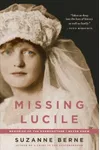
Shannon Ravenel was a legendary editor and co-founder of Algonquin Books of Chapel Hill who edited many of Edgerton's novels. Under her dedicated imprint line, she published works from various Southern writers. While Clyde Edgerton's memoirs Solo and Missing Lucile were released under this imprint, the other titles belong to different authors. For example, Winter Run is a novel by Robert Ashcom, and When It Was Our War is a home-front memoir written by Stella Suberman. Readers should not buy these expecting them to be Edgerton's work, though they share the same publisher and editorial curation.
Clyde Edgerton’s Non-Fiction and Memoirs
Beyond his celebrated fiction, Edgerton has written several personal, non-fiction volumes that offer deep insights into his own life, upbringing, and passions:
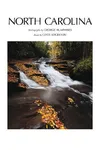
- North Carolina (2003): A collaborative, non-fiction portrait of his home state, co-authored with George Humphries.
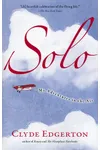
- Solo: My Adventures in the Air (2005): A humorous and reflective memoir detailing Edgerton's late-in-life journey to earn his private pilot's license.
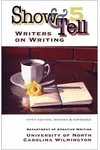
- Show & Tell: Writers on Writing (2006): An anthology compiled by the UNCW Creative Writing department, featuring a key essay by Edgerton on narrative voice and plot mechanics.
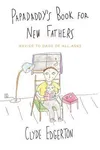
- Papadaddy's Book for New Fathers (2013): A collection of funny, practical, and heartwarming advice reflecting Edgerton's experiences of becoming a father again later in life.
On-Screen and On-Stage Adaptations
The highly visual dialogue and musical elements of Edgerton's books have made them popular candidates for adaptations:
- Movies: Walking Across Egypt was adapted into a 1999 feature film starring Ellen Burstyn, Jonathan Taylor Thomas, and Mark Hamill. Killer Diller was adapted into a movie in 2004, and his debut Raney has also been adapted for the screen.
- Musicals and Stage Plays: Lunch at the Piccadilly was adapted into a successful stage musical with music by Mike Craver and a script co-written by Edgerton. The Floatplane Notebooks and Raney have both enjoyed popular theatrical runs across regional theaters in the South.