
Where to Start Reading Conor Brady
If you want to experience the gritty realism of Victorian Dublin, the best place to start is at the beginning of the Joe Swallow series with A June of Ordinary Murders. Because the books follow a linear chronological path in Swallow's personal life and career, reading them in order allows you to fully appreciate his promotion from Detective Sergeant to Inspector, his evolving relationships, and the shifting political landscape of late 19th-century Ireland.
While each novel features a self-contained murder mystery that is resolved by the final page, the backdrop of Irish nationalism, the struggles of the Dublin Metropolitan Police (DMP), and Swallow's internal conflicts build upon one another. Starting with the first book ensures you get the full weight of these historical and personal developments.
Joe Swallow Series in Order
Conor Brady's signature fiction series currently consists of four novels. Fortunately for readers, the chronological order matches the publication order exactly. Here is how to read them:
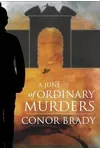
- A June of Ordinary Murders (2012)
Set during a sweltering heatwave in June 1887, this debut novel introduces us to Detective Sergeant Joe Swallow of the Dublin Metropolitan Police's elite G Division. Dublin is preparing for Queen Victoria's Golden Jubilee, and the police are on high alert for nationalist conspiracies. Swallow is pulled away from political duties to investigate a brutal double murder in Phoenix Park. The title refers to the historical distinction made by the authorities: political crimes were "special," whereas murder and theft were merely "ordinary" crimes. Swallow must navigate police corruption, political pressure, and a city on the brink of unrest.
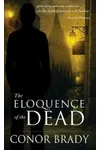
- The Eloquence of the Dead (2013)
It is now late 1887. Swallow is tasked with solving the murder of a prominent Dublin pawnbroker who was beaten to death in his own shop. The investigation quickly escalates as Swallow discovers a connection to missing family heirlooms, local political corruption, and Fenian activists operating in the shadows. As he digs deeper, Swallow finds himself caught between his duty to the Crown and his personal sympathy for the Irish populace, all while trying to protect those closest to him from a web of powerful conspiracies.
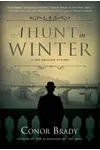
- A Hunt in Winter (2016)
Set in the winter of 1889, the third installment sees Swallow promoted to Inspector. The stakes are raised when a series of brutal killings targeting women shocks Dublin, carrying the terrifying hallmarks of Jack the Ripper's London murders. The investigation grows increasingly complex, eventually forcing Swallow to leave the familiar streets of Dublin and travel across Europe to track down a elusive and calculating killer. This book delves deeply into the early days of forensic science and the challenge of coordinating international police investigations.
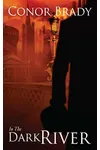
- In the Dark River (2018)
The fourth novel unfolds against the backdrop of the high-stakes political downfall of Charles Stewart Parnell. The story begins with a series of jewel thefts, but soon expands into a web of international espionage, stolen diamonds, and cold-blooded murder. Swallow must walk a thin line as Irish political alliances fracture and the British intelligence services attempt to manipulate the local police. It is a atmospheric conclusion to the series that highlights the deep instability of the era.
What to Know Before You Start: The Historical Context
Conor Brady does not write light, cozy mysteries. His work is deeply grounded in the historical reality of 1880s Ireland. To get the most out of the Joe Swallow books, it helps to understand a few key elements of the setting:
- The G Division: Joe Swallow is a detective in the G Division of the Dublin Metropolitan Police. This was the investigative and intelligence-gathering wing of the police force, meaning Swallow is constantly exposed to both criminal investigations and political espionage.
- The Political Tension: The 1880s was a decade of intense political upheaval in Ireland, marked by the Land War, the rise of the Home Rule movement under Charles Stewart Parnell, and Fenian dynamite campaigns. Swallow, as a Catholic Irishman working for a police force controlled by the British administration, represents the conflicted identity shared by many Irishmen of the time.
- Gritty Realism: Brady depicts Dublin with all its Victorian contradictions—the grand architecture of the Ascendancy contrasted against the grinding poverty of the slums, the sulfur-choked air, and the gas-lit alleys. His focus on emerging forensic methods, such as facial reconstruction and early ballistics, adds a layer of police-procedural authenticity.
Conor Brady's Non-Fiction and Memoirs
Before turning his hand to fiction, Conor Brady had a distinguished career in journalism and public service, including serving as the editor of The Irish Times and working as a Garda Ombudsman Commissioner. His non-fiction works are highly regarded and provide valuable context for the historical research that informs his novels:
- Guardians of the Peace: The Early Years of the Irish Police Force (2000 / Centenary Edition 2022)
An authoritative account of the founding of An Garda Síochána (the Irish police force) in 1922. The book details the challenges of establishing a new, unarmed police force during the Irish Civil War and its subsequent development through the mid-20th century.
- Up with the Times (2005)
A personal memoir detailing Brady's sixteen-year tenure as the editor of The Irish Times from 1986 to 2002. It offers a fascinating behind-the-scenes look at major events in modern Irish history, including the Northern Ireland peace process and various political scandals.
- The Guarding of Ireland: The Garda Síochána and the Irish State 1960–2014 (2014)
A continuation of his policing history, this volume covers the modern era. Brady examines how the force adapted to the challenges of the Troubles, the rise of organized crime, and the internal reforms and public controversies that shaped the modern Garda.