



























How to Read Cordwainer Smith
Cordwainer Smith was the science fiction pen name of Dr. Paul Myron Anthony Linebarger, an East Asian scholar and psychological warfare expert. He wrote within a single, highly detailed fictional universe called the Instrumentality of Mankind. Because almost all of his science fiction output consists of short stories and novellas published across several decades, finding the best reading order can be challenging. Fortunately, there is a clear consensus on the best ways to approach his unique body of work.
Option 1: Universe Chronological Order (Highly Recommended)
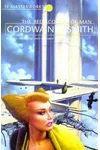
Unlike most sci-fi series where chronological orders can feel disjointed, reading Cordwainer Smith in chronological order of his universe's future history is widely considered the best approach. His stories build a mythic, historical tapestry of a human civilization that evolves over 15,000 years, beginning with early space exploration and ending with the Rediscovery of Man. The definitive collection The Rediscovery of Man: The Complete Short Science Fiction of Cordwainer Smith (published by NESFA Press) is intentionally arranged in this chronological order. Following this timeline allows you to experience the rise, stagnation, and rebirth of the Instrumentality in a coherent narrative flow.
Option 2: Publication Order
If you prefer to see how Cordwainer Smith's writing style and ideas developed over his career, you can read his stories in publication order. This path begins with his seminal debut, Scanners Live in Vain (1950), which introduced the harsh realities of early space travel, and moves through key stories like The Game of Rat and Dragon (1955) and The Ballad of Lost C'Mell (1962). While this showcases his evolution as an author, it does jump around the future timeline, which can make the complex historical setting harder to grasp for newcomers.
The Core Reading Order (Chronological Timeline)
If you are using the NESFA Press edition of The Rediscovery of Man, or hunting down the stories individually, this is the chronological timeline of the Instrumentality of Mankind:
- No, No, Not Rogov! (Takes place in the late Cold War era, serving as a prelude)
- War No. 81-Q (An early war story setting the stage for future conflict)
- Mark Elf (Follows a survivor from the early era waking up in a strange future)
- The Queen of the Afternoon (Explores the establishment of the Instrumentality)
- Scanners Live in Vain (The classic story of cyborg space travelers sacrificing their senses)
- The Lady Who Sailed The Soul (An early interstellar voyage using light-sails)
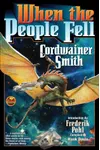
- When the People Fell (The colonization of Venus under extreme conditions)
- Think Blue, Count Two (A generation ship story involving psychological defenses)
- The Colonel Came Back from the Nothing-at-All (Early exploration of the deep space void)
- The Game of Rat and Dragon (Human telepaths and psychic cats teaming up to fight hyperspace entities)
- The Burning of the Brain (A space navigation tragedy involving early jump travel)
- From Gustible's Planet (First contact with an alien species and the tragic food chain conflict)
- Himself in Anachron (A time-travel story finalized after Smith's death)
- The Crime and the Glory of Commander Suzdal (A desperate commander makes a controversial choice to save his crew)
- Golden the Ship Was—Oh! Oh! Oh! (A massive psychological warfare trick played on a cosmic scale)
- The Dead Lady of Clown Town (The origin of the Underpeople's rebellion, featuring a dog-derived girl named D'joan)
- Under Old Earth (Deep underground exploration and the discovery of the Lords of the Instrumentality's secrets)
- Drunkboat (A man travels through hyperspace raw, returning with godlike madness)
- Mother Hitton's Littul Kittons (The defense of the planet Norstrilia using a biological weapon made of psychically amplified cats)
- Alpha Ralpha Boulevard (Set during the early stages of the Rediscovery of Man, where humans re-learn how to feel fear and love)
- The Ballad of Lost C'Mell (A cat-girl underperson aligns with a Lord of the Instrumentality to win rights for her people)
- A Planet Named Shayol (A prison planet story exploring extreme biological punishment and recovery)
- Quest of the Three Worlds (A fix-up novel gathering the stories On the Gem Planet, On the Storm Planet, On the Sand Planet, and Three to a Given Star following the adventurer Casher O'Neill)
- Down to a Sunless Sea (A haunting late story published posthumously)
Norstrilia: Cordwainer Smith's Only Sci-Fi Novel
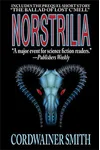
Smith's only full-length science fiction novel is Norstrilia (1975). It tells the story of Rod McBan, a young man from the planet Old North Australia (Norstrilia), the wealthiest world in the galaxy because it produces the immortality drug stroon. After surviving a brutal trial, Rod uses a supercomputer to manipulate financial markets and purchase the Earth. Because of its length and complexity, publishers originally split the manuscript into two shorter novels:
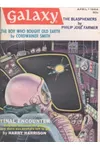
- The Planet Buyer (1964) (also published as The Boy Who Bought Old Earth)
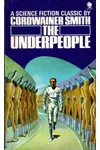
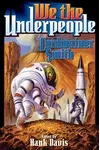
- The Underpeople (1968)
These two books represent a split version of the same story. Readers are strongly advised to skip these individual volumes and read the single, restored novel Norstrilia instead, which contains the complete narrative with bridging material intact.
What to Know Before You Start
Cordwainer Smith’s work is deeply poetic, written with a style heavily influenced by Chinese traditional storytelling and psychological principles. Before diving in, keep these aspects in mind:
The Underpeople and the Instrumentality
The Instrumentality of Mankind is an authoritarian, benevolent dictatorship that has ruled humanity for thousands of years, seeking to protect them from pain, war, and struggle. To serve humanity, they engineered the Underpeople: animals modified into human form (like C'mell the cat-girl) who are treated as slaves. A central theme of the later stories is the fight for Underpeople rights and the Instrumentality's decision to initiate the "Rediscovery of Man," deliberately introducing danger, disease, and languages back to Earth to prevent human cultural death.
Non-Sci-Fi Works and Pseudonyms
Dr. Linebarger also wrote mainstream fiction and political works under other names. When checking his bibliography, note that:
- Felix C. Forrest was the name he used for his mainstream psychological novels Ria (1947) and Carola (1948).
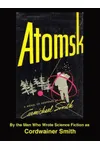
- Carmichael Smith was the name used for his espionage thriller Atomsk (1949).
- Paul M. A. Linebarger was used for his authoritative non-fiction works on politics and warfare, including Psychological Warfare (1948).
Anthologies and Spurious Listings
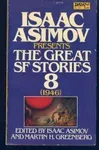
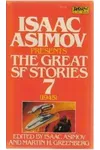
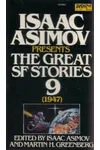
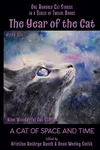
In various database lists, you may find anthologies like Isaac Asimov's Great SF Stories series or Kristine Kathryn Rusch's The Year of the Cat series associated with Cordwainer Smith. These are multi-author anthologies that simply reprint classic Smith stories (such as The Game of Rat and Dragon appearing in cat-themed anthologies). They do not represent new or co-authored works by Smith himself.