
How to Read Corinna Luyken's Books
Corinna Luyken's bibliography consists of standalone picture books rather than serialized novels. Because there is no overarching plot continuity or chronological timeline connecting her works, readers can dive in anywhere. However, the best way to navigate her library is by separating her solo projects (which she both wrote and illustrated) from her collaborations (where she served as the illustrator for other authors). Below, we outline the best starting paths and the complete publication order of her works.
Recommended Starting Points
If you are new to Corinna Luyken's work, we recommend beginning with one of these three entries, depending on what theme you want to explore:
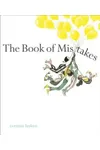
- For Creativity and Resilience: Start with The Book of Mistakes (2017). This was Luyken's debut as an author-illustrator and remains her most famous work, showing how errors and smudges can be transformed into beautiful art.
- For Emotional Literacy: Start with My Heart (2019). A New York Times bestseller, this book uses simple, lyrical text to help young readers understand that feelings change and that they have agency over their own hearts.
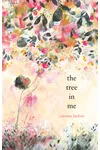
- For Nature Connection: Start with The Tree in Me (2021). This is a gorgeous, poetic examination of the strength, creativity, and deep connection that humans share with the natural world.
Books Written and Illustrated by Corinna Luyken
These are the books where Luyken crafted both the lyrical text and the whimsical, fluid artwork. Reading them in publication order shows her growth as a storyteller:
- The Book of Mistakes (2017) – A playful, meta-fictional look at the creative process, showing children how accidental ink spots and proportion mishaps can spark new ideas.
- My Heart (2019) – A gentle exploration of emotions, illustrating how a heart can feel open, heavy, small, or light, using a beautiful palette of yellow, grey, and black.
- The Tree in Me (2021) – A rich, visual poem that compares a child's inner strength, energy, and growth to a tree.
- ABC and You and Me (2023) – A physically interactive alphabet book that encourages children to use their bodies to mimic the shapes of letters, blending literacy with movement.
- The Arguers (2025) – A whimsical fairy-tale style picture book about a community that gets so caught up in bickering over trivial things that they almost miss what truly matters.
- Hello, Ocean! (2026) – A seashore-themed story celebrating environmental stewardship and family collaboration during a beach cleanup.
Books Illustrated by Corinna Luyken (Written by Others)
Luyken's expressive brushstrokes, ink washes, and textured illustrations have also brought other authors' stories to life. These collaborations are excellent additions to her reading list:
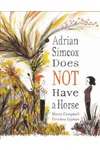
- Adrian Simcox Does NOT Have a Horse by Marcy Campbell (2018) – A story about empathy and imagination, where a girl learns to look past her classmate's tall tales.
- Weird Little Robots by Carolyn Crimi (2019) – A middle-grade chapter book featuring Luyken's black-and-white illustrations, focusing on two science-loving misfit friends who build a secret robot town.
- Nothing in Common by Kate Hoefler (2020) – A quiet, poetic book about two neighbors who seemingly have nothing in common until a shared observation brings them together.
- Something Good by Marcy Campbell (2021) – A story set in a school environment addressing how a community heals after something bad is written on a bathroom wall.
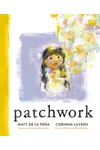
- Patchwork by Matt de la Peña (2022) – A beautiful, non-traditional look at identity, reminding children that they are not just one thing, but a beautiful, ever-evolving patchwork of experiences.
- In the Dark by Kate Hoefler (2023) – A thoughtful story about rumors, perspective, and understanding what is unfamiliar.
Anthologies and Shared Contributions
- Share Your Rainbow: 18 Artists Draw Their Hope for the Future (2020) – A collaborative charity anthology released during the pandemic, featuring artwork from Luyken alongside other prominent illustrators.
Reader Guidance & Standalone Nature
Do you need to read these books in a specific order? No. Every picture book listed here is a complete, self-contained story. You can select books based entirely on age relevance or thematic interest. For instance, while most of her picture books are perfect for ages 3 to 8, the chapter book Weird Little Robots is geared toward slightly older readers (ages 8 to 12) who are transitioning into longer stories. When reading her works, pay close attention to the visual details; Luyken often weaves subtle background stories and recurring visual motifs through her use of negative space, color shifts, and ink splatters that reward repeat reads.