


Where to Start Your Cormac McCarthy Journey
Cormac McCarthy is widely considered one of the most powerful voices in modern American literature. Known for his spare punctuation, striking prose, and dark thematic explorations of morality and violence, his catalog can be intimidating. If you are diving in for the first time, starting with his most challenging works can lead to frustration. Here are the three best entry points recommended for new readers:
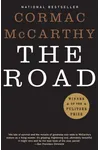
- The Road (2006): This post-apocalyptic tale of a father and son walking through a dead landscape is McCarthy's most emotionally accessible work. While bleak, it features a clear narrative drive and a tender core that makes it a perfect introduction to his signature style.
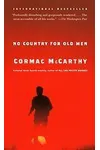
- No Country for Old Men (2005): Originally written as a screenplay, this modern Western thriller is fast-paced, highly cinematic, and structurally straightforward. If you loved the Academy Award-winning film adaptation, you will find this novel very approachable.
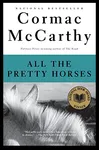
- All the Pretty Horses (1992): The first volume of the Border Trilogy, this book offers a more traditional narrative structure and lyrical beauty, following young cowboys in a changing world. It was McCarthy's commercial breakthrough and is widely praised for its balance of classic storytelling and poetic prose.
The Border Trilogy in Reading Order
The Border Trilogy is McCarthy's most famous multi-volume project. While the first two books tell independent stories with different characters, their thematic threads and characters converge in the final volume. To get the full impact of the narrative arcs, you should read them in order of publication:
- All the Pretty Horses (1992): Introduces sixteen-year-old John Grady Cole as he travels to Mexico in search of a vanishing cowboy lifestyle, only to find love and brutal reality.
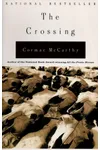
- The Crossing (1994): Set slightly earlier, this sprawling, melancholic novel follows young Billy Parham on three separate, harrowing journeys across the U.S.–Mexico border, beginning with his attempt to return a trapped pregnant wolf to her home.
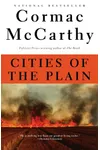
- Cities of the Plain (1998): The paths of John Grady Cole and Billy Parham cross as they work together on a New Mexico ranch in 1952. This novel acts as a tragic elegiac conclusion to both young men's journeys.
The Passenger Duology
Published shortly before McCarthy's passing in 2023, this duology marks his final contribution to literature. These two novels are deeply linked companion pieces that shift his focus toward physics, math, grief, and philosophy. The recommended order is:
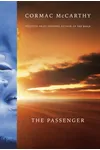
- The Passenger (2022): Focuses on Bobby Western, a salvage diver haunted by his father's legacy (helping build the atomic bomb) and the memory of his sister. It sets up the narrative universe and the central mystery of a sunken plane.
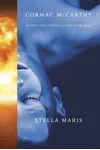
- Stella Maris (2022): A prequel and companion piece consisting entirely of a transcript of psychiatric sessions with Bobby's sister, Alicia Western, a mathematical genius. It provides essential context to the events and grief explored in the first book.
Publication Order of Standalone Novels
If you want to experience the evolution of McCarthy's writing style—moving from Southern Gothic complexity to stark Western landscapes and minimalist prose—reading his standalone novels in publication order is highly rewarding:
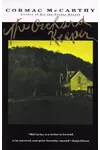
- The Orchard Keeper (1965): McCarthy's debut novel, heavily influenced by William Faulkner, set in rural Tennessee.
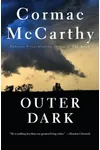
- Outer Dark (1968): A grim, allegorical Southern Gothic tale focusing on incest, abandonment, and three mysterious wanderers.
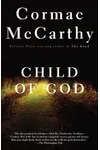
- Child of God (1973): A shocking and disturbing look at a displaced, desperate social outcast descending into madness and crime in the Appalachian hills.
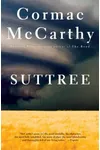
- Suttree (1979): A massive, semi-autobiographical, and surprisingly humorous novel following a man who chooses a life among the outcasts, houseboats, and eccentrics of Knoxville, Tennessee.
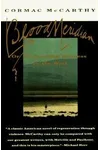
- Blood Meridian (1985): Often hailed as his masterpiece, this brutal, historically grounded anti-Western follows "the kid" as he joins the scalp-hunting Glanton gang. It is famous for the terrifying figure of Judge Holden.
- No Country for Old Men (2005): A gripping chase novel set along the Texas-Mexico border in 1980, exploring fate, violence, and aging.
- The Road (2006): A Pulitzer Prize-winning post-apocalyptic survival story.
Plays, Screenplays, and Graphic Novels
In addition to his novels, McCarthy wrote directly for the stage and screen, showcasing his mastery of dialogue. More recently, his work has also been adapted into visual mediums:
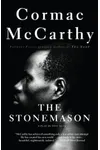
- The Stonemason (1994): A play exploring three generations of a Black family of stonemasons in Kentucky.
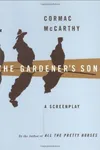
- The Gardener's Son (1996): A screenplay originally produced for television in 1977, detailing a historical murder in a South Carolina mill town.
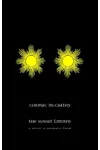
- The Sunset Limited (2006): Subtitled "A Novel in Dramatic Form," this two-character play features an intense theological and philosophical debate between a suicidal professor and a deeply religious ex-convict.
- The Counselor (2013): An original screenplay published as a book, depicting a lawyer who gets in over his head in a drug-trafficking scheme.
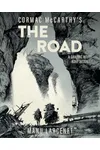
- The Road: A Graphic Novel Adaptation (2024): Formally approved by McCarthy before his passing, this visual adaptation by acclaimed French cartoonist Manu Larcenet uses stark, monochromatic art to capture the desolate mood of the original text.
What to Know Before You Start
McCarthy's style is famously minimalist. He rarely used quotation marks, semicolons, or colons, believing that the prose itself should make the speaker and flow clear. Do not let the lack of standard punctuation deter you; reading his sentences aloud or letting yourself fall into their natural rhythm will help you adapt quickly. While books like Blood Meridian contain extreme, graphic violence, they are balanced by works like Suttree and All the Pretty Horses which offer moments of humor, deep beauty, and profound philosophical inquiry.