

Where Should You Start Reading C.P. Snow?
For most readers, the primary gateway into C.P. Snow’s literary world is his massive 11-volume cycle, Strangers and Brothers. This sequence follows the life, career, and observations of Lewis Eliot as he climbs from working-class origins into the elite circles of British academia, government, and high society. Because the series was published out of chronological order over thirty years, readers generally choose one of three entry points:
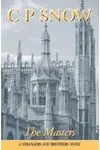
- The Famous Standalone Entry (Recommended): The Masters (1951). If you want to sample Snow's writing at its finest before committing to the whole series, start here. It focuses on a tense, claustrophobic election for the mastership of a Cambridge college. It is widely considered his masterpiece and works perfectly as a standalone novel.
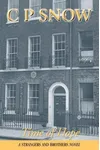
- The Chronological Entry: Time of Hope (1949). If you prefer to watch Lewis Eliot grow up and experience his life in a linear sequence, start here. It covers his childhood in Leicester and his early struggles to establish himself in the legal profession.
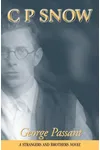
- The Publication Entry: George Passant (1940). Originally published under the title Strangers and Brothers, this is where the public first met Lewis Eliot and his mentor, George Passant. It sets the tone for the themes of ambition and moral compromise that define the series.
The Strangers and Brothers Sequence in Detail
The sequence is a landmark of mid-century British realism. Lewis Eliot acts sometimes as the central protagonist and other times as an observant narrator who details the lives, ambitions, and downfalls of the people around him. It is a world of committee meetings, quiet backroom negotiations, and intense moral debates. To help you choose your path, we have outlined both the publication and chronological reading orders below.
Strangers and Brothers: Publication Order
Reading the series in publication order allows you to experience the narrative as Snow constructed it, letting the mysteries of characters' pasts unfold naturally as they did for the original audience.
- George Passant (1940) – Introduces the idealistic lawyer George Passant and a group of young provincial hopefuls.
- The Light and the Dark (1947) – Explores the brilliant but self-destructive life of scholar Roy Calvert.
- Time of Hope (1949) – Steps back in time to reveal Lewis Eliot's own childhood and difficult early marriage.
- The Masters (1951) – A gripping look at academic politics and rivalry in a Cambridge college.
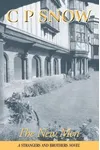
- The New Men (1954) – Focuses on the development of the atomic bomb and the ethical dilemmas of the scientists involved.
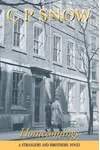
- Homecomings (1956) – Follows Lewis Eliot's personal life through the war years, dealing with tragedy and a second chance at love.
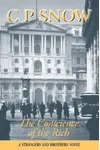
- The Conscience of the Rich (1958) – Investigates the lives of a wealthy Anglo-Jewish family and the conflicts between generation gaps and political ideologies.
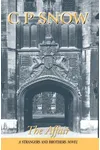
- The Affair (1960) – Re-examines the Cambridge college from The Masters during a scientific fraud investigation.
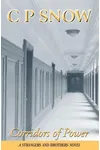
- Corridors of Power (1964) – Takes the reader deep into the halls of British government during the Cold War.
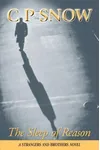
- The Sleep of Reason (1969) – A darker installment focusing on a shocking murder trial in Eliot's hometown.
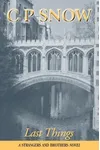
- Last Things (1970) – The final volume, wrapping up Eliot's career and reflections on his life.
Strangers and Brothers: Chronological Order
If you prefer to follow Lewis Eliot's life in a straight line from his youth to his retirement, the chronological order is the way to go. Note how the early novels shift positions compared to the publication order:
- Time of Hope (1949) – Set from 1914 to 1933.
- George Passant (1940) – Set from 1925 to 1933.
- The Conscience of the Rich (1958) – Set from 1927 to 1936.
- The Light and the Dark (1935–1943) – Set from 1935 to 1943.
- The Masters (1951) – Set in 1937.
- The New Men (1954) – Set from 1939 to 1946.
- Homecomings (1956) – Set from 1938 to 1951.
- The Affair (1960) – Set from 1953 to 1954.
- Corridors of Power (1964) – Set from 1955 to 1958.
- The Sleep of Reason (1969) – Set from 1963 to 1964.
- Last Things (1970) – Set from 1964 to 1968.
C.P. Snow’s Standalone Novels
Outside of his famous cycle, C.P. Snow wrote several standalone novels. These span various genres, from his early detective fiction to his later reflections on society and modern youth.
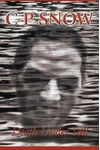
- Death Under Sail (1932) – Snow’s debut novel, a classic whodunit mystery set on a sailing holiday in Norfolk. It is a fun, traditional detective story that stands apart from the serious tone of his later works.
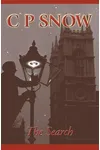
- The Search (1934) – A novel focusing on the struggles, ambitions, and ethics of a young scientist. This book served as an important thematic precursor to his later academic novels.
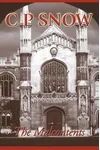
- The Malcontents (1972) – Focuses on a group of young, radical student activists planning a protest in an English cathedral city.
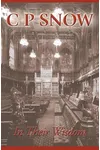
- In Their Wisdom (1974) – A late-career novel centered around a legal battle over an inheritance, illustrating the state of mid-1970s Britain.
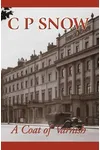
- A Coat of Varnish (1979) – Snow's final completed novel, returning to the murder mystery genre to examine social decay in a wealthy London neighborhood.
Non-Fiction and Essays
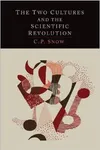
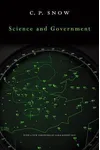
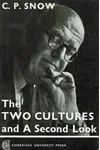
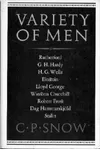
As a public intellectual, C.P. Snow was just as well known for his essays and lectures as he was for his fiction. His most influential non-fiction work is The Two Cultures and the Scientific Revolution (1959), which sparked a massive global debate about the communication gap between scientists and literary intellectuals. Readers interested in his intellectual life should also seek out Science and Government (1961) and his biographical essays in Variety of Men (1967), which profiles figures like Winston Churchill and Albert Einstein.
What to Know Before You Start
Snow's style is marked by a clear, dry, and clinical realism. Because he spent years as a Cambridge tutor and a high-ranking civil servant during WWII, his depiction of bureaucracy, scientific institutions, and academic committees is exceptionally authentic. Keep in mind that his books focus heavily on dialogue, moral dilemmas, and the psychology of committee work. If you prefer high-action plots, his books might feel slow, but for those who love administrative intrigue, political maneuvers, and character-driven realism, Snow is unmatched.
For those interested in screen adaptations, the entire 11-novel Strangers and Brothers cycle was adapted into a highly acclaimed 13-part television series by the BBC in 1984, which remains a faithful visual companion to the books.