
Where to Start with Curtis C. Chen
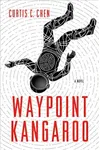
If you are new to the fast-paced, humorous, and tech-savvy worlds of Curtis C. Chen, the best place to start is at the beginning of his signature series with Waypoint Kangaroo (2016). Unlike massive, sprawling multi-author universes with convoluted timelines, Chen's bibliography is remarkably reader-friendly. His works divide neatly into two primary zones: his solo sci-fi spy series, Kangaroo, and his collaborative cyberpunk police procedural, Ninth Step Station (also known under its podcast title, Ninth Step Murders).
The Kangaroo Series: High-Tech Espionage and Pocket Dimensions
The Kangaroo books are a clever blend of James Bond tradecraft, near-future space exploration, and a dash of superhero mechanics. The series centers on Evan Rogers, a spy codenamed "Kangaroo." Kangaroo has a unique, unexplained genetic quirk: he can open a portal to a personal pocket universe—an empty, infinite void where he can stash and retrieve objects. This makes him the ultimate smuggler and operative, able to bypass any security sensor with a pocket full of tools, weapons, or contraband.
Because the overarching narrative, character relationships, and the mystery surrounding Kangaroo's powers develop progressively, it is highly recommended to read this series in strict publication order. The chronological order matches the publication order exactly.
1. Waypoint Kangaroo (2016)
The debut novel introduces us to Evan Rogers and his unique "pocket" superpower. Following a botched mission on Earth, Kangaroo's handler forces him to take a mandatory vacation. He boards the Kowloon, an interplanetary cruise ship bound for Mars. But the vacation turns deadly when Kangaroo discovers a corpse and uncovers a massive conspiracy that threatens to ignite a war between Earth and Mars. This book was a finalist for both the Locus Award for Best First Novel and the Endeavour Award in 2017.
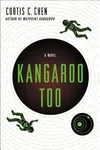
2. Kangaroo Too (2017)
Following the explosive events of the first book, Kangaroo is sidelined from active duty. However, he is sent to the Moon alongside his suspicious physician, Jessica Chu. Their mission is to pay a retired asteroid miner named Clementine for vital intelligence. Using his pocket universe to smuggle gold as payment, Kangaroo expects a straightforward exchange. Instead, Jessica is framed for a murder she didn't commit, the lunar base goes into lock-down after a domestic terror attack, and Kangaroo has to navigate low-gravity hazards to clear his doctor's name and escape.
3. True Blue Kangaroo (2024)
After a multi-year hiatus, the series returned with a high-stakes descent onto Venus. While tourists enjoy luxury floating resorts high in the Venusian clouds, a hidden network of secret government prisons—known as "blue sites"—exists deep within the toxic lower atmosphere. Kangaroo is tasked with infiltrating one of these dark sites. He must either rescue a captured spy or extract a high-value political prisoner, all while surviving a highly secure environment inspired by classic espionage dramas like The Prisoner.
Ninth Step Station / Ninth Step Murders: Cyberpunk Collaboration
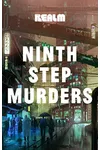
For readers who enjoy a darker, grittier cyberpunk aesthetic, Chen's major collaborative project is a must-read. Originally released as a serialized audio and text drama by Serial Box (now Realm) under the name Ninth Step Station, the project was later adapted and distributed as the podcast Ninth Step Murders.
Co-written by Curtis C. Chen, Malka Older, Fran Wilde, and Jacqueline Koyanagi, the story is set in a near-future Tokyo. Following a devastating disaster, Tokyo has been divided into sectors controlled by rival global superpowers, specifically the United States and China. The series operates as a cyberpunk buddy-cop drama, pairing Miyako Koreda, a detective from the local Tokyo Metropolitan Police, with Emma Higashi, a military peacekeeper from the United States. Together, they must solve complex cases while walking a tightrope of international geopolitical tensions.
Reading and Listening Order for Ninth Step Station
The collaborative series is structured like a television show, divided into seasons and episodes. To follow the narrative, read or listen to the seasons in order:
- Season 1 (2019 / Compiled 2023): Establishes the rocky alliance between Detective Koreda and Peacekeeper Higashi as they investigate street-level crimes that threaten to expose dangerous political conspiracies. Curtis C. Chen authored several individual episodes in this season, including the acclaimed episode "The Stolen Xiǎohái."
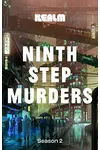
- Season 2 (2023): Continues the detective duo's investigations as the cold war between the American and Chinese factions in Tokyo threatens to boil over into active conflict.
Short Stories, Anthologies, and Collections
In addition to his longer novel and serial work, Chen has written numerous pieces of short fiction. For readers looking for quick, punchy entry points to his style, the following collections and anthologies are worth exploring:
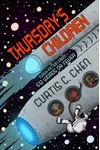
- Thursday's Children: Flash Fiction from 512 Words or Fewer (2014): A self-published collection containing 117 of Chen’s micro-stories. Originally written on his personal blog, these bite-sized tales demonstrate his early experimentation with brevity, science fiction concepts, and quick twist endings.
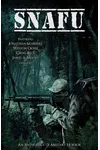
- SNAFU: An Anthology of Military Horror (2014): Features Chen’s short fiction alongside other military horror writers, highlighting a slightly darker, more action-oriented side of his speculative writing.
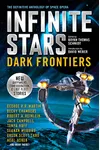
- Infinite Stars: Dark Frontiers (2019): A major space opera anthology edited by Bryan Thomas Schmidt, featuring stories set in iconic universes. Chen contributed a short story to this collection, expanding his footprint in traditional space adventure.
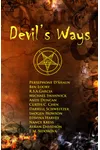
- Devil's Ways (2020): A fantasy anthology exploring different cultural and mythic versions of the Devil, showcasing Chen's ability to write outside his typical science fiction sandbox.
Who is Curtis C. Chen's Writing For?
If you are a fan of lighthearted, witty science fiction with smart protagonists who solve problems using logic and quirky assets, Chen is a perfect fit. His style is frequently compared to John Scalzi (especially the Old Man's War and Lock In series) due to the snappy, comedic dialogue and fast pacing. Readers who enjoy the practical, scientific problem-solving of Andy Weir's The Martian will also appreciate how Kangaroo uses the physics of his pocket dimension—such as momentum, air pressure, and volume limits—to outsmart his opponents. While the stakes are high, the tone remains breezy and fun, making the series an excellent palette cleanser between heavier space operas.
What to Know Before You Start
To fully appreciate Curtis C. Chen's work, it helps to understand the unique inspirations and formatting quirks that define his novels:
- The Doraemon Connection: Chen has frequently shared that the concept of Kangaroo’s pocket universe was inspired by his childhood love for the classic Japanese manga Doraemon. In the manga, a robotic cat possesses a magical four-dimensional pouch from which he pulls futuristic gadgets. Chen took this whimsical concept and asked, "What if a realistic spy had this ability, and how would military and intelligence agencies react to it?"
- Interactive Cover Puzzles: An avid puzzle fan and creator, Chen worked with his publishers to embed hidden puzzle trails in the cover designs of the physical editions of Waypoint Kangaroo and Kangaroo Too. Solvers who cracked the codes on the covers were led to secret online reward pages.
- From Code to Prose: Before writing full-time, Chen worked as a software engineer in Silicon Valley. This background is evident in his writing. While his books are lighthearted and funny, the rules governing his technology and the limits of Kangaroo’s pocket universe are logically structured, consistent, and satisfyingly technical.