





Where to Start with Cynthia Ozick
Because Cynthia Ozick is a celebrated giant of contemporary American literature whose career spans over half a century, choosing a starting point can be challenging. Unlike authors of popular genre fiction, she does not write traditional serialized thrillers or fantasy sagas. Instead, her work is composed of standalone novels, deeply connected novellas, short fiction collections, and brilliant essay collections. To experience the full range of her intellectual depth, wit, and emotional gravity, we recommend starting with one of two distinct pathways.
The Emotional Pathway: The Shawl (1989)
For readers who want to experience Ozick’s most emotionally devastating and universally acclaimed fiction, The Shawl is the perfect entry point. It is a slim book that contains only two closely related pieces: the brief short story "The Shawl" (originally published in The New Yorker in 1980) and the longer sequel novella "Rosa" (published in The New Yorker in 1983). Together, they form a masterpiece of Holocaust literature, tracking the tragedy of a mother losing her infant in a concentration camp and her subsequent struggles decades later as an eccentric survivor living in Miami. Reading these two pieces in their intended chronological order is essential to capturing the full weight of the narrative.
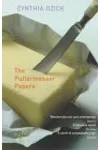
The Whimsical Pathway: The Puttermesser Papers (1997)
If you prefer a blend of intellectual humor, Jewish folklore, and sharp social satire, start with The Puttermesser Papers. This novel-in-stories follows the life, career, and afterlife of Ruth Puttermesser, a municipal lawyer in New York. The book is famous for a sequence where Ruth constructs a female golem out of the dirt in her potted plants, who then helps her get elected as mayor of New York. Ozick wrote these five linked stories over several decades, revisiting the character roughly once a decade before compiling them into a single cohesive novel in 1997.
Cynthia Ozick's Standalone Novels in Publication Order
While Ozick's novels do not share characters or continuities, reading them in order of publication reveals her development as an artist. Her prose evolves from sprawling, dense Jamesian exercises into shorter, more focused, and sharp tragicomedies.
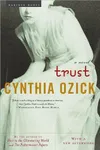
- Trust (1966): Ozick's massive debut novel. Heavily influenced by Henry James, it is a complex, philosophical story of a young woman searching for her father and her own identity against a backdrop of wealthy, European-influenced American circles.
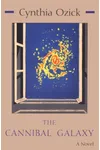
- The Cannibal Galaxy (1983): A tightly written school novel focusing on Joseph Brill, the principal of a dual-curriculum school, who searches for a student of supreme genius but misses the brilliance right in front of him.
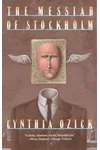
- The Messiah of Stockholm (1987): A literary mystery set in Sweden. It follows a book reviewer who believes he is the orphaned son of the real-life Polish writer Bruno Schulz, who was murdered by the Nazis. The story revolves around the search for Schulz's lost manuscript, The Messiah.
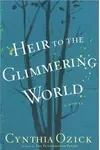
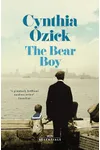
- Heir to the Glimmering World (2004): (Published in the UK as The Bear Boy). Set in 1930s New York, it focuses on a household of German-Jewish refugees supported by a wealthy benefactor named James A'Bair, who is haunted by his childhood identity as the inspiration for his father's classic children's stories.
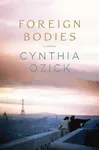
- Foreign Bodies (2010): A direct, post-war reimagining and "photographic negative" of Henry James's classic novel The Ambassadors, set in 1952 Paris and New York.
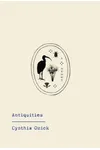
- Antiquities (2021): A short novel focusing on Lloyd Wilkinson Petrie, an elderly trustee of a defunct boarding school, as he records his memoirs and looks back at a childhood friendship with a mysterious Jewish boy.
Key Reading Caveats & Title Differences
When searching for Ozick’s books, readers should be aware of a couple of notable publisher title variations and format changes that can cause confusion:
Heir to the Glimmering World vs. The Bear Boy
These two titles refer to the exact same 2004 novel. The book was published in North America as Heir to the Glimmering World, but international markets and the United Kingdom published it under the title The Bear Boy. The UK title highlights the character of James A'Bair, whose life mirrors that of Christopher Robin Milne (the son of A. A. Milne, creator of Winnie-the-Pooh).
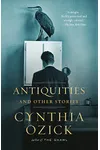
Antiquities vs. Antiquities and Other Stories
In 2021, Ozick published her short novel Antiquities. In 2022, the paperback version was released under the title Antiquities and Other Stories. This updated edition packages the original 2021 novella along with four additional short stories: "The Coast of New Zealand", "The Bloodline of the Alkanas", "Sin", and "A Hebrew Sibyl". If you want the most complete version of her recent fiction, look for the 2022 collection.
The Non-Fiction Essays: A Companion to the Fiction
Cynthia Ozick is as famous for her sharp, intellectually rigorous essays as she is for her fiction. Her essays often explore the relationship between art and morality, the tension between Jewish tradition and classical aesthetics, and deep literary criticism of writers like Henry James, Edith Wharton, and Franz Kafka. Approaching her essays alongside her fiction provides deep context for her storytelling. Recommended collections include:
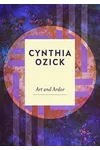
- Art & Ardor (1983): Includes key essays on gender, writing, and Jewish identity.
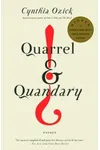
- Quarrel & Quandary (2000): Winner of the National Book Critics Circle Award, this collection contains some of her most celebrated short essays, including thoughts on the nature of translation and memory.
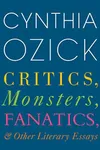
- Critics, Monsters, Fanatics, and Other Literary Essays (2016): A passionate defense of the role of the literary critic in a culture dominated by instant opinions.