
The Recommended Starting Point
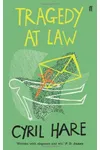
If you are new to the legal puzzles and witty whodunits of Cyril Hare (the pen name of barrister Alfred Alexander Gordon Clark), the absolute best place to start is his undisputed masterpiece: Tragedy at Law (1942). Not only is it widely considered one of the finest legal mysteries ever written—highly praised by the likes of P.D. James—but it also serves as the perfect introduction to Hare's signature style. More importantly, this novel is the first time we meet the brilliant but down-on-his-luck barrister Francis Pettigrew, and it establishes the recurring crossover dynamic with Hare's other series lead, Inspector Mallett.
However, if you prefer to see characters grow from their absolute beginnings and want to experience the evolution of Hare's plotting, you should follow the strict publication order. Because Hare only wrote nine detective novels, completing his entire bibliography is a highly rewarding and manageable project for fans of classic British mysteries.
The Inspector Mallett and Francis Pettigrew Universe
Cyril Hare's primary detective fiction occupies a single shared universe. Instead of keeping his two main sleuths separate, Hare frequently crossed them over. To understand how they fit together, it helps to look at them as three distinct sequences: the early Inspector Mallett books, the Francis Pettigrew solo/lead books, and the shared crossover novels.
The Inspector Mallett Trio (Early Police Procedurals)
Before introducing the legal elements that made him famous, Hare began his career with three traditional mysteries featuring Scotland Yard's Inspector Mallett, a stout detective with a hearty appetite and a sharp mind:
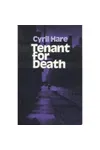
- Tenant for Death (1937) – A classic mystery involving a missing financier found dead in a London suburb.
- Death Is No Sportsman (1938) – Set against the backdrop of an exclusive fly-fishing syndicate on the River Didder.
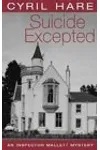
- Suicide Excepted (1939) – A puzzle focusing on a suspicious death in a hotel, where Mallett plays a secondary role while the victim's family attempts to prove it was murder to secure an insurance payout.
The Crossover Masterpieces (Mallett and Pettigrew)
These novels bring both characters together, creating a wonderful contrast between Mallett's methodical police work and Pettigrew's reluctant, cynical legal insights:
- Tragedy at Law (1942) – Set during a High Court judge's tour of the Southern Circuit, where a series of mysterious incidents culminates in murder.
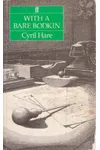
- With a Bare Bodkin (1946) – Set during World War II in the remote offices of the Ministry of Pin Control, where staff members are murdered using a pinning bodkin.
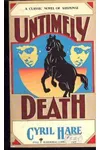
- He Should Have Died Hereafter (also published as Untimely Death) (1958) – Hare's final novel, featuring a bizarre case of a disappearing body on the Exmoor moors that hinges on complex inheritance law.
The Francis Pettigrew Mysteries
In these novels, the spotlight shines brightly on Pettigrew, with Mallett either absent or relegated to a minor reference:
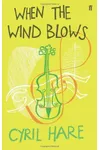
- When the Wind Blows (also published as The Wind Blows Death) (1949) – Pettigrew gets caught up in the murder of a guest violinist during an amateur orchestral performance.
- That Yew Tree's Shade (also published as Death Walks the Woods) (1954) – A quiet village mystery involving the murder of a wealthy local philanthropist.
The Standalone Novel and Short Stories
Outside of his main shared universe, Hare wrote one highly acclaimed standalone mystery and one main collection of short stories published posthumously:
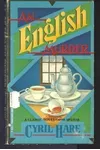
- An English Murder (also published as The Christmas Murder) (1951) – A quintessential snowed-in country house mystery set during Christmas. The sleuth here is an outsider, a foreign history scholar named Dr. Wenceslaus Bottwink, who uses his understanding of English history and class dynamics to solve the crime.
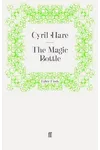
- The Magic Bottle (1946) – A rare non-mystery children's fantasy novel that stands apart from the rest of his bibliography.
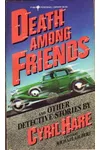
- Death Among Friends and Other Detective Stories (1959) – A collection containing Hare's best short fiction, showcasing his dark irony, legal loopholes, and twist endings.
What to Know Before You Start
Hare's mysteries are celebrated for their dry British humor, their authentic depiction of mid-century middle-class life, and their absolute legal accuracy. Because Hare was a practicing barrister and later a county court judge, his plots often turn on obscure legal points—such as the exact rules governing insurance policies, probate, or land inheritance. He never cheats the reader; the legal clues are always present if you know where to look.
Readers should be prepared for varying titles between UK and US editions. For instance, if you are searching for He Should Have Died Hereafter in the US, look for Untimely Death. Similarly, When the Wind Blows was published as The Wind Blows Death, and That Yew Tree's Shade was printed as Death Walks the Woods. Keeping this in mind will save you from accidentally purchasing the same book twice under different titles.