
Recommended Reading Path: Where to Start
Because Daisy Lafarge’s bibliography spans poetry, psychological fiction, and experimental non-fiction, the best place to start depends heavily on your personal reading preferences:
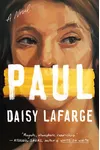
- For Fiction Lovers: Start with her debut novel, Paul (originally published in 2021). It is a tense, sensory, and psychologically gripping exploration of power dynamics, passivity, and toxic relationships set in rural France.
- For Poetry Enthusiasts: Begin with her acclaimed full-length poetry collection, Life Without Air (2020). Shortlisted for the T.S. Eliot Prize, this collection explores chemical, ecological, and emotional suffocation, drawing heavily on her interdisciplinary background.
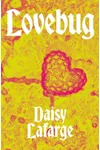
- For Non-Fiction and Science Readers: Pick up Lovebug (2023), which explores the history and poetics of infection, intimacy, and the breakdown of boundaries between the self and the other.
Publication Order of Books & Novels
While Lafarge's books are standalone works that do not share a continuing storyline, reading them in order of publication allows you to trace her evolution from experimental poet to novelist and essayist. Note that although some databases list Paul under 2023, its original UK release was in 2021, followed by a US publication in 2022.
Standalone Novels and Books
- Paul (2021 / 2023 in local databases) – A psychological novel following a young graduate student volunteering on a French farm who becomes entangled in a manipulative relationship with an older man.
- Lovebug: A Study in Penicillins and Other Infectious Intimacies (2023) – A hybrid non-fiction book blending critical theory, autobiography, and biological science to examine the metaphors of infection and love.
Poetry Collections and Pamphlets
- understudies for air (Sad Press, 2017) – Her early poetry pamphlet exploring voice, position, and environment.
- capriccio (SPAM Press, 2019) – An experimental, playful poetry pamphlet described as a "hallucinatory folly."
- Life Without Air (Granta, 2020) – Lafarge's debut full-length poetry collection, exploring themes of ecological crisis and emotional toxicity.
- Five Tongues (2020) – A self-published, risograph-printed charity pamphlet written during lockdown.
- The Invisible Worm (2025) – A limited-edition pamphlet published in tandem with her solo art exhibition, The Sick Rose.
- The Romance of the Sick Rose (2026) – An art-associated poetry pamphlet continuing her exploration of disease, botany, and romance.
Anthologies and Collaborative Projects
- Makar/Unmakar: Twelve Contemporary Poets in Scotland (2019) – An anthology edited by Daisy Lafarge, showcasing diverse voices in contemporary Scottish poetry.
- Eileen Agar: Angel of Anarchy (2021) – A publication featuring contributions from Lafarge exploring the life and work of the Surrealist artist Eileen Agar.
- Radical Pets (2025) – An audio-novel co-authored by seven writers using a collaborative "exquisite corpse" storytelling technique.
Chronological Order & Reading Caveats
Since Daisy Lafarge writes standalone books and poetry collections rather than serialized fiction, there is no chronological order of plot events. You can pick up any of her books out of order without worrying about spoiling a previous plot. However, a thematic progression exists: her academic PhD research in molecular epidemiology and geography directly feeds into the imagery of Life Without Air, the claustrophobia of Paul, and forms the explicit foundation of Lovebug. Reading them in sequence reveals the deep connections between her academic research and creative output.
What to Know Before You Start
Lafarge’s work is characterized by its interdisciplinary nature. She frequently merges scientific precision with poetic fluidity. Readers should be prepared for themes that explore the darker sides of human interaction, ecology, and biology—including parasite-host dynamics, emotional manipulation, infection, and environmental degradation. Rather than traditional biography fluff, knowing that she is a visual artist helps explain the highly sensory, descriptive quality of her prose and her tendency to publish pamphlets alongside her art exhibitions.