
How to Navigate the McKellar Math Universe
Unlike fictional sagas with chronological storylines, Danica McKellar’s books are math-education guides designed to grow alongside your child. Rather than reading them in order of publication, the best way to read them is by following a structured developmental path based on the reader's age, school grade, and mathematical needs. Below, we break down the ideal path for early learners, elementary students, and middle-to-high schoolers.
1. Early Learners: Toddlers to Kindergarten (Ages 0 to 6)
These colorful, rhyming picture books introduce mathematical thinking before children even begin formal schooling. They build basic number recognition, spatial awareness, and simple counting habits.
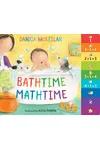
- Bathtime Mathtime (2018): Best for ages 2–5. Introduces simple addition using the concept of "counting on." During a fun bath routine, kids learn that adding one to a number is just counting to the next number. By counting feet, bubbles, and rubber ducks, toddlers learn to associate math with enjoyable daily routines.
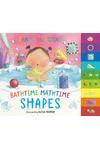
- Bathtime Mathtime: Shapes (2019): Best for ages 0–3. A board book companion that focuses on identifying basic 2D and 3D shapes (squares, triangles, spheres, cubes) in the real world. It helps children build spatial intelligence by recognizing shapes in their environment.
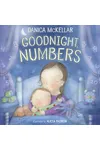
- Goodnight, Numbers (2017): Best for ages 0–6. A soothing bedtime book that teaches children that numbers are friendly, concrete parts of their everyday environments (like tricycle wheels or animal legs). It also features subtle search-and-find elements to build focus and visual tracking.
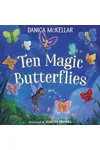
- Ten Magic Butterflies (2018): Best for ages 4–6 (Preschool to 1st Grade). Focuses on "making ten"—an essential foundation for double-digit addition and subtraction—by grouping flower friends that turn into butterflies. This book is key for early math fluency.
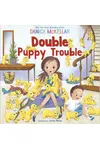
- Double Puppy Trouble (2022): Best for ages 4–8. Introduces the concept of doubling and exponential growth. The story of Moxie Jo and a magic doubling stick makes multiplication concepts fun and visual, while teaching lessons about sibling gratitude and sharing.
2. Elementary Schoolers: Grades 1 to 5 (Ages 6 to 10)
Once children enter elementary school, they need transition guides to bridge the gap between counting and core arithmetic. These books are longer than picture books, featuring cartoon helpers, visual diagrams, and fun math shortcuts.
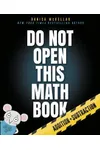
- Do Not Open This Math Book (2018): Best for ages 6–9 (Grades 1–4). Focuses on addition, subtraction, and place value. It breaks down the "new math" methods taught in schools today, making them accessible to both kids and parents. It is an excellent resource for homeschooling parents looking to explain regrouping and base-ten concepts.
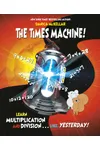
- The Times Machine! (2020): Best for ages 7–10 (Grades 2–5). Targets multiplication and division. It uses mnemonic devices, stories, and colorful illustrations to make times tables memorization easy and stress-free. It provides the memory hooks kids need to master quick recall.
3. Middle School to High School: Grades 6 to 11 (Ages 9 to 16)
This is Danica McKellar’s core series, which originally made her a bestselling author. Written specifically with a self-help, magazine-style format, these books address math anxiety, peer pressure, and common obstacles that often lead girls to turn away from STEM subjects.
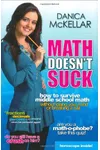
- Math Doesn't Suck: How to Survive Middle School Math Without Losing Your Mind or Breaking a Nail (2007): Best for grades 6–8 (Ages 9–14). Focuses on middle school essentials like fractions, decimals, percentages, finding the lowest common multiple, and translating word problems. It teaches girls that intelligence is fashionable and empowering.
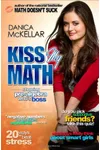
- Kiss My Math: Showing Pre-Algebra Who's Boss (2008): Best for grades 7–9 (Ages 11–15). Steps up to pre-algebra concepts, including integers, variables, exponents, and basic equation-solving. It builds the analytical mindset needed for secondary school success.
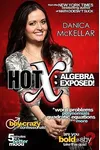
- Hot X: Algebra Exposed! (2009): Best for grades 8–10 (Ages 13–16). Focuses purely on Algebra I, covering topics like polynomials, quadratic equations, factoring, and coordinate graphing. It demystifies abstract equations by comparing variables to real-life scenarios.
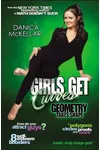
- Girls Get Curves: Geometry Takes Shape (2012): Best for grades 9–11 (Ages 14–16). Focuses on geometry, translating complex geometric proofs, shapes, theorems, and spatial logic into accessible, real-world examples. It emphasizes reasoning skills over rote memorization.
Core Series Publication Order
If you prefer to collect and browse the books in the order they were published, here is the chronological list of Danica McKellar's books:
- Math Doesn't Suck: How to Survive Middle School Math (2007)
- Kiss My Math: Showing Pre-Algebra Who's Boss (2008)
- Hot X: Algebra Exposed! (2009)
- Girls Get Curves: Geometry Takes Shape (2012)
- Goodnight, Numbers (2017)
- Ten Magic Butterflies (2018)
- Bathtime Mathtime (2018)
- Do Not Open This Math Book (2018)
- Bathtime Mathtime: Shapes (2019)
- The Times Machine! (2020)
- Double Puppy Trouble (2022)
What to Know Before You Start: The McKellar Philosophy
Danica McKellar’s journey into mathematical writing began at UCLA, where she co-authored a scientific paper on magnetic fields (the Chayes-McKellar-Winn theorem). She realized that many young students, particularly girls, begin to lose confidence in math during middle school due to social pressures and dry teaching methods. Her guides are structured to read like teen lifestyle magazines rather than rigid curriculum textbooks, offering personality quizzes, reassuring advice columns, and positive testimonials to build self-esteem along with math skills.
While the books align closely with standard US educational curricula (including Common Core concepts in the elementary guides), they are best used as supplementary aids to build confidence. A student struggling with algebra will benefit most from diving straight into Hot X, whereas a child preparing for middle school should start with Math Doesn't Suck.
Pedagogical Approach: Overcoming Math Anxiety
Unlike traditional textbooks that present formulas in isolation, McKellar’s books emphasize the "why" behind the math. She uses creative metaphors—such as comparing finding common denominators to finding common ground between friends—to make the concepts memorable. This approach is specifically designed to combat "math anxiety," a common psychological barrier where students shut down when faced with numbers. By framing math as a confidence-building tool and a creative challenge, the books help readers shift their mindset from "I can't do this" to "I can master this."
Practical Tips for Parents and Educators
For parents and teachers looking to integrate these books into their kids' learning, keep these tips in mind:
- Use them as a supplement, not a replacement: These books are designed to sit alongside a standard school curriculum or homeschool syllabus. They explain concepts in alternative ways when standard textbooks fail to click.
- Read together: Especially for the early childhood picture books and elementary guides, reading together allows parents to participate in the learning puzzles and try the math games alongside their child.
- Don't skip the non-math content: The middle school and high school guides contain chapters on building self-confidence, dealing with peer pressure, and developing smart study habits. These sections are crucial to the overall goal of the series.