
Where to Start Reading Daniel C. Dennett
Daniel C. Dennett was one of the most celebrated and provocative philosophers of the modern era, known for his unique ability to bridge the gap between philosophy, cognitive science, and evolutionary biology. Because his bibliography spans over five decades—from his debut in 1969 to his final memoir in 2023—diving into his work can feel daunting. There is no single chronological storyline, so the best reading order depends on your interests. However, some books serve as much better entry points than others.
For the vast majority of readers, the absolute best starting point is Intuition Pumps and Other Tools for Thinking (2013). In this book, Dennett lays out his philosophical toolkit, explaining the metaphors, analogies, and thought experiments (what he calls 'intuition pumps') that he developed throughout his career to dissect complex problems. Mastering these tools first will make his longer, more academic volumes much easier to comprehend.
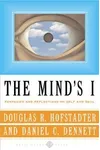
If you prefer a highly creative, collaborative introduction to his theories of selfhood, start with The Mind’s I: Fantasies and Reflections on Self and Soul (1981), co-edited with Douglas Hofstadter. This anthology combines thought-provoking fiction, science fiction, and philosophical essays with commentary by Hofstadter and Dennett, offering an accessible yet mind-expanding look at the nature of identity.
The Four Thematic Reading Paths
Once you are familiar with Dennett's style and philosophical tools, you can explore his work by following one of four primary thematic paths based on what interests you most.
Path 1: Consciousness and the Mind
Dennett is perhaps most famous for his controversial theories on consciousness, where he argues that the mind is a collection of brain processes rather than a single, unified 'self.' To explore this topic, read in this order:
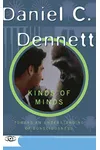
- Kinds of Minds: Towards an Understanding of Consciousness (1996) – A short, highly readable primer that serves as an excellent introduction to how different organisms (and machines) process information.
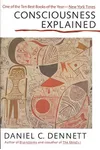
- Consciousness Explained (1991) – Dennett’s magnum opus on the mind. It is a dense, rewarding, and highly debated book where he presents his Multiple Drafts Model of consciousness.
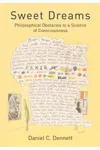
- Sweet Dreams: Philosophical Obstacles to a Science of Consciousness (2005) – A follow-up volume where Dennett addresses his critics, refines his theories, and dismantles popular philosophical concepts like 'qualia.'
Path 2: Evolution and Cognitive Development
Dennett viewed evolution by natural selection as a universal mechanism that explains not just biology, but culture, language, and the human mind itself. Follow this progression to understand his evolutionary perspective:
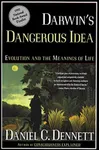
- Darwin's Dangerous Idea: Evolution and the Meanings of Life (1995) – A sweeping, ambitious work that argues natural selection is an algorithmic process that fundamentally challenges traditional views of purpose and meaning.
- From Bacteria to Bach and Back: The Evolution of Minds (2017) – A late-career summation that details how non-conscious, simple biological processes evolved into the complex, creative human minds capable of producing art and science.
Path 3: Free Will and Agency
Can free will exist in a deterministic universe? Dennett was a famous compatibilist, arguing that physical determinism does not strip humans of moral responsibility. Read these works in order to understand his stance:
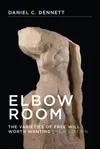
- Elbow Room: The Varieties of Free Will Worth Wanting (1984) – A classic, highly accessible defense of compatibilism that outlines the types of freedom that actually matter to human life.
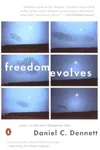
- Freedom Evolves (2003) – An expansion of his ideas on free will, drawing heavily from evolutionary biology and game theory to show how agency naturally evolved.
- Just Deserts: Debating Free Will (2021) – A highly engaging debate book co-authored with philosopher Gregg D. Caruso, presenting contrasting arguments on free will and moral responsibility in a dialogue format.
Path 4: Religion, Belief, and Public Science
As one of the 'Four Horsemen' of New Atheism (alongside Richard Dawkins, Sam Harris, and Christopher Hitchens), Dennett studied religion as a natural, evolutionary phenomenon. Follow this order:
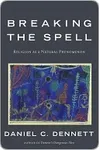
- Breaking the Spell: Religion as a Natural Phenomenon (2006) – An objective, evolutionary, and cognitive investigation into why religions form, persist, and influence human behavior.
- Caught in the Pulpit: Leaving Belief Behind (2015) – Co-authored with Linda LaScola, this book examines the psychological journeys of clergy members who secretly lost their faith but remained in the pulpit.
- The Four Horsemen: The Conversation That Sparked an Atheist Revolution (2019) – The transcribed record of the landmark 2007 discussion between Dennett, Dawkins, Harris, and Hitchens, offering a direct look at the core arguments of the New Atheist movement.
A Caveat on Academic Collections
While Dennett's solo monographs are written to be accessible to the general public, several of his books are actually collections of technical academic papers. General readers should avoid starting with these, as they assume a strong background in academic philosophy and cognitive science. Save these volumes for after you have read his mainstream books:
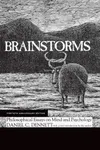
- Brainstorms: Philosophical Essays on Mind and Psychology (1978)
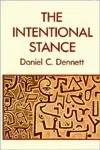
- The Intentional Stance (1987)
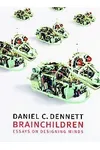
- Brainchildren: Essays on Designing Minds (1998)
Daniel C. Dennett Complete Bibliography in Publication Order
If you wish to trace the evolution of Dennett's ideas chronologically—from his early doctoral work under Gilbert Ryle to his final reflections—here is the complete list of his primary non-fiction books in order of publication:
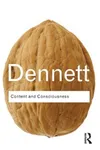
- Content and Consciousness (1969)
- Brainstorms: Philosophical Essays on Mind and Psychology (1978)
- The Mind’s I: Fantasies and Reflections on Self and Soul (1981) (with Douglas Hofstadter)
- Elbow Room: The Varieties of Free Will Worth Wanting (1984)
- The Moral First Aid Manual: The Tanner Lectures on Human Values (1986)
- The Philosophical Lexicon (1987)
- The Intentional Stance (1987)
- Quining Qualia (1988)
- Consciousness Explained (1991)
- Darwin's Dangerous Idea: Evolution and the Meanings of Life (1995)
- Kinds of Minds: Towards an Understanding of Consciousness (1996)
- Brainchildren: Essays on Designing Minds (1998)
- Mind and Reality: The Nature of Mind and the Expansion of Consciousness (1999)
- The Computational Perspective (2001)
- Freedom Evolves (2003)
- Sweet Dreams: Philosophical Obstacles to a Science of Consciousness (2005)
- Thank Goodness! (2006)
- Breaking the Spell: Religion as a Natural Phenomenon (2006)
- Where Am I? (2008)
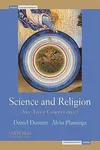
- Science and Religion: Are They Compatible? (2010) (with Alvin Plantinga)
- Inside Jokes: Using Humor to Reverse-Engineer the Mind (2011) (with Matthew M. Hurley and Reginald B. Adams Jr.)
- Intuition Pumps and Other Tools for Thinking (2013)
- Caught in The Pulpit: Leaving Belief Behind (2015) (with Linda LaScola)
- From Bacteria to Bach and Back: The Evolution of Minds (2017)
- The Four Horsemen: The Conversation That Sparked an Atheist Revolution (2019) (with Richard Dawkins, Sam Harris, and Christopher Hitchens)
- Just Deserts: Debating Free Will (2021) (with Gregg D. Caruso)
- I've Been Thinking (2023)
What to Know Before You Start
Dennett’s style is uniquely friendly, witty, and filled with memorable metaphors—such as 'skyhooks' versus 'cranes' in evolutionary biology, or the 'Cartesian Theater' in the philosophy of mind. Despite his accessibility, Dennett is a rigorous philosopher. He doesn't just present opinions; he builds complex, interdisciplinary arguments that draw heavily from biology, computer science, and neuroanatomy. Taking your time with his thought experiments and keeping an open mind about counterintuitive conclusions (especially regarding consciousness and free will) will make your reading journey highly rewarding.