






How to Read Daniel Hecht: The Recommended Reading Paths
Daniel Hecht is a master of blending high-stakes suspense, deep psychological inquiry, and a touch of the uncanny. Whether you are diving into his parapsychology investigations or exploring his neuro-scientific thrillers, his works generally fall into distinct categories. To get the most out of his storytelling, we recommend two primary starting points.
Path 1: The Cree Black Investigations (Chronological & Publication Order)
If you enjoy parapsychological mysteries grounded in science, historical depth, and cultural folklore, start here. This series follows clinical psychologist and parapsychologist Cree Black as she uses her empathic abilities and scientific rigor to solve hauntings. You must read these in order to appreciate Cree's character growth, evolving relationships, and psychological development:
- City of Masks (2003)
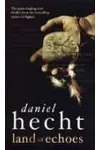
- Land of Echoes (2004)
- Bones of the Barbary Coast (2006)
Path 2: The Mo Ford / Paul Skoglund Books (Publication vs. Prequel Order)
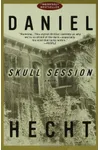
Hecht's debut novel, Skull Session, is a highly acclaimed neurological thriller featuring Paul Skoglund, a man with Tourette's syndrome, and State Police investigator Mo Ford. A few years later, Hecht released Puppets, which serves as a direct prequel focusing on Mo Ford. You have two options for reading this duology:
- Option A: Publication Order (Recommended). Read Skull Session (1998) first, followed by Puppets (2001). This introduces you to Hecht's most famous protagonist (Paul Skoglund) first, while the prequel acts as a deep dive into the backstory of Detective Mo Ford.
- Option B: Chronological Order. Read Puppets (2001) first, then Skull Session (1998). This lets you follow Mo Ford's career chronologically as he encounters bizarre, puppet-like murder scenes before dealing with the events at the Skoglund family lodge.
The Cree Black Series: A Closer Look
The Cree Black novels stand out in the mystery genre because they do not treat the paranormal as cheap horror. Instead, Hecht uses parapsychology as a lens to explore grief, trauma, and history.
City of Masks (2003)
The series begins in New Orleans. Cree Black is summoned to the historic Garden District to investigate Beauforte House, where the current owner is experiencing terrifying visions that reflect her own childhood trauma. Cree, a natural empath, must distinguish between psychological manifestations, family history, and true supernatural entities. It is the perfect introduction to Cree's methodology and her complex personal history.
Land of Echoes (2004)
In the second book, the setting shifts to a boarding school for gifted Navajo teenagers in New Mexico. Cree is asked to evaluate Tommy Keeday, a student suffering from violent seizures that his family attributes to a chindi (the vengeful spirit of an ancestor). Hecht weaves Navajo culture and neuropsychiatry into a compelling investigation of cultural identity and buried secrets.
Bones of the Barbary Coast (2006)
In this final installment, Cree aids San Francisco homicide detective Bert Marchetti after a deformed human skeleton is discovered in the foundation of a Victorian house. Moving between modern investigations and the 1889 diary of a woman living in the infamous Barbary Coast red-light district, the novel bridges two eras to solve a century-old crime.
The Standalone Thrillers and Contemporary Dramas
Outside of his series, Daniel Hecht has published several standalones that range from high-tech science thrillers to quiet, character-driven stories of survival in Vermont. These can be read in any order.
Skull Session (1998)
Hecht's breakout debut remains a favorite among thriller readers. The story centers on Paul Skoglund, a brilliant repairman struggling with Tourette's syndrome, who agrees to repair his aunt's vandalized hunting lodge. He discovers a scene of extreme violence that is connected to a string of local disappearances. The book is widely praised for its empathetic, complex portrayal of Tourette's and its blending of Gothic suspense with brain science.
The Babel Effect (2000)
Published in 2000 (though some sources list 2001), this novel takes inspiration from the tech-thrillers of Michael Crichton. It follows Ryan and Jessamine McCloud, a husband-and-wife scientific team tracking the biological roots of human violence. They hypothesize that a contagion—the 'Babel Effect'—is responsible for rising global aggression, leading them into a conspiracy involving corporate and governmental interests.
Puppets (2001)
A suspenseful prequel to Skull Session, this thriller follows investigator Mo Ford as he hunts a serial killer who leaves victims arranged like stringed puppets. The case soon reveals a darker network of government experimentation and mind control.
On Brassard's Farm (2018)
A significant departure from Hecht's thriller roots, this contemporary novel is a grounded, realistic story of personal transformation. Following a series of life-shattering events, urban schoolteacher Ann Turner flees to rural Vermont, eventually working as a hand on a dairy farm. Drawing on Hecht's own experiences with farming and forestry, the book details the gritty, exhausting realities of agricultural life and the healing power of manual labor.
The Body Below (2023)
Hecht returned to the mystery genre with this Vermont-set novel. Disgraced journalist Conn Whitman discovers a submerged body while swimming in a local lake. When the police investigator warns him off, Conn teams up with his psychologist fiancée Celine to investigate the town's secrets themselves, exposing the collateral damage of long-buried crimes.
What to Know Before You Start
Daniel Hecht's background as a professional guitarist, logger, and carpenter brings a tactile, realistic grit to his prose. While his early books lean heavily into scientific explanations (especially neurology and parapsychology), his later works focus deeply on the landscape and culture of Vermont. Expect complex characters, rich descriptions of nature, and plots that challenge the boundary between logic and the unexplained.