


Where to Start Reading Dante: The Recommended Path
For most readers, Dante Alighieri is synonymous with the Divine Comedy. However, starting directly with his descent into Hell can feel disorienting without the emotional and thematic backdrop that drove his writing. The most rewarding path through Dante's works follows his spiritual and artistic development, starting with his early love poetry and leading into his grand theological epic.
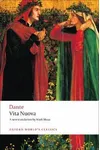
1. Begin with Vita Nuova (The New Life)
Written around 1292–1293, Vita Nuova is the ideal starting point. This short work combines autobiographical prose narrative with lyric poetry to tell the story of Dante's profound, courtly love for Beatrice Portinari. Beatrice is not just a passing muse; she is the central figure of Dante’s spiritual salvation. Reading this first allows you to understand who Beatrice is and why her death shattered Dante, setting the stage for her role as his savior and guide in the later stages of the Divine Comedy.
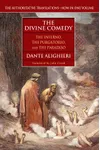
2. The Divine Comedy (La Divina Commedia)
After establishing the emotional foundation in Vita Nuova, you are ready to embark on his masterpiece. Written during his exile between approximately 1308 and 1321, the epic poem is structured as a trilogy and must be read in its chronological narrative order:
- Inferno (Hell): Dante, guided by the Roman poet Virgil, journeys through the nine circles of Hell. This is the most famous and widely read portion, filled with dramatic encounters, political enemies, and vivid moral lessons.
- Purgatorio (Purgatory): Dante and Virgil climb the mountain of Purgatory, where souls undergo cleansing penance. It is often considered the most deeply human and poetically rich volume of the trilogy.
- Paradiso (Heaven): Guided by Beatrice, Dante ascends through the spheres of Heaven to the ultimate vision of God. This final volume is a dense, beautiful exploration of medieval theology, light, and philosophy.
3. Delve into the Minor and Philosophical Works
Once you have conquered the major narrative journey, you can appreciate his academic and political treatises. These works provide deep intellectual context to the political controversies and philosophical views reflected in the Divine Comedy:
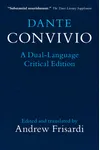
- Convivio (The Banquet): Composed around 1304–1307, this is an unfinished defense of the vernacular language and a philosophical commentary on Dante's own poems.
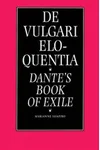
- De Vulgari Eloquentia (On Vernacular Eloquence): Written around 1302–1305, this Latin essay argues for the legitimacy and beauty of the Italian vernacular as a literary language.
- De Monarchia (On Monarchy): Written around 1312–1313, this political treatise outlines Dante’s belief in a secular global empire independent of the Pope's political authority.
Chronological Composition vs. Modern Publication Dates
Because Dante wrote in the medieval era long before the invention of the printing press, his works circulated as hand-copied manuscripts. Consequently, formal "publication" dates in historical tables can be confusing. For example, Dante's Rime (a collected corpus of his scattered lyric poems) was written across his lifetime but only compiled systematically in later centuries, with some bibliographic tables assigning a date of 1400. Similarly, Dante’s Latin Eclogues (a poetic exchange with Giovanni del Virgilio written between 1319 and 1320) did not receive a formal printed edition until 1719 in Florence.
When reading Dante, always prioritize the date of composition over the modern printed edition date to understand his intellectual evolution.
Practical Reader Advice
Choosing the Right Translation
Dante wrote the Divine Comedy in terza rima (an interlocking three-line rhyme scheme in the Tuscan dialect). Translating this structure into English is notoriously difficult, and different translations serve different reader needs:
- For Beginners: John Ciardi's translation is highly readable, using a modern poetic rhythm that captures the dramatic pacing. Mark Musa's translation is also excellent for clarity and literal accuracy.
- For Literary Depth: Allen Mandelbaum's translation strikes a beautiful balance between poetic beauty and fidelity to the original text.
- For Scholarly Rigor: The translation by Jean and Robert Hollander features extensive, line-by-line notes that are invaluable for understanding historical and political references.
The Importance of Annotations
Do not attempt to read the Divine Comedy without footnotes. Dante’s afterlife is heavily populated by real 14th-century Florentine politicians, church figures, and historical characters. A good annotated edition (such as those by Hollander or Charles S. Singleton) will explain who these figures are, transforming what could be a confusing list of names into a thrilling, politically charged drama.