
Where to Start Reading Danzy Senna
Because all of Danzy Senna’s novels and non-fiction works are standalones, you have complete freedom in deciding where to begin your journey. However, depending on what type of reader you are, there are three ideal entry points:
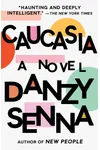
- For the Classics Lover: Caucasia (1998). This is Senna’s groundbreaking debut and her most celebrated work. If you want a deeply emotional, historically grounded coming-of-age story that captures the racial and political tensions of the 1970s, start here. It is widely taught in universities and remains a modern classic.
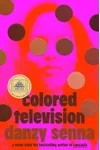
- For the Satire Enthusiast: Colored Television (2024). If you prefer modern, laugh-out-loud dark comedies that take aim at the entertainment industry, start with her latest novel. It is a hilarious and cynical look at Hollywood’s obsession with diversity and the compromises of creative ambition.
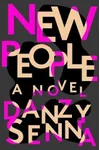
- For the Psychological Fiction Fan: New People (2017). If you enjoy tense, slow-burn stories about relationships, obsession, and the performative nature of class and race in bohemian settings, this late-90s Brooklyn-set novel is the perfect middle-ground.
Danzy Senna Books in Publication Order
While her books do not share a continuity, reading them in publication order allows you to trace her evolution from earnest, lyrical coming-of-age storytelling to sharp, satirical, and highly contemporary social commentary.
Standalone Novels
- Caucasia (1998)
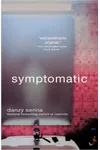
- Symptomatic (2004)
- New People (2017)
- Colored Television (2024)
Short Stories & Collections
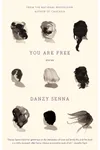
- You Are Free (2011) – Her first standalone collection containing eight short stories.
Non-Fiction & Memoir
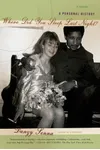
- Where Did You Sleep Last Night?: A Personal History (2009) – A deeply personal memoir uncovering her family's complex history.
Notable Anthology Contributions
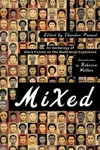
- Mixed: An Anthology of Short Fiction on the Multiracial Experience (2006) – While edited by Chandra Prasad, Senna contributed the essential short story "Triad" to this collection.
Deep Dive into Danzy Senna’s Novels
Caucasia (1998)
Set in the turbulent 1970s of Boston, Caucasia follows two biracial sisters, Birdie and Cole Lee, who are the daughters of a white academic mother and a Black civil rights activist father. When their parents split and their mother goes on the run from the FBI, the family is fractured. Cole goes with her father to California, while Birdie accompanies her mother, forced to pass as a white, Jewish girl in a series of small towns. The novel is a masterpiece of identity exploration, capturing the pain of passing, the loss of sisterly connection, and the rigid racial boundaries of 20th-century America.
Symptomatic (2004)
Her second novel takes a sharp turn into psychological thriller territory. The unnamed protagonist, a young mixed-race woman, moves to New York City for a prestigious writing fellowship. Feeling displaced and isolated, she is drawn to an older colleague named Greta, who also identifies as multiracial. What starts as a comforting friendship quickly devolves into a suffocating, obsessive relationship as Greta tries to project her own unresolved racial anxieties onto the protagonist. It is a tense, claustrophobic look at identity projections and the dangers of seeking connection in the wrong places.
New People (2017)
Set in late 1990s Brooklyn, New People follows Maria and Khalil, a biracial, highly educated couple who seem to embody the multicultural dream. They are even the subjects of a documentary tracking the lives of "new people" in a post-racial America. Yet, as their wedding approaches, Maria finds herself increasingly obsessed with a quiet, dark-skinned poet, threatening to dismantle the carefully curated life she has built. The novel is a biting, satirical dissection of gentrifying spaces, bohemian pretentiousness, and the internal conflicts of performing identity.
Colored Television (2024)
Jane Gibson is a writer who has spent a decade struggling to finish her second novel, which she hopes will be her masterpiece. Under financial strain and living in a borrowed mansion, she takes a pivot into the television industry, pitching a pilot to a Hollywood producer who is hungry for multiracial stories. What follows is a brilliant comedy of errors as Jane attempts to write a "mulatto" comedy-drama while sacrificing her artistic integrity in the name of survival. It is an incredibly funny and cynical look at how the entertainment industry commodifies diversity.
Her Non-Fiction and Short Fiction
Where Did You Sleep Last Night?: A Personal History (2009)
In this memoir, Senna applies her investigative eye to her own family history. Born to a white Bostonian poet, Fanny Howe, and an Afro-Mexican scholar and activist, Carl Senna, her parents’ interracial marriage broke barriers but ended in a painful divorce. Decades later, Senna travels to the American South to untangle the mysteries of her father’s ancestry, finding a history filled with secrets, class divides, and complex racial lines. It serves as an excellent companion piece to her novels, grounding her fictional themes in real-world history.
You Are Free (2011)
This collection of eight stories features diverse characters navigating contemporary anxieties, passing, and modern relationships. Whether detailing a woman running into an ex-boyfriend at a yoga retreat or a child of activists attempting to find their own place in the world, the stories are unified by Senna's signature wit and her characters' attempts to break free from the boxes society places them in.
What to Know Before You Start
Senna’s work regularly focuses on the "canary in the coal mine" experience of multiracial individuals. Rather than presenting a simplistic, celebratory view of multiculturalism, she digs into the awkward, messy, and sometimes painful realities of navigating a world that demands binary choices. Her tone has shifted over the years, moving from the earnest lyricism of Caucasia to the dark, satirical humor of her later works, making her one of the most versatile voices in contemporary American literature.