

Where Should You Start Reading Dara Horn?
Because almost all of Dara Horn’s works are written as standalone projects, there is no single mandatory starting point. Instead, the best gateway depends entirely on what kind of reader you are:
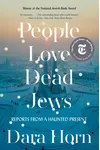
- For the Nonfiction Reader (The Most Popular Choice): Start with People Love Dead Jews: Reports from a Haunted Present (2021). This brilliant, sharp, and highly acclaimed collection of essays explores how modern culture handles Jewish memory and history. It is a fantastic introduction to Horn’s razor-sharp intellect, dark humor, and scholarly approach.
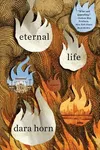
- For the Fiction Lover of Magical Realism: Start with Eternal Life (2018). This novel tells the story of Rachel, a woman who made a vow in Roman-era Jerusalem that traded her mortality to save her dying son. Having lived for two thousand years, Rachel must navigate the modern digital age, where changing identities and keeping her secrets becomes nearly impossible. It is highly readable, funny, and deeply moving.
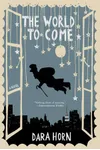
- For the Mystery and Art Enthusiast: Start with The World to Come (2006). Blending Yiddish folklore, Soviet history, and a modern museum heist, it follows a former child prodigy who steals a Marc Chagall painting he believes belonged to his family. It is a gorgeous puzzle box of a novel.
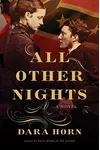
- For the Historical Fiction Fan: Start with All Other Nights (2009). Set during the American Civil War, this historical spy thriller follows a Jewish Union soldier tasked with spying on his own family and marrying a Confederate courier.
Dara Horn Books in Publication Order
If you prefer to see an author's style evolve over time, reading in publication order is a great path. Her novels grew increasingly ambitious in structure, moving from traditional multi-generational stories to complex sci-fi and historical hybrids.
Standalone Novels
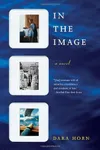
- In the Image (2002) – Horn's debut novel, which won the National Jewish Book Award. It weaves together the modern life of a young woman named Leora with the 20th-century historical memories of an elderly family friend, structured like an intricate dollhouse.
- The World to Come (2006) – A multi-generational mystery centering on a stolen Marc Chagall painting, connecting Soviet-era Yiddish writers to modern-day New Jersey.
- All Other Nights (2009) – A gripping Civil War spy novel tackling espionage, patriotism, and Jewish identity on both sides of the Mason-Dixon line.
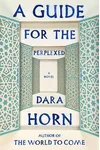
- A Guide for the Perplexed (2013) – A modern thriller about a tech prodigy kidnapped in Egypt, interlaced with the historical recovery of the Cairo Genizah archives by Solomon Schechter in the 19th century.
- Eternal Life (2018) – A philosophical and witty look at immortality, motherhood, and the heavy burden of never-ending life.
Novellas and Prequels
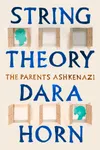
- String Theory: The Parents Ashkenazi (2014) – This novella is a direct prequel to A Guide for the Perplexed. It tells the backstory of Jacqueline Luria and Roger Ashkenazi, explaining how they met in 1980 and detailing the family dynamics that would later fuel the fierce sibling rivalry between their daughters in the main novel.
Graphic Novels
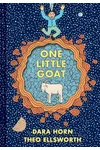
- One Little Goat: A Passover Catastrophe (2025) – Illustrated by Theo Ellsworth, this is Horn's first book for young readers. It is a playful, time-traveling graphic novel featuring a family trapped in a never-ending Passover Seder.
Nonfiction and Essays
- March Of The Living 1992: Excerpts From My Journal (1993) – Horn's earliest published work, chronicling her high school trip to Holocaust sites in Poland and Israel.
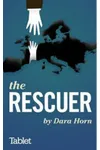
- The Rescuer (2012) – A Kindle Single that profiles Varian Fry, the American journalist who helped run an underground rescue network in Nazi-occupied France.
- People Love Dead Jews: Reports from a Haunted Present (2021) – The critically acclaimed essay collection exploring antisemitism and cultural memory.
The Sibling Prequel Dilemma: Guide vs. String Theory
The only two works in Dara Horn's bibliography that share a direct continuity are the novel A Guide for the Perplexed (2013) and the novella String Theory: The Parents Ashkenazi (2014). You have two ways to approach this pairing:
Option A: The Chronological Path (Novella First)
Read String Theory: The Parents Ashkenazi before A Guide for the Perplexed. This introduces you to Jacqueline and Roger in 1980, setting up their academic ambitions, their marriage, and the psychological groundwork for their daughters' rivalries. When you start the main novel, you will immediately understand the complex family baggage hanging over the sisters.
Option B: The Publication Path (Novel First - Recommended)
Read A Guide for the Perplexed first, and treat String Theory as a companion backstory. The novel is designed to stand on its own, and unraveling the mystery of the sisters' relationship without knowing the exact details of their parents' youth makes for a more suspenseful read. The prequel novella then serves as a satisfying puzzle piece that fills in the gaps afterwards.
What to Know Before You Start
Dara Horn is not just a storyteller; she is a scholar with a Ph.D. in Yiddish and Hebrew Literature from Harvard. Because of this, her novels are incredibly rich in historical research and intertextuality. She frequently bases her fiction on real historical figures, such as the Yiddish writer Der Nister, the artist Marc Chagall, the scholar Solomon Schechter, and the rescuer Varian Fry. Understanding that her work bridges the line between ancient traditions, historical fact, and modern-day dilemmas will help you appreciate the layered depth of her narratives.