

Where to Start with Dave Canterbury
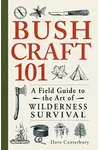
For anyone looking to transition from casual camping to self-reliant wilderness survival, Dave Canterbury’s books are the modern gold standard. Unlike fiction series where chronology dictates the reading order, Canterbury’s non-fiction survival manuals are best approached based on your current skill level and practical needs. If you are new to his philosophy, the best place to start is undoubtedly Bushcraft 101: A Field Guide to the Art of Wilderness Survival (2014). This book introduces his signature "5 Cs of Survivability" and serves as the foundation for all his subsequent works.
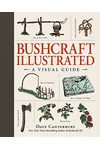
For visual learners, Bushcraft Illustrated (2019) acts as an alternative starting point or a companion guide, translating the core concepts of the first book into detailed diagrams and illustrations. Once you have mastered these basics, you can branch out into specialized topics like foraging, advanced wilderness navigation, and first aid.
The Core Bushcraft Series in Publication Order
Canterbury’s mainstream success is defined by his core series published by Adams Media (a division of Simon & Schuster). Reading them in publication order shows how his teaching philosophy evolved from general survival basics to highly specific wilderness skills:
- Bushcraft 101: A Field Guide to the Art of Wilderness Survival (2014) – The foundational text that teaches you how to pack, prepare, and survive using minimal gear.
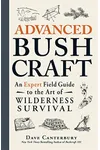
- Advanced Bushcraft: An Expert Field Guide to the Art of Wilderness Survival (2015) – Takes the basics further, focusing on long-term wilderness living, tracking, and utilizing resources found in the deep woods.
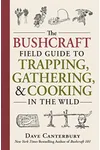
- The Bushcraft Field Guide to Trapping, Gathering, and Cooking in the Wild (2016) – A deep dive into food procurement, detailing primitive traps, wild edible plants, and outdoor cooking techniques.
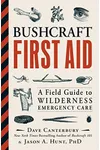
- Bushcraft First Aid: A Field Guide to Wilderness Emergency Care (2017) – Co-authored with Jason A. Hunt, this guide covers wilderness medicine, emergency response, and improvised first aid when help is hours or days away.
- Bushcraft Illustrated: A Visual Guide to Wilderness Survival (2019) – A fully illustrated, graphic-heavy guide covering shelter-building, knot-tying, and tool usage.
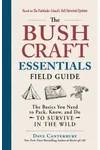
- The Bushcraft Essentials Field Guide: A Field Guide to Wilderness Survival (2022) – A condensed, pocket-sized reference compiling the most critical survival checklists and quick-reference instructions for field use.
The 2012 Pathfinder Pocket Guides
Before his core series achieved New York Times bestseller status, Canterbury self-published and distributed a series of highly specialized, short-form pocket guides in 2012 through his training school. These quick-reference booklets are designed to be lightweight additions to a backpack, focusing on a single survival discipline per volume. While much of this knowledge was later integrated into his larger books, these individual guides remain popular for targeted study:
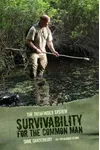
- Survivability For The Common Man (2012) – The original blueprint for the Pathfinder System.
- Edible Plants of the Eastern Woodlands (2012) – Focusing on identification and preparation of wild food.
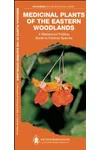
- Medicinal Plants of the Eastern Woodlands (2012) – A guide to natural remedies and plant-based first aid.
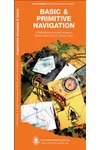
- Basic & Primitive Navigation (2012) – Navigation without a compass using celestial bodies and natural signs.
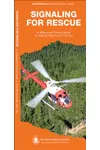
- Signaling for Rescue (2012) – Methods to attract search-and-rescue teams.
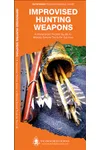
- Improvised Hunting Weapons (2012) – Crafting primitive tools for food procurement.
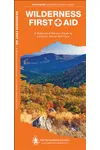
- Wilderness First Aid (2012) – Early emergency care concepts.
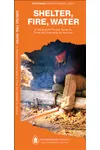
- Shelter, Fire, Water (2012) – The three immediate elements of survival.
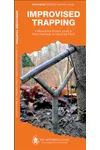
- Improvised Trapping (2012) – Small game trapping methods.
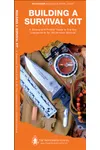
- Building a Survival Kit (2012) – Gear selection and packing logic.
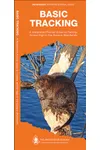
- Basic Tracking (2012) – Reading signs and animal tracks.
Recommended Skill-Progression Reading Order
While publication order is logical, a skill-progression reading order is far more practical for outdoor enthusiasts who want to build their capabilities step-by-step. Here is the recommended path to reading Dave Canterbury's works:
Phase 1: The Fundamentals
Start with Bushcraft 101 to learn the framework of survival. If you prefer visual learning or want clear diagrams of knots and shelters, read Bushcraft Illustrated alongside it. These two books will give you the theoretical knowledge to survive a short-term emergency in the wild.
Phase 2: Sustenance and Safety
Once you understand shelter, fire, and basic tools, read The Bushcraft Field Guide to Trapping, Gathering, and Cooking in the Wild to learn how to sustain yourself over longer periods. Simultaneously, study Bushcraft First Aid (co-authored with Jason A. Hunt) to ensure you can handle injuries, breaks, and illnesses that happen when you are far from civilization.
Phase 3: Mastery and Advanced Skills
Move on to Advanced Bushcraft to learn tracking, navigation, and advanced tool usage. This book is intended for those who want to transition from surviving to truly living off the grid for extended periods.
Phase 4: Field Reference
Keep The Bushcraft Essentials Field Guide or the 2012 pocket guides (such as Edible Plants of the Eastern Woodlands) in your pack as quick-reference manuals while you are actually in the field.
What to Know Before You Start
Dave Canterbury’s entire survival philosophy revolves around the "5 Cs of Survivability": a Cutting tool, a Combustion device, a Cover, a Container, and Cordage. He argues that these five items are the hardest to replicate in the wild and should form the core of any survival kit. Understanding this principle is crucial, as almost all of his books build upon these five pillars. His guides are written in a direct, hands-on style derived from his years of military experience and his work at the Pathfinder School. They are meant to be practiced in the field, not just read on a couch.