


Where to Start: The Recommended Sibley Path
Unlike narrative fiction series, the books of renowned ornithologist and illustrator David Allen Sibley are field guides, reference volumes, and natural history masterpieces. Because of this, there is no chronological story to follow. Instead, your reading path depends entirely on your experience level and how you plan to use the books. Here is the recommended way to approach his bibliography:
1. For Beginners: Start with Birding Basics
If you are new to birdwatching, jumping straight into a massive 600-page field guide can be overwhelming. The absolute best place to start is Sibley's Birding Basics (2002). This compact guide doesn't focus on listing every species; instead, it teaches you how to watch birds. You will learn about feather groups (topology), bird shapes, behaviors, how to interpret songs, and how to avoid common pitfalls like misidentifying a bird due to lighting or distance. Reading this first will make his larger guides much easier to navigate.
2. For the Field: The Regional Field Guides
Once you are ready to identify birds outside, you need a portable guide. Sibley split North America along the Rocky Mountains to create two highly focused, lightweight regional volumes. You should select the one matching your geography:
- The Sibley Field Guide to Birds of Eastern North America: Covers approximately 650 species found east of the Rockies.
- The Sibley Field Guide to Birds of Western North America: Covers over 700 species found west of the Rockies.
These books are compact enough to fit in a large pocket or backpack, making them the perfect companions for hikes and backyard observation.
3. For the Library: The Master Reference
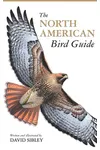
The crown jewel of Sibley's work is The Sibley Guide to Birds (also published internationally as The North American Bird Guide). This is the comprehensive, heavy master volume covering more than 900 species across the entire continent. Because it is bulky and weighs nearly 2.5 pounds, it is best kept on your home bookshelf, in your car, or at your backyard viewing station. It features the maximum number of hand-painted illustrations, showcasing rare plumages, regional subspecies, and flight patterns that are condensed or omitted in the regional field guides.
Critical Caveat: The Importance of Second Editions
When purchasing Sibley's core identification guides, it is critical to ensure you are getting the Second Editions. David Allen Sibley spent years updating and revising his original works to reflect changes in science and user feedback:
- The Sibley Guide to Birds (Second Edition, 2014): Updated with revised taxonomy, new range maps showing climate shift impacts, and over 600 new illustrations.
- The Sibley Field Guides to Eastern & Western North America (Second Editions, 2016): These versions were completely redesigned to match the layout of the Big Sibley, organizing species accounts in vertical columns to allow for much easier side-by-side comparisons of similar birds.
Sibley’s Behavior and Science Guides
Once you have mastered identification, Sibley offers books that explore what birds are actually doing and how they live:
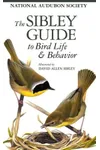
The Sibley Guide to Bird Life & Behavior (2001)
Organized by bird family, this book is designed as a companion to the main identification guide. Rather than showing you how to identify a species, it details the evolution, anatomy, habitat, nesting habits, and feeding behaviors of each family group. It is an essential read for anyone wanting to move from simple bird identification to true ornithological understanding.
What It's Like to Be a Bird (2020)
This large-format, beautifully illustrated book is written for a general audience. It answers common questions about bird physiology and daily life, such as how birds fly, how they sleep, how their eyes perceive the world, and why they sing. It serves as an engaging, standalone read that appeals equally to children, casual nature lovers, and hard-core birders.
How to Use Sibley's Guides Together
To get the most out of your birding experience, the ideal setup is to use Sibley's books as a cohesive ecosystem. Beginners should read Sibley's Birding Basics first to train their eyes and ears. Once in the field, carry the regional field guide (Eastern or Western) for fast, on-the-spot identification. If you spot a rare or unusually colored bird that doesn't seem to match the illustrations in the portable guide, note its features or snap a photo. When you return home, consult the Big Sibley (the comprehensive master guide) to study the detailed subspecies plumages and geographical variations. Finally, look up the species' family in The Sibley Guide to Bird Life & Behavior to understand its nesting patterns and migration schedules. This multi-layered approach turns birdwatching from a simple checklist game into a deep, rewarding study of nature.
Beyond Birds: Sibley's Tree Guides
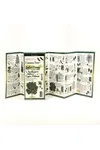
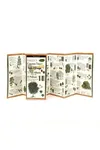
Sibley brought his famous visual layout and meticulous identification style to the botanical world with The Sibley Guide to Trees (2009). This volume is a comprehensive guide to over 600 tree species in North America. Just like his bird guides, it uses hand-painted illustrations to detail leaves, twigs, bark, flowers, and fruit, showing how they change throughout the seasons. For regional tree enthusiasts, Sibley has also produced specialized folding guides for various local regions.
Companion Material and Folding Guides
To round out your collection, Sibley has created several practical tools for active nature enthusiasts:
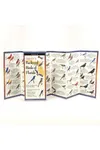
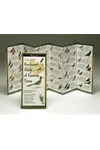
- Laminated Folding Guides: Lightweight, waterproof pamphlets focusing on specific regions or families (such as Owls of North America, Backyard Birds of Florida, or Raptors of North America). These are perfect for keeping by the window or giving to children.
- The Sibley Birder's Life List and Field Diary (2017): A structured journal for recording your own sightings, dates, and locations.
- The Sibley Birds Coloring Field Journal (2016): An interactive way to study bird markings by coloring Sibley’s own outlines.
Complete Publication Order of David Allen Sibley's Major Works
While Sibley's books are designed to be used based on need rather than publication date, here is the chronological order of his major releases for reference:
- The Birds of Cape May (1993; revised editions in 1997 and later) — Sibley's early local checklist guide.
- The Sibley Guide to Birds (2000) — The groundbreaking first edition of the master guide.
- The Sibley Guide to Bird Life & Behavior (2001) — The family-by-family ecology reference.
- Sibley's Birding Basics (2002) — The essential instructional guide for beginners.
- The Sibley Field Guide to Birds of Eastern North America (2003) — Portable regional guide (First Edition).
- The Sibley Field Guide to Birds of Western North America (2003) — Portable regional guide (First Edition).
- The Sibley Guide to Trees (2009) — Comprehensive guide to North American trees.
- The Sibley Guide to Birds, Second Edition (2014) — The fully updated master reference.
- The Sibley Field Guide to Birds of Eastern North America, Second Edition (2016) — Updated portable guide with vertical layout.
- The Sibley Field Guide to Birds of Western North America, Second Edition (2016) — Updated portable guide with vertical layout.
- What It's Like to Be a Bird (2020) — Large-format illustrated exploration of avian biology and behavior.