

















Where to Start Reading David Graeber
David Graeber was an anthropologist, anarchist, and activist who possessed a rare talent: he could take complex institutional structures and lay them bare with wit, storytelling, and rigorous historical perspective. Because his works are standalone non-fiction volumes rather than a serialized narrative, there is no single mandatory path. However, jumping straight into his most academic works can feel overwhelming. We recommend tailoring your starting point to your specific interests and reading style.
The Most Accessible Entry Point: Bullshit Jobs
For most readers, the best starting point is Bullshit Jobs: A Theory (2018). Grounded in real-world testimonies and written with a sharp, dark humor, this book explores why so many modern administrative, corporate, and clerical jobs feel completely meaningless to the people doing them. It serves as an excellent introduction to Graeber's trademark style: taking an everyday frustration that most people take for granted, examining it through a historical and social lens, and showing that society does not have to function this way.
The Landmark Masterpiece: Debt: The First 5,000 Years
If you want to dive straight into the work that cemented Graeber's reputation as a world-class public intellectual, begin with Debt: The First 5,000 Years (2011). This sweeping history of human civilization dismantles the traditional economic myth that money evolved to replace barter. Instead, Graeber demonstrates that virtual credit and social debt have existed far longer than physical coins. While highly rigorous and detailed, it remains incredibly engaging and fundamentally changes how readers view money, morality, and human relationships.
The Radical Primer: Fragments of an Anarchist Anthropology
For readers who want a brief but potent introduction to the philosophical foundation undergirding all of Graeber's work, Fragments of an Anarchist Anthropology (2004) is the perfect place to start. At just under 100 pages, this essay is a quick, accessible read that outlines how communities can organize themselves democratically and horizontally without relying on top-down state structures.
David Graeber Books in Publication Order
If you prefer to follow the development of Graeber's thought as it evolved over his career, reading in publication order is a rewarding approach. This pathway shows his progression from fieldwork-heavy anthropological studies to sweeping global histories and contemporary political critiques.
Note: While local databases and bibliographies sometimes list slight differences in release years due to regional publisher schedules, the general chronology of his primary non-fiction books is as follows:
- Toward An Anthropological Theory of Value: The False Coin of Our Own Dreams (2001) – An academic foundation focusing on value theory in anthropology.
- Fragments of an Anarchist Anthropology (2004) – A short manifesto linking anarchist theory with anthropological findings.
- Lost People: Magic and the Legacy of Slavery in Madagascar (2007) – An ethnography based on his doctoral fieldwork in Madagascar.
- Possibilities: Essays on Hierarchy, Rebellion, and Desire (2007) – A collection of essays expanding his anthropological theories.
- Revolutions in Reverse: Essays on Politics, Violence, Art, and Imagination (2009 / 2011) – Brief essays addressing activist strategy and imagination.
- Direct Action: An Ethnography (2009) – A massive, detailed study of the global justice movement from the perspective of an active participant.
- Debt: The First 5,000 Years (2011) – His breakthrough book tracing the history of debt, money, and power.
- The Democracy Project: A History, a Crisis, a Movement (2013) – Reflects on his time with the Occupy Wall Street movement and the history of democratic practice.
- The Utopia of Rules: On Technology, Stupidity, and the Secret Joys of Bureaucracy (2015) – A critique of the corporate and state bureaucracy that dominates modern life. (Note: Initial drafts or small editions appeared in 2013, but the wide release was 2015).
- On Kings (2017) – Co-authored with Marshall Sahlins, exploring the origins of sovereignty and kingship.
- Bullshit Jobs: A Theory (2018) – His popular work investigating useless employment.
- Anarchy — In a Manner of Speaking (2020) – A book-length interview discussing anarchist ideas and his personal intellectual trajectory.
- The Dawn of Everything: A New History of Humanity (2021) – A posthumously published revisioning of human history, co-authored with David Wengrow.
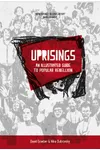
- Uprisings: An Illustrated Guide to Popular Rebellion (2022) – An illustrated exploration of historical rebellions, co-authored with Nika Dubrovsky.
- Pirate Enlightenment, or the Real Libertalia (2023) – A posthumous exploration of pirate societies in 18th-century Madagascar and their democratic structures.
Co-Authored and Posthumous Works
Following his sudden passing in 2020, several significant manuscripts Graeber had been working on were completed and published posthumously. These works represent some of his most ambitious thinking.
- The Dawn of Everything (2021): Written over ten years with archaeologist David Wengrow, this international bestseller challenges the conventional narrative that human societies inevitably progress from small, egalitarian bands of hunter-gatherers to complex, unequal states. It is a massive, intellectually thrilling volume that acts as a fitting capstone to Graeber's life's work.
- Pirate Enlightenment, or the Real Libertalia (2023): This book returns to Graeber's research roots in Madagascar, arguing that the legends of egalitarian pirate kingdoms like Libertalia were not just myths, but real experiments in democratic self-governance that influenced the European Enlightenment.
- Uprisings (2022): Created with his wife Nika Dubrovsky, this is an accessible, illustrated guide aimed at visualizing historical social movements and popular rebellions.
What to Know Before You Start
Graeber's writing is highly interdisciplinary, blending anthropology, history, economics, and political philosophy. However, you do not need a background in any of these fields to enjoy his books. He deliberately wrote in a friendly, conversational tone, avoiding heavy academic jargon wherever possible.
His fundamental worldview is that human institutions—whether they are money, governments, or corporate offices—are created by humans. Because we created them, we have the power to change them or build something else. Keeping this perspective in mind makes it much easier to trace the unifying thread across all of his books, from his dense anthropological studies of Madagascar to his modern critiques of bureaucracy.