
Where to Start Reading David H. Freedman
Because David H. Freedman writes standalone, investigative non-fiction rather than serialized fiction, there is no single narrative timeline you must follow. However, depending on your personal interests, certain books stand out as the ideal entry point to his work:
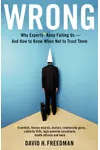
- For the Critical Thinker: Start with Wrong: Why Experts Keep Failing Us—And How to Know When Not to Trust Them (2010). This is Freedman's most widely discussed work. It serves as an eye-opening guide to skepticism, analyzing why public experts—from medical researchers and financial advisors to parenting gurus—frequently offer incorrect advice, and how you can spot flawed studies.
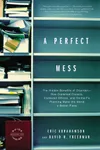
- For the Organizer (or the Messy): Start with A Perfect Mess: The Hidden Benefits of Disorder (2006), co-authored with Eric Abrahamson. If you've ever felt guilty about a cluttered desk or disorganized schedule, this book provides a liberating and research-backed defense of the constructive power of messiness.
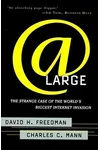
- For the Tech Thriller Fan: Start with At Large: The Strange Case of the World's Biggest Internet Invasion (1997), co-authored with Charles C. Mann. This gripping piece of narrative non-fiction reads like a cyberpunk thriller, tracing one of the earliest global internet hacking investigations.
David H. Freedman Books in Publication Order
Reading Freedman's books in chronological publication order highlights his progression from exploring the frontiers of artificial intelligence to analyzing human systems, business management, and eventually the limitations of expert knowledge. Below is the complete list of his books by release date:
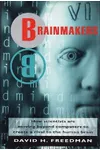
1. Brainmakers: How Scientists Are Moving Beyond Computers to Create a Rival to the Human Brain (1994)
In his debut book, Freedman takes readers inside the labs of pioneering roboticists, neuroscientists, and computer engineers who, in the early 1990s, sought to break away from traditional silicon-chip architectures. The book details the early struggle to build artificial intelligence modeled on biological neural networks, offering a fascinating historical snapshot of the concepts that laid the groundwork for modern AI and machine learning.
2. At Large: The Strange Case of the World's Biggest Internet Invasion (1997)
Co-authored with Charles C. Mann, this narrative non-fiction book chronicles the real-life hunt for a mysterious hacker known by the aliases "Phantomd" and "Infomaster." In the early, wild-west days of the public internet, this hacker successfully breached high-security networks at academic institutions, corporations, military research facilities, and government offices. The book offers both an exciting detective story and an early warning about global network vulnerabilities.
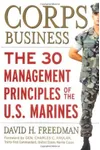
3. Corps Business: The 30 Management Principles of the U.S. Marines (2000)
Freedman shifts his focus to organizational management in this study of the United States Marine Corps. He examines how a large, highly disciplined organization successfully fosters quick decision-making, flexibility under pressure, and decentralized leadership. Freedman translates these military principles into thirty practical lessons that corporate leaders and managers can apply to civilian businesses.
4. A Perfect Mess: The Hidden Benefits of Disorder—How Crammed Closets, Cluttered Offices, and On-the-Fly Planning Make the World a Better Place (2006)
Co-authored with Columbia Business School professor Eric Abrahamson, this book challenges the multi-billion-dollar professional organization industry. Through engaging anecdotes and scientific studies, the authors argue that moderate levels of disorder, randomness, and flexibility lead to greater efficiency, creativity, and resilience than rigid, hyper-organized systems.
5. Wrong: Why Experts Keep Failing Us—And How to Know When Not to Trust Them (2010)
Freedman's fifth book is a deep dive into the business of expert advice. He investigates the systemic biases, flaws in scientific research methodologies, media distortions, and human tendencies that cause prominent experts to frequently get it wrong. The book serves as a vital toolkit for readers looking to evaluate claims in medicine, nutrition, finance, and business.
Important Clarification: The Two David Freedmans
When searching for David H. Freedman's books, readers often run into a common point of confusion. There are two major authors in the science and data space with very similar names:
- David H. Freedman: The journalist and author of the five popular non-fiction books detailed in this guide. He is a contributing editor at The Atlantic and Inc. who writes narrative non-fiction and investigative articles for a general audience.
- David A. Freedman (1938–2008): The late, highly distinguished professor of mathematical statistics at the University of California, Berkeley. He co-authored the classic academic textbook Statistics (with Robert Pisani and Roger Purves) and wrote Statistical Models: Theory and Practice.
On his official website, David H. Freedman explicitly clarifies that he uses his middle initial to prevent confusion with the late Berkeley statistician. Make sure to check the middle initial when buying or researching his books!