
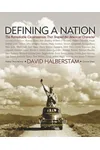

Where to Start Reading David Halberstam
Because David Halberstam wrote standalone works of journalism and narrative history rather than serialized fiction, there is no single required reading sequence. Instead, the best path depends entirely on your specific interests. Here are the three primary entry points recommended for new readers:
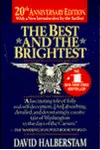
- For Politics and American Power: Start with The Best and the Brightest (1972). This is widely considered Halberstam's masterpiece, detailing the intellectual hubris that led the United States into the Vietnam War.
- For Social History: Start with The Fifties (1993). It is a highly readable, massive chronicle of the decade that shaped modern consumer culture, civil rights, and political division.
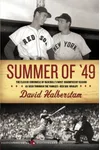
- For Sports Fanatics: Start with Summer of '49 (1989), a nostalgic look at the legendary Yankees-Red Sox pennant race, or The Breaks of the Game (1981), which is frequently cited as one of the greatest basketball books ever written.
The Vietnam and Foreign Policy Reading Path
Halberstam's early fame was built on his fearless, Pulitzer Prize-winning reporting from the battlefields of Vietnam. For readers wanting to understand the trajectory of 20th-century American foreign policy and military conflict, we recommend reading his books in this thematic order:
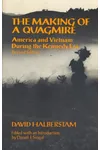
- The Making of a Quagmire: America and Vietnam During the Kennedy Era (1965) – An essential, boots-on-the-ground look at the early days of U.S. involvement.
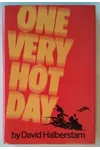
- One Very Hot Day (1967) – Halberstam’s only novel, which provides a fictionalized but highly realistic look at a single, grueling day for soldiers in Vietnam.
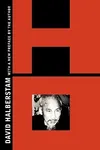
- Ho (1971) – A brief, insightful biography of Vietnamese leader Ho Chi Minh.
- The Best and the Brightest (1972) – The definitive, sweeping political post-mortem on the decision-making of the Kennedy and Johnson administrations.
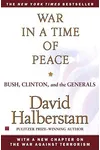
- War in a Time of Peace: Bush, Clinton and the Generals (2001) – A look at the post-Cold War era, tracking how the legacy of Vietnam shaped modern military interventions in the Gulf, Bosnia, and Kosovo.
- The Coldest Winter: America and the Korean War (2007) – Published posthumously, this book acts as a chronological prequel, exploring the roots of Cold War military strategy in Asia.
The American Culture and Power Reading Path
Beyond military conflicts, Halberstam was fascinated by how institutional power was accumulated and projected within American society. This path traces the rise of media empires, industrial shifts, and the fight for civil rights:
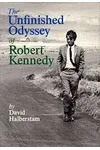
- The Unfinished Odyssey of Robert Kennedy (1969) – A close-up look at the political campaign and ideals of RFK before his tragic assassination.
- The Powers That Be (1979) – A monumental study of the media giants (CBS, Time, The Los Angeles Times, and The New York Times) and their role in shaping public opinion and politics.
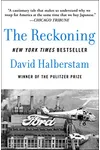
- The Reckoning (1986) – A fascinating parallel history of the American auto industry (specifically Ford) and its Japanese competitor (Nissan), capturing the shifting economic tides of the late 20th century.
- The Next Century (1991) – A short reflective essay on America's competitiveness and international standing at the end of the Cold War.
- The Fifties (1993) – The broad cultural baseline that sets the stage for the social upheavals of the subsequent decades.
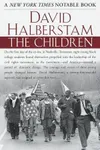
- The Children (1998) – A deeply personal return to Halberstam's reporting roots, tracking the lives and legacy of the young student activists of the Nashville civil rights movement.
- Firehouse (2002) – A localized, raw portrait of Engine 40, Ladder 35 in the wake of the September 11 terrorist attacks.
The Sports and Character Reading Path
Halberstam did not write about sports simply to recap games; he used athletic arenas as a lens to view American character, friendship, and changing demographics. This path organizes his sports journalism from the most universally acclaimed onwards:
- The Breaks of the Game (1981) – Following the 1979–1980 Portland Trail Blazers, this book explores the commercial pressures, racial dynamics, and team politics of professional basketball.
- The Amateurs (1985) – A focused, intimate look at the obsessive world of competitive rowing and the athletes training for the 1984 Olympics.
- Summer of '49 (1989) – A classic sports history focusing on the historic baseball rivalry between Joe DiMaggio's Yankees and Ted Williams' Red Sox.
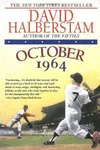
- October 1964 (1994) – A companion piece of sorts to Summer of '49, this chronicle of the 1964 World Series between the Cardinals and Yankees highlights the integration and modernization of the game.
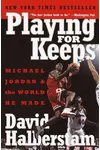
- Playing for Keeps: Michael Jordan and the World He Made (1999) – A cultural history of how Michael Jordan and Nike transformed basketball into a global entertainment empire.
- The Teammates: A Portrait of a Friendship (2003) – A short, poignant look at the lifelong bonds of baseball greats Ted Williams, Dom DiMaggio, Johnny Pesky, and Bobby Doerr as they make one final road trip.
- The Education of a Coach (2005) – A deep dive into the coaching philosophy and upbringing of NFL legend Bill Belichick.
- The Glory Game: How the 1958 NFL Championship Changed Football Forever (2008) – A portrait of the historic Giants vs. Colts game that popularized professional football on television.
Co-authored and Posthumous Works
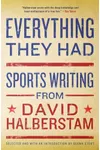
Due to Halberstam's sudden death in a car crash in April 2007, his final projects had unique paths to publication. The Coldest Winter was completed before his death but published posthumously in late 2007. His final sports book, The Glory Game, was left unfinished. Former New York Giants player and broadcaster Frank Gifford, who had played in the historic 1958 game, stepped in to complete the manuscript, which was published in 2008 (or 2009, depending on the edition). Halberstam's sports writing was also anthologized posthumously in the collection Everything They Had (2008).