

Where to Start Reading David Lindsay
Because all of David Lindsay's novels are standalone works, there is no single narrative continuity that you must follow. However, because his styling, pacing, and philosophical complexity vary wildly, your choice of entry point will heavily shape your reading experience.
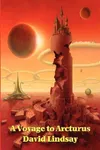
The Recommended Starting Point: A Voyage to Arcturus (1920)
Almost all readers should start with A Voyage to Arcturus. It is not only Lindsay's debut but also his undisputed masterpiece. It is the most readily available of his books and provides immediate exposure to his unique brand of Gnostic-inspired cosmic fantasy. If you appreciate its surreal landscapes and heavy metaphysical trials, you will find his other works rewarding. If you struggle with it, you might prefer his more domestic-focused stories next.
The Accessible Alternative: The Haunted Woman (1922)
If a cosmic journey to an alien planet feels too daunting, your best alternative starting point is The Haunted Woman. It grounds its supernatural elements—specifically a mysterious house with a hidden, shifting staircase—in a recognizable, early 20th-century English setting. It blends psychological romance with metaphysical exploration, serving as a gentler introduction to his writing style.
David Lindsay Books in Publication Order
During his lifetime, Lindsay published five novels. Two additional novels were left unpublished at the time of his death in 1945 and were eventually released together in a single volume in 1976. Reading his novels in publication order allows you to see how his writing transitioned from raw cosmic allegory to drawing-room science fiction, commercial historical adventure, and eventually back to massive mythological epics.
- A Voyage to Arcturus (1920)
- The Haunted Woman (1922)
- Sphinx (1923)
- The Adventures of Monsieur de Mailly (1926) – Also published under the title "A Blade for Sale" in the United States (1927).
- Devil's Tor (1932)
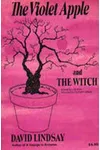
- The Violet Apple (written in 1924, published posthumously in 1976)
- The Witch (unfinished, written in his final years, published posthumously in 1976)
Deep Dive into David Lindsay's Novels
A Voyage to Arcturus (1920)
This legendary novel follows a protagonist named Maskull as he travels to Tormance, an alien planet orbiting the double star system of Arcturus. Tormance is a shapeshifting landscape where new sensory organs grow to perceive new colors, emotions, and moral realities. Maskull's journey is a pilgrimage of the soul, exploring Gnostic themes of illusion, suffering, and the search for absolute truth beyond the deceptive creations of the demiurge Crystalman.
The Haunted Woman (1922)
Set in a quiet English country house, this novel centers on Isbel Loment and her complex romantic interests. When a hidden door and staircase appear, leading to a mystical upper floor, those who ascend find their perceptions changed. On this hidden level, characters can speak and feel with absolute, unshielded honesty—an intimacy that they completely forget the moment they descend back to the ordinary world. It is a haunting exploration of the barriers between human souls.
Sphinx (1923)
In Sphinx, Lindsay attempts to merge his metaphysical philosophy with the contemporary drawing-room drama of the 1920s. The protagonist, Nicholas Cabot, is an inventor who develops a machine designed to record deep-sleep dreams and translate them into visible, psychical experiences. The scientific quest soon overlaps with local social gossip, romantic rivalries, and the tragic fate of a local composer, Lore Jensen.
The Adventures of Monsieur de Mailly (1926)
Often referred to as a "potboiler," this is the most unusual entry in Lindsay's bibliography. Written as a deliberate attempt to achieve commercial success after his previous novels failed to sell well, this is a swashbuckling historical adventure set in the court of Louis XIV. It is unique among Lindsay's works because it almost entirely lacks the metaphysical, Gnostic, and supernatural themes that define his other books. US editions were published under the title A Blade for Sale.
Devil's Tor (1932)
Lindsay referred to this massive, slow-paced cosmological epic as his "monster." The plot begins on the Dartmoor heights of Devil's Tor when a lightning strike shatters a rock formation, revealing an ancient tomb. The story follows Ingrid Fleming and the convergence of two halves of a sacred, meteoric stone stolen from a Tibetan monastery. Uniting the stone fulfills a prophecy to bring together a chosen man and woman, setting the stage for a new human savior. The book is dense, challenging, and deeply philosophical.
The Violet Apple (Written 1924, Published 1976)
A metaphysical reimagining of the Genesis story, this novel focuses on Anthony Kerr, a playwright who inherits a Venetian glass dragon containing seeds said to have come from the original Tree of Knowledge. When the seeds are planted, they produce a small tree bearing two violet-colored fruits. When consumed, the fruit triggers a massive expansion of consciousness, altering the lives of the characters forever.
The Witch (Unfinished, Published 1976)
Lindsay's final, unfinished work is a highly symbolic novel. It centers on Ralf, a man who undergoes a spiritual awakening after being invited to the home of a mysterious woman named Urda, who lives on the Sussex Downs. There, he experiences visions of the soul's journey after death. The posthumous publication includes nineteen completed chapters, along with notes for a massive, prophetic twentieth chapter.
What to Know Before You Start
Readers diving into David Lindsay's library should keep several structural and stylistic caveats in mind:
- Dense, Uncompromising Prose: Lindsay was not a polished stylist in the traditional sense. His writing can be heavy, awkward, and syntactically complex. However, fans and scholars argue that his style matches the rugged, alien, and difficult nature of the concepts he explores.
- Commercial vs. Metaphysical Tension: Books like Sphinx and The Haunted Woman constantly balance mundane social conventions (such as dinner party etiquette and engagements) with universe-shattering metaphysical concepts. This contrast can be jarring but is central to his style.
- Posthumous Publications: The Violet Apple and The Witch were published decades after Lindsay's death. Because they did not receive final authorial polishes, they are best read after you are already familiar with his completed works.
- Influences on Later Giants: While Lindsay died in relative obscurity, his works went on to influence major literary figures. J.R.R. Tolkien and C.S. Lewis both read and praised A Voyage to Arcturus, with Lewis noting its profound influence on his own Space Trilogy. Literary critic Harold Bloom was so inspired by the book that he wrote a direct homage, The Flight to Lucifer.