



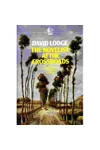
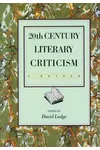
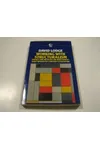


Where to Start with David Lodge
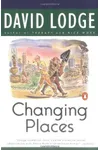
For anyone new to David Lodge, the absolute best place to start is with his legendary Campus Trilogy, beginning with Changing Places (1975). This is Lodge at his most accessible and hilarious, showcasing his trademark campus satire. While almost all of his books can technically be read as standalones, starting here gives you an immediate sense of his wit, narrative experimentation, and satirical style. If you prefer a quick taste of his Catholic-themed writing and stylistic parodies before committing to a trilogy, The British Museum Is Falling Down (1965) is an excellent alternative entry point.
The Campus Trilogy in Order
Lodge's most famous contribution to modern British literature is his Campus Trilogy. These three novels are set in the fictional midlands industrial city of Rummidge (a stand-in for Birmingham) and the sunny, radical State University of Euphoria (a stand-in for UC Berkeley). Although each book features a self-contained story, they share characters and progress chronologically, making it highly recommended to read them in order of publication:
- Changing Places: A Tale of Two Campuses (1975) – Introduces the academic exchange program between the mild-mannered Philip Swallow of Rummidge and the bombastic Morris Zapp of Euphoria. As they swap jobs and eventually lives, cultural and marital complications ensue.
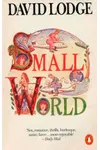
- Small World: An Academic Romance (1984) – A Booker Prize-shortlisted sequel that expands the scope globally, satirizing the international conference circuit. Swallow and Zapp return as secondary characters, alongside a younger set of academics chasing a prestigious UNESCO chair.
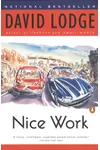
- Nice Work (1988) – Also shortlisted for the Booker Prize, this novel pairs feminist scholar Robyn Penrose with a gruff local factory manager, Vic Wilcox, in an industry-university shadow scheme. It adapts the traditional Victorian "Condition of England" novel to the Thatcherite 1980s.
Publication Order of Standalone Novels
If you wish to trace Lodge's progression as a novelist, reading his standalones in order of publication reveals how his style evolved from early realist social dramas to complex, postmodern comic novels. Here is the complete list of his standalone novels in publication order:
- The Picturegoers (1960) – Lodge's debut novel, centering around a group of young people in South London and their local cinema, exploring early themes of Catholicism, relationships, and youth culture.
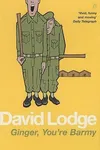
- Ginger, You're Barmy (1962) – A darker, semi-autobiographical look at the National Service in postwar Britain, based directly on Lodge's own time in the Royal Armoured Corps.
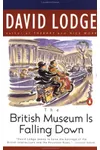
- The British Museum Is Falling Down (1965) – A breakthrough comic novel that follows a desperate Catholic graduate student over the course of a single day, filled with brilliant parodies of major twentieth-century writers.
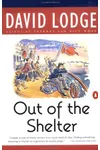
- Out of the Shelter (1970) – A coming-of-age novel following a young boy who visits his sister in occupied Germany shortly after World War II.
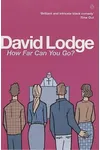
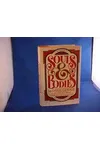
- How Far Can You Go? (1980) (Published in the US as Souls and Bodies) – A highly acclaimed, ambitious novel tracing a group of Catholic friends from their university days in the 1950s through the social revolutions of the 1970s.
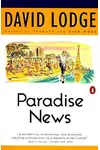
- Paradise News (1991) – A comedy-drama examining tourism, family reunions, and faith, set in Hawaii.
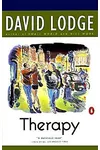
- Therapy (1995) – A witty exploration of mid-life crises, cognitive behavioral therapy, and pilgrimage, told through the diary of a successful television writer.
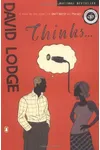
- Thinks . . . (2001) – Set at a fictional campus, this novel explores the debate between cognitive science and literary imagination, focusing on an affair between a cognitive scientist and a creative writing professor.
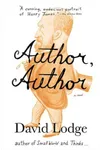
- Author, Author (2004) – A biographical novel detailing the life of American-British author Henry James, particularly focusing on his theatrical failures.
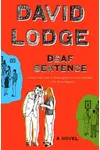
- Deaf Sentence (2008) – A comedy-drama about a retired linguistics professor dealing with the challenges of hearing loss, aging, and family duties, drawing heavily on Lodge's personal experiences.
- A Man of Parts (2011) – A biographical novel focused on the life, loves, and legacy of pioneering science fiction writer and thinker H.G. Wells.
Short Stories and Play Adaptations
Lodge has also worked in shorter fiction formats and playwriting. These should be approached as companion pieces to his major novels:
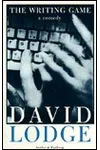
- The Writing Game (1991) – A play exploring the drama and politics of a creative writing course at a residential college.
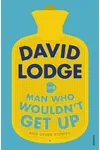
- The Man Who Wouldn't Get Up and Other Stories (1997) – A collection of short stories showcasing Lodge's versatile writing styles.
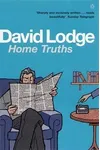
- Home Truths (1999) – Originally written as a play in 1998, this work was adapted by Lodge into a novella. It centers on a semi-retired writer and a screening of media intrusion, capturing the theatrical dynamics of its stage origins.
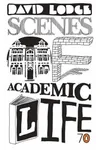
- Scenes of Academic Life (2005) – A specialized collection gathering his campus-themed short pieces and stories.
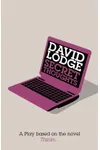
- Secret Thoughts (2011) – A stage play adaptation of his novel Thinks . . ..
Non-Fiction, Literary Criticism, and Memoirs
As a former Professor of English Literature at the University of Birmingham, Lodge's critical essays are highly regarded for making complex literary theory accessible to general readers. Notable works include:
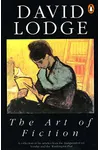
- The Art of Fiction (1992) – A collection of short newspaper columns dissecting different narrative devices, from stream-of-consciousness to metafiction.
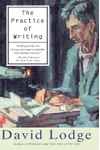
- The Practice of Writing (1996) – A collection of essays detailing the creative process, adapting books for television, and the writer's craft.
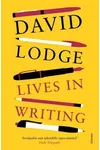
- Lives in Writing (2014) – Essays analyzing the relationship between biography and creative writing.
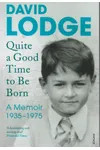
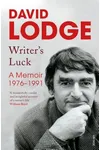
- The Memoirs Trilogy: Lodge has detailed his life across three extensive memoirs: Quite a Good Time to be Born (2015), Writer's Luck (2018), and Varying Degrees of Success (2021).
A Note on the "Bloomsbury Revelations" Listing
In standard database structures, David Lodge is sometimes associated with a long list of philosophical and theoretical works under the "Bloomsbury Revelations" banner. This is a reprint series from Bloomsbury Academic containing major works of philosophy, theory, and literature. David Lodge's critical masterpiece, The Modes of Modern Writing (1977), was selected to be part of this prestigious series. However, he did not write, co-author, or edit the other entries in the Bloomsbury Revelations catalog (such as works by Gilles Deleuze, Henri Bergson, or Jean-Paul Sartre). Readers searching for Lodge's actual writings can skip the rest of that list.