


Where to Start with David Macaulay
David Macaulay’s books do not follow a single continuous storyline, meaning you don't have to read them in a strict chronological order. Instead, his bibliography is divided into distinct thematic tracks. Depending on your interests, there are three ideal starting points:
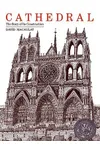
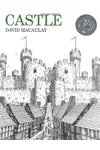
- The Architecture & Construction Path: Start with Cathedral (1973) or Castle (1977). These detailed, illustrated guides to fictional historical structures are masterpieces of draftsmanship and the perfect entry point to his structural books.
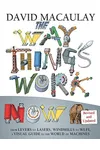
- The Technology & How-It-Works Path: Start with The Way Things Work Now (2016). This updated version of his 1988 classic uses humorous woolly mammoths to explain everything from levers to digital technology.
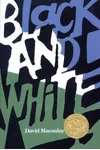
- The Creative Storytelling Path: Start with Black and White (1990). This Caldecott Medal-winning picture book challenges readers to follow four separate, interconnected stories simultaneously, showcasing Macaulay's experimental narrative style.
The Architecture and Construction Books
Macaulay’s most famous series is his collection of architectural books. Each volume focuses on a specific type of building or infrastructure, detailing how it was planned, constructed, and used in its historical context. While they were published over several decades, they can be read in any order:
- Cathedral (1973) – Details the construction of a fictional Gothic cathedral in 13th-century France.
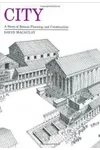
- City (1974) – Explores the planning and building of a typical Roman city, Verbonia.
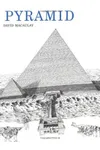
- Pyramid (1975) – Explains the steps to design and construct an ancient Egyptian pyramid.
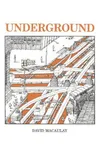
- Underground (1976) – A fascinating look at the support systems beneath a modern city street, from water mains to subway tunnels.
- Castle (1977) – Follows the construction of a 13th-century medieval castle and its town in Wales.
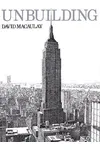
- Unbuilding (1979) – A creative look at the deconstruction process, imagining the hypothetical dismantling of the Empire State Building.
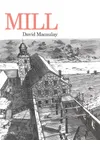
- Mill (1983) – Describes the planning, construction, and operation of a 19th-century New England textile mill.
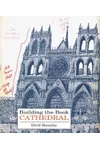
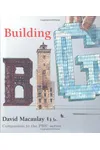
- Building the Book Cathedral (1999) – A behind-the-scenes companion to his debut book, exploring the design decisions, angles, and artistic choices behind the original 1973 work.
- Mosque (2003) – Explores the construction of a 16th-century Ottoman mosque complex, illustrating the design principles of Islamic architecture.
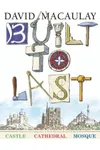
If you want to read these as a collected edition, you can look for Built to Last (2010). This omnibus updates Cathedral, Castle, and Mosque with full-color illustrations and additional research.
The "How It Works" Easy-Reader Series
In the early 2010s, Macaulay collaborated with Sheila Keenan to create a series of level-reader books designed for younger children. These books take the technical clarity of his larger works and adapt them for early readers with simplified text and targeted illustrations:
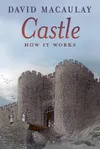
- Castle: How It Works (2012) – A simplified look at medieval castles, distinct from the 1977 masterwork.
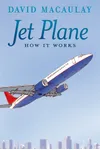
- Jet Plane: How It Works (2012) – Breaks down the mechanics of flight and jet engines.
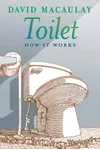
- Toilet: How It Works (2013) – A fun, educational look at the plumbing and sewage systems that keep modern cities clean.
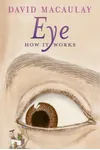
- Eye: How It Works (2013) – Explains the biological and mechanical processes behind human vision.
The Evolution of "The Way Things Work"
Macaulay’s most iconic work is his comprehensive encyclopedia of machines. Over the years, this book has been updated to reflect the rapid evolution of modern technology, particularly digital systems:
- The Way Things Work (1988) – The original bestseller co-authored with Neil Ardley, which introduced the woolly mammoths as humorous stand-ins for human curiosity.
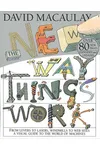
- The New Way Things Work (1998) – An updated edition that incorporated digital technology, including computers, microchips, and early internet concepts.
- The Way Things Work Now (2016) – A major revision that brings the technology up to date, adding explanations of touchscreens, Wi-Fi, and 3D printing.
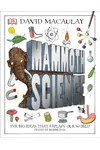
For younger readers, Macaulay expanded this universe with Mammoth Science: The Big Ideas That Explain Our World, Tested by Mammoths (2020), which focuses on core scientific principles rather than just mechanics.
Standalone Illustrated Stories & Satire
Beyond technical manuals, Macaulay has authored several works of fiction and satire that combine his architectural eye with dry humor:
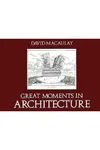
- Great Moments in Architecture (1978) – A humorous collection of architectural drawings depicting imaginary and satirical monuments.
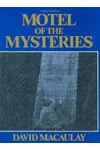
- Motel of the Mysteries (1979) – A satire of archaeology set in the year 4022, where future scientists discover a preserved 20th-century motel room and misidentify common items (like toilet seats) as sacred relics.
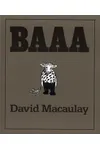
- Baaa (1985) – A dystopian story about sheep taking over a deserted human world, which offers a cautionary tale about consumerism.
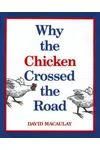
- Why the Chicken Crossed the Road (1987) – A chain-reaction comedy of errors that details the chaotic consequences of a chicken's journey.
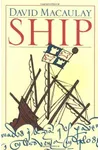
- Ship (1993) – A narrative split between modern underwater archaeologists discovering a shipwreck and a historical diary detailing the construction of a 15th-century Spanish caravel.
- Shortcut (1995) – An interconnected puzzle book featuring a series of coincidental events.
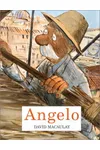
- Angelo (2002) – A heartwarming tale about an aging plasterer restoring a church and his relationship with a pigeon.
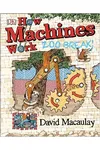
- How Machines Work: Zoo Break! (2015) – A story about two animals attempting an escape using simple machines, featuring interactive paper pop-ups and flaps.
What to Know Before You Start
When diving into David Macaulay's catalog, keep the following in mind:
- Ages and Reading Levels: His classic architectural books (like Cathedral and Pyramid) have sophisticated vocabulary and detailed diagrams, making them excellent for older kids, teens, and adults. For early readers, stick to the How It Works reader series.
- Visual Literacy: Macaulay's work relies heavily on visual storytelling. Take time to study the details in the cross-sections, perspective drawings, and character expressions, as they often contain hidden jokes or subtle information not written in the main text.
- The Mammoth Guides: You do not need to buy all three editions of The Way Things Work. The Way Things Work Now (2016) is the most complete and up-to-date version, rendering the 1988 and 1998 editions mostly obsolete except for historical interest.