

Where to Start Reading David McCullough
David McCullough did not write recurring fictional characters or sequential narrative series. Instead, he wrote stand-alone, deeply researched works of narrative non-fiction that bring American history to life. Because of this, you do not need to follow a strict chronological or publication order. You can easily start with whatever historical era, event, or figure captures your interest. However, for the best reading experience, we recommend starting with one of these three thematic entry points:
1. The Revolutionary Path (For Beginners)
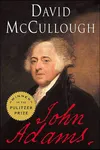
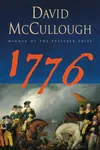
If you want to experience McCullough at the height of his storytelling power, start with John Adams (2001) followed immediately by 1776 (2005). John Adams is a sweeping biography of the brilliant, often difficult Founding Father, which won the Pulitzer Prize and was adapted into a critically acclaimed HBO miniseries. 1776 serves as a perfect companion piece, narrowing the lens to focus intensely on the military struggles of George Washington and his continental army during the pivotal year of the American Revolution.
2. The Presidential Biography Path
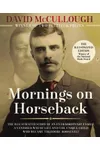
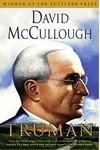
For readers who love deep, character-driven historical portraits, start with Truman (1992). This massive biography of Harry S. Truman won McCullough his first Pulitzer Prize, detailing how an ordinary man from Missouri rose to make some of the most monumental decisions in world history. Follow this with Mornings on Horseback (1981), which covers the early life, family dynamics, and formative years of Theodore Roosevelt before he entered national politics.
3. The Engineering and Innovation Path
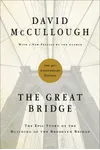
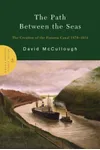
If you prefer stories about human ingenuity, grit, and the physical reshaping of the world, start with The Wright Brothers (2015), the story of Wilbur and Orville Wright's relentless pursuit of flight. Next, read The Great Bridge (1972), which details the epic and dangerous construction of the Brooklyn Bridge, followed by The Path Between the Seas (1977), McCullough's masterwork on the creation of the Panama Canal.
David McCullough Books in Publication Order
Reading McCullough's books in the order they were published allows you to see how his style evolved from focusing on localized disasters and engineering feats to grand presidential biographies and broader historical eras. Here is his complete bibliography in order of publication:
- The Johnstown Flood (1968) – McCullough's debut book, depicting the catastrophic 1889 Pennsylvania flood caused by a dam failure.
- The Great Bridge: The Epic Story of the Building of the Brooklyn Bridge (1972) – A detailed look at the engineering marvel and the Roebling family who built it.
- The Path Between the Seas: The Creation of the Panama Canal, 1870–1914 (1977) – The epic story of the canal's design, construction, and the lives it cost.
- Mornings on Horseback (1981) – An intimate biography of the young Theodore Roosevelt and his family.
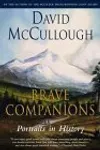
- Brave Companions: Portraits in History (1991) – A collection of seventeen essays profiling historical figures like Harriet Beecher Stowe and Alexander von Humboldt.
- Truman (1992) – The definitive, Pulitzer Prize-winning biography of the 33rd President of the United States.
- John Adams (2001) – The Pulitzer Prize-winning biography of America's second president.
- The Course of Human Events (2004) – A short publication containing the text of McCullough's 2003 Jefferson Lecture in the Humanities.
- 1776 (2005) – A narrative history focusing on the military trials of the American Revolutionary War in the year of independence.
- In the Dark Streets Shineth: A 1941 Christmas Eve Story (2010) – A brief historical account of the wartime meeting between Franklin D. Roosevelt and Winston Churchill after Pearl Harbor.
- The Greater Journey: Americans in Paris (2011) – The story of 19th-century American artists, writers, and doctors who traveled to Paris to hone their crafts.
- The Wright Brothers (2015) – The biography of Wilbur and Orville Wright and their journey to invent powered flight.
- The American Spirit: Who We Are and What We Stand For (2017) – A collection of McCullough's speech transcripts reflecting on American ideals and history.
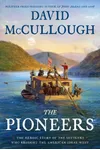
- The Pioneers: The Heroic Story of the Settlers Who Brought the American Ideal West (2019) – His final book, focusing on the early pioneers who settled the Northwest Territory.
Chronological Order by Historical Subject
If you prefer to read McCullough's books in the order of the historical events they depict, you can follow this chronological timeline. This approach gives you a sweeping, multi-century narrative of the American experience:
- John Adams (Focuses on 1735–1826) – Covers the colonial era, the revolution, the early Republic, and the Federalist period.
- 1776 (Focuses on 1776) – Details the military conflicts of the Revolutionary War.
- The Pioneers (Focuses on 1788 onwards) – Covers the post-Revolutionary westward migration into Ohio and the Northwest Territory.
- The Greater Journey: Americans in Paris (Focuses on 1830–1900) – Follows American intellectuals studying abroad in France during the 19th century.
- Mornings on Horseback (Focuses on 1858–1886) – Covers the Victorian era and the youth of Theodore Roosevelt.
- The Great Bridge (Focuses on 1869–1883) – Covers the post-Civil War Gilded Age and the rise of modern industrial engineering.
- The Path Between the Seas (Focuses on 1870–1914) – Captures the late Gilded Age and the Progressive Era global expansion.
- The Johnstown Flood (Focuses on 1889) – Explores Gilded Age class dynamics and a tragic local disaster.
- The Wright Brothers (Focuses on the early 1900s) – Explores the dawn of the aviation age and turn-of-the-century innovation.
- Truman (Focuses on 1884–1972) – Covers the World Wars, the atomic bomb, and the beginning of the Cold War.
- In the Dark Streets Shineth (Focuses on December 1941) – Explores the tense alliance of WWII leadership at Christmas.
What to Know Before You Start Reading
David McCullough's style is heavily characterized by narrative history. He was not an academic dry writer who listed dates and policies; instead, he focused on personal letters, diaries, journals, and human relationships to reconstruct the past. Readers should keep a few details in mind before diving in:
- Stand-Alone Flexibility: Every single book in his bibliography can be read as a standalone work. There are no direct narrative cliffhangers or sequels.
- Companion Adaptations: If you read John Adams, consider watching the seven-part HBO miniseries starring Paul Giamatti, which was closely adapted from the book and captures McCullough's visual style. Similarly, a documentary based on The Wright Brothers and PBS specials on The Great Bridge offer excellent visual companions.
- Speeches and Essays: Books like Brave Companions, The Course of Human Events, and The American Spirit are collections of essays or speeches. They are much shorter and offer a overview of his historical philosophy rather than a single sustained historical narrative. If you are looking for his famous immersive stories, stick to his full-length books first.