






What to Know Before You Start: The Mitchellverse
If you pick up a David Mitchell novel, you are not just reading a standalone book; you are stepping into a massive, interconnected literary cosmos known by fans as the "Mitchellverse" or the "Über-novel." Mitchell has confirmed that he views his novels as individual chapters of one single, giant work. Across his books, characters reappear, souls migrate, and major metaphysical concepts—such as the conflict between the immortal, soul-reincarnating Horologists and the predatory, soul-consuming Anchorites—unfold in the background.
Despite this intricate web of connections, Mitchell designs each of his novels to function as a self-contained story. You do not need to read them in a specific sequence to understand the plot of any single book. However, if you read them out of order, you might miss the rich "Easter eggs" and the grand, slow-burning evolution of his metaphysical rules. Here is a practical guide to the best reading paths through his work.
Option 1: The Publication Order (Highly Recommended)
Reading in publication order is the most popular way to experience the Mitchellverse. It allows you to discover recurring characters and concepts in the exact sequence Mitchell created them. As you progress, the links transition from subtle literary nods to major, plot-defining realities.
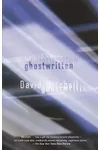
- Ghostwritten (1999) – Mitchell's debut is a mosaic of nine interconnected narratives spanning the globe, introducing key recurring motifs and minor characters like the radio host Bat Segundo and Hugo Coal.
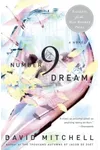
- number9dream (2001) – Set in Tokyo, this coming-of-age story leans into dreams and video game aesthetics, carrying minor references to the wider universe.
- Cloud Atlas (2004) – A masterpiece of nested storytelling that moves from the 19th-century Pacific to a post-apocalyptic future. It introduces the journalist Luisa Rey and the Cloud Atlas Sextet by composer Robert Frobisher.
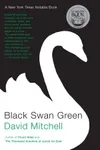
- Black Swan Green (2006) – A semi-autobiographical, grounded coming-of-age novel set in 1980s England. It features Madame Crommelynck (who links back to Cloud Atlas) and Neal Johns (who links to Ghostwritten).
- The Thousand Autumns of Jacob de Zoet (2010) – A historical fiction novel set in a Dutch trading outpost in 1799 Japan. It introduces Dr. Lucas Marinus and the sinister Abbot Enomoto, setting the foundation for the universe's magical rules.
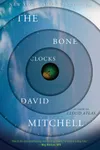
- The Bone Clocks (2014) – The central metaphysical anchor of the Mitchellverse. It spans decades of Holly Sykes's life and brings the war between the Horologists and the Anchorites (including Dr. Marinus) directly to the forefront.
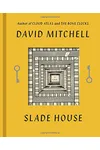
- Slade House (2015) – A spooky, fast-paced companion novel that takes place in a mysterious house over several decades, directly expanding on the soul-feeding lore established in The Bone Clocks.
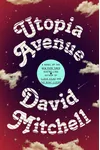
- Utopia Avenue (2020) – Follows a fictional British rock band in the late 1960s. This book serves as a massive crossover event, bringing back Dr. Marinus, Luisa Rey, Levon Frankland, and resolving the supernatural curse of Jasper de Zoet.
Option 2: The Internal Timeline Order
For dedicated fans embarking on a re-read, mapping the Mitchellverse chronologically by its historical setting is an engaging project. Because novels like Cloud Atlas, The Bone Clocks, and Slade House hop across centuries, organizing them chronologically requires focusing on the primary historical window of each novel:
- The Thousand Autumns of Jacob de Zoet (Set in 1799)
- Utopia Avenue (Set in 1967–1968)
- Black Swan Green (Set in 1982–1983)
- number9dream (Set in the late 1990s)
- Ghostwritten (Set in the late 1990s)
- The Bone Clocks (Spans 1984 to 2043)
- Slade House (Spans 1979 to 2015, running parallel to parts of The Bone Clocks)
- Cloud Atlas (Spans 1849 to a far-future post-apocalyptic era)
Note: Starting with The Thousand Autumns of Jacob de Zoet or Utopia Avenue is entirely possible and highly enjoyable. However, the sudden introduction of heavy fantasy elements in The Bone Clocks can feel jarring if you have not built up to it through the gradual genre-blending of the publication order.
Deep Dive: The Essential Mitchellverse Connections
Understanding who is who can make your reading experience much richer. Here are the most prominent recurring elements that tie the books together:
- Dr. Marinus: The ultimate thread. Marinus is a Horologist—a soul who is automatically reincarnated into a new body 49 days after dying, retaining all past memories. We meet Marinus as Dr. Lucas Marinus in 1799 Japan (The Thousand Autumns), as a Columbia professor in 1968 (Utopia Avenue), and in multiple bodies in The Bone Clocks and Slade House.
- The De Zoet Legacy: Jacob de Zoet, the protagonist of The Thousand Autumns, leaves a lineage that is plagued by a dark spiritual legacy. His direct descendant, Jasper de Zoet, is the guitarist of the band in Utopia Avenue, whose mental struggles are revealed to be a literal possession by the spirit of Abbot Enomoto.
- Luisa Rey: The investigative journalist from the 1970s segment of Cloud Atlas appears in Utopia Avenue as a real-world figure who interacts with Elf Holloway.
- Crispin Hershey: The cynical author from The Bone Clocks makes a brief cameo as a young child in Utopia Avenue.
Translations and Collaborative Works
In addition to his fictional universe, Mitchell has done highly acclaimed translation work with his wife, Keiko (KA) Yoshida. Together, they translated two landmark memoirs by Naoki Higashida, a non-verbal autistic Japanese writer. These works are highly recommended for readers interested in neurodiversity and Mitchell's personal inspirations:
- The Reason I Jump (2013) – Higashida's explanation of his inner mind as a 13-year-old boy.
- Fall Down 7 Times, Get Up 8 (2017) – Higashida's insights as a young adult navigating the world.