
Where to Start Reading David Olusoga
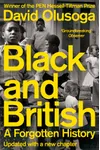
For anyone looking to dive into David Olusoga's catalog, the undisputed starting point is his landmark book, Black and British: A Forgotten History (2016). This award-winning volume is the cornerstone of his career, providing a comprehensive, eye-opening account of the relationship between Britain and people of African descent from Roman times to the present. It serves as the perfect introduction to his clear, human-centered style of history writing.
Depending on your interest and age group, Olusoga has designed different paths through this core history. If you are reading with children or looking for a shorter entry point, you can start with the adapted versions of this main text. Otherwise, once you have finished the main Black and British volume, you can choose your next path based on thematic interests:
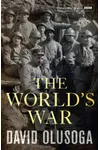
- For global military and empire history: Transition to The World’s War (2014) to learn about the forgotten colonial soldiers of World War I.
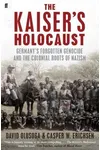
- For deep colonial roots: Read The Kaiser's Holocaust (2010), which investigates the Herero and Nama genocide in Namibia.
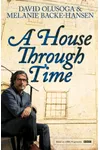
- For social and local history: Pick up A House Through Time (2020) to see how the biography of a single house reflects the shifting fortunes of British cities.
- For daily insights: Keep Black History for Every Day of the Year (2024) on your nightstand for bite-sized daily history.
Publication Order of Non-Fiction Books
If you prefer to read David Olusoga's works in the order they were written, follow this chronological publication sequence:
- The Kaiser's Holocaust: Germany's Forgotten Genocide and the Colonial Roots of Nazism (2010) – Co-authored with Casper W. Erichsen, this book examines Germany's colonial crimes in Namibia and how they prefigured the Holocaust.
- The World's War: Forgotten Soldiers of Empire (2014) – A detailed chronicle of the colonial troops and laborers from Africa, Asia, and the Americas who fought in World War I.
- Black and British: A Forgotten History (2016) – The definitive sweeping narrative of the Black presence in Britain over two millennia.
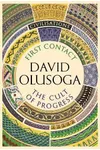
- Civilisations: First Contact / The Cult of Progress (2018) – A tie-in to the major BBC television series, examining the history of art, empire, and cultural encounters.
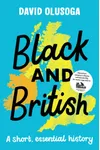
- Black and British: A Short, Essential History (2020) – A condensed, simplified adaptation of the 2016 bestseller, written specifically for children and young adults.
- A House Through Time (2020) – Co-authored with Melanie Backe-Hansen, this social history book tracks the diverse residents of a single house across different eras.
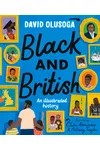
- Black and British: An Illustrated History (2022) – A beautifully illustrated edition of the Black British history narrative, aimed at younger school-age readers.
- Black History for Every Day of the Year (2024) – Co-authored with his siblings Yinka and Kemi Olusoga, this daily devotional-style book features 366 profiles of Black historical figures and milestones.
Publication Order of Anthologies and Contributions
In addition to his standalone non-fiction books, Olusoga has contributed chapters and forewords to academic and collaborative anthologies:
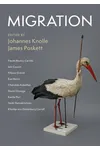
- Migration (Darwin College Lectures) (2020) – Olusoga contributed the opening chapter, titled "Black and British Migration," exploring early African migration to the British Isles.
Chronological History Timeline vs. Publication Order
Because David Olusoga's books are works of historical non-fiction rather than serialized narratives, there is no fictional plot timeline to follow. However, reading them in historical chronological order—matching the periods they cover—offers a fascinating perspective on the evolution of empire, race, and migration. Here is how they line up historically:
- Ancient to Modern Times: Start with Black and British: A Forgotten History, which begins in Roman Britain (where African soldiers guarded Hadrian's Wall) and progresses chronologically to the 21st century. Alternatively, use Black History for Every Day of the Year to get a daily snapshot spanning centuries of global history.
- Late 19th Century to Early 20th Century: Read The Kaiser's Holocaust, which centers on the German colonial empire in Southwest Africa from 1884 to 1915, outlining the tragic events that served as a precursor to mid-20th-century atrocities.
- The First World War (1914–1918): Read The World’s War, which focuses entirely on the global conflict of WWI, highlighting the experiences of over four million non-European soldiers and laborers who were recruited to fight on European soil.
- The Biography of British Cities: Read A House Through Time, which focuses on local social history from the Georgian era through the Victorian period, industrialization, and the post-war housing boom.
Key Series and Collaborative Projects
The Black and British Trilogy
Olusoga's most famous concept has evolved into a trilogy of books tailored to different audiences. The core text is the 2016 edition. In 2020, recognizing the need for inclusive history in schools, he wrote the Short, Essential History for teens. He followed this in 2022 with the Illustrated History, utilizing rich visual assets to introduce primary school children to these historical concepts.
Co-Authored Historical Works
Olusoga frequently collaborates with other experts and family members to bring distinct viewpoints to his books. The Kaiser's Holocaust was written alongside Namibian historian Casper Erichsen, combining archival expertise with deep local knowledge. For the 2024 book Black History for Every Day of the Year, he teamed up with his siblings, Yinka (an expert in childhood studies) and Kemi (who provided the illustrations), to design a family-friendly, educational daily history resource.
What to Know Before You Start
David Olusoga's books are highly engaging and written with the pacing of a documentary filmmaker, but they do cover challenging historical truths, including colonial violence, systemic racism, and the history of transatlantic slavery. His work acts as a form of "public history," meaning it bridges the gap between dense academic research and accessible storytelling for everyday readers. Many of his books, such as The World’s War, Civilisations, and A House Through Time, were written to accompany major BBC television documentaries, so watching the corresponding series alongside your reading is highly recommended for a fully immersive experience.