
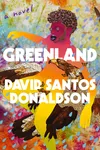
Where to Start with David Santos Donaldson
David Santos Donaldson burst onto the literary scene in 2022 with his highly acclaimed debut novel, Greenland. Because Donaldson is a standalone novelist who has not yet published a multi-book series, your starting point is simple: start with Greenland. However, reading this book is not just a linear journey. It is a highly complex, multi-layered metafictional experience that is best appreciated when read alongside the historical texts and literary figures that populate its pages.
In Greenland, Donaldson weaves a novel-within-a-novel. The narrative frame follows Kip Starling, a contemporary Black queer author in Brooklyn, who has locked himself in a basement to write a historical novel. Kip's manuscript focuses on the real-life secret love affair between the famous British author E.M. Forster and an Egyptian tram conductor named Mohammed el Adl during World War I. To get the most out of Donaldson's debut, readers should consider exploring E.M. Forster's own biography and writings as companions to the text.
The Metafictional Structure of Greenland
Understanding how Greenland is structured will help you navigate its pages. The book toggles between two primary layers that function like overlaid transparencies:
- The Brooklyn Frame: We see Kip Starling battling intense isolation, anxiety, and a looming deadline in his Brooklyn basement. His personal relationships—particularly his marriage to a white man—and his struggles with racial identity mirror the themes of the book he is writing.
- The Alexandrian Story: This is Kip's manuscript, which recreates the historical affair between E.M. Forster and Mohammed el Adl in Alexandria, Egypt, beginning around 1917.
As the novel progresses, the boundaries between Kip's real life and his historical subjects begin to dissolve. Donaldson employs elements of magical realism where characters from the past seem to speak directly to Kip, helping him confront his own psychological blockages and the legacy of colonial trauma.
Thematic Companion Reading List
To fully appreciate the depth of Greenland, we recommend pairing it with the following historical and queer classics:
1. Maurice by E.M. Forster
Written between 1913 and 1914 but published posthumously in 1971, Maurice is Forster's landmark queer novel. It depicts a young man's journey to accepting his homosexuality in Edwardian England. Reading Maurice before or alongside Greenland highlights Forster's struggle to find a "homosexual success story" in his fiction, which contrasts sharply with the real-life complexities of his relationship with Mohammed el Adl.
2. Alexandria: A History and a Guide by E.M. Forster
Forster wrote this guidebook during his time working for the Red Cross in Egypt, which is the exact period when he met Mohammed. This work, along with Forster's collection of essays Pharos and Pharillon, provides the geographical and cultural atmosphere of Alexandria that Kip struggles to recreate in his basement.
3. The Works of James Baldwin
Critics have frequently compared Donaldson's psychological acuity and exploration of Black queer identity to James Baldwin. Reading Baldwin's Giovanni's Room or his essays on race and sexuality provides excellent context for Kip Starling's internal struggles in modern Brooklyn.
What to Know Before You Start
Before cracking open Greenland, keep the following reader guidance in mind:
- A Professional Psychotherapist's Touch: Donaldson is a practicing psychotherapist. This professional background deeply informs the characters' inner lives, giving Kip's psychological breakdown and subsequent healing a raw, authentic feeling.
- A Juilliard-Trained Dramatist: Donaldson studied acting at the Juilliard School and wrote plays commissioned by the Public Theater. The dialogue and theatrical pacing of the narrative show clear influences of his dramatic training.
- Heavy Themes: The novel does not shy away from difficult topics, including the trauma of colonialism, systemic racism, homophobia, and severe mental distress. However, it resolves in a space of emotional reconciliation and artistic triumph.