
How to Approach David Wallace-Wells' Works
Unlike novelists with sprawling fantasy universes or extensive series, David Wallace-Wells is an investigative journalist whose influence centers on a concentrated body of work. His focus is the climate crisis, human adaptability, and near-future speculation. To get the most out of his writing, you do not need to follow a complex chronological timeline. Instead, you should choose the path that best matches your reading preferences, age, and interest in policy debate.
We recommend starting with his landmark non-fiction book before branch-reporting into his audio projects and active columns. Below is the ideal path to reading his catalog.
1. The Recommended Entry Point: The Uninhabitable Earth (2019)
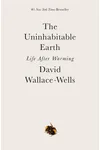
If you only read one work by Wallace-Wells, make it The Uninhabitable Earth: Life After Warming. Released in 2019, this book expanded his viral 2017 magazine essay into a comprehensive, multi-dimensional study of our planet's near future. It is divided into logical segments that investigate how warming will transform everything from global food supplies to geopolitical borders.
2. The Teen-Friendly Alternative: The Young Adult Edition (2023)
For younger readers, students, or anyone looking for a more concise overview, the 2023 adaptation The Uninhabitable Earth (Adapted for Young Adults) is the perfect starting point. It simplifies some of the dense scientific metrics of the original text but retains the emotional core and call to action.
3. The Retrospective: The 2017 Cover Story
For readers interested in the history of climate communication, reading the original July 2017 cover story for New York magazine—simply titled "The Uninhabitable Earth"—offers a fascinating look at the essay that launched the modern climate anxiety conversation. It is shorter, punchier, and represents the raw, alarm-ringing style that defined his early climate career.
4. Ongoing Analysis: The New York Times Columns & Speculative Podcast
Once you are familiar with his core theories, you can follow his ongoing journalism. Since 2022, Wallace-Wells has written regular columns for The New York Times, covering the intersection of climate technology, public health, and global policy. Additionally, his 2021 speculative audio series, the 2038 podcast, explores near-future forecasts with co-hosts and experts.
Understanding the Anatomy of "The Uninhabitable Earth"
To fully appreciate his main text, it helps to understand how the book is constructed. Rather than focusing on atmospheric chemistry, Wallace-Wells looks at the human consequences. The heart of the book is Part II, "Elements of Chaos," which is broken down into twelve specific areas of systemic risk:
- Heat Death: How rising temperatures will directly threaten human survivability, particularly in equatorial regions.
- Hunger: The threat of agricultural collapse, topsoil degradation, and shifting crop zones.
- Drowning: The physical impact of sea-level rise on coastal megacities and island nations.
- Wildfire: The expansion of fire seasons and the destruction of critical forest ecosystems.
- Disasters No Longer Natural: How extreme weather events will become the daily baseline rather than rare anomalies.
- Freshwater Drain: The geopolitical and physical strain of drinking water shortages.
- Dying Oceans: The collapse of marine life systems through acidification and warming.
- Unbreathable Air: The health impacts of smog, particulate pollution, and carbon dioxide on human cognition.
- Plagues of Warming: How melting permafrost and warming vectors could reintroduce or spread diseases.
- Economic Collapse: The staggering costs of adaptation and damage repair on global markets.
- Climate Conflict: Resource wars and mass migration driving political instability.
- Systems: How these individual crises interact, compounding one another to create unpredictable feedback loops.
Original Edition vs. Young Adult Adaptation
Deciding between the two versions of The Uninhabitable Earth depends heavily on your goals as a reader. Here is how the two editions compare:
- The Uninhabitable Earth (2019): This is the full-length, unabridged version. It features dense citations, complex socio-economic debates, and exhaustive detail. It is best suited for adult readers, policy students, and anyone wanting a deep dive into the literature of climate science.
- The Young Adult Adaptation (2023): Tailored for readers aged 12 to 17, this version runs shorter (typically 176 to 192 pages depending on formatting). It streamlines the scientific arguments, removes some of the more complex economic statistics, and structures the text to be highly readable for middle and high school students, placing a stronger emphasis on youth activism and empowerment.
Companion Media and Podcasts
If you want to expand your experience beyond the written page, Wallace-Wells has worked on several companion audio projects and long-form series:
- The 2038 Podcast (2021): Co-hosted by Wallace-Wells, this speculative series dives into predictions for the next two decades. Rather than focusing solely on climate, it looks at how technology, labor, and society will shift under the pressure of the Anthropocene.
- Audiobooks: Both the 2019 original book and the 2023 YA adaptation are available as audiobooks. Notably, Wallace-Wells narrates these himself, which brings his signature urgency and storytelling cadence directly to the listener.
What to Know Before You Start
Before diving into Wallace-Wells' work, readers should be prepared for his distinct editorial tone. Unlike traditional science writing, which can be detached and objective, Wallace-Wells writes with a style that critics have described as "urgent" and "almost biblical."
His approach has generated controversy. When the 2017 essay was first published, some climate scientists criticized it for focusing too heavily on worst-case scenarios, arguing that extreme alarmism could lead to defeatism. Wallace-Wells defended his approach, asserting that constructive fear is a powerful motivator. In the 2019 book, he addressed these criticisms by balancing his worst-case scenarios with a clearer exploration of political solutions, green energy, and carbon tax systems, showing that our future is still a story we are actively writing.