

Where to Start Reading David Zindell
For readers new to David Zindell, the best entry point depends entirely on whether you prefer high-concept, philosophical science fiction or epic, Arthurian-style fantasy. However, Zindell's reputation was built on his pioneering space opera, making the Neverness Cycle (also known as the A Requiem for Homo Sapiens universe) his most highly recommended starting point.
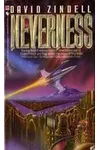
If you want to experience Zindell's writing at its most ambitious and mathematically mystical, start with his debut novel, Neverness (1988). It is the perfect introduction to his complex prose style, universe rules, and core philosophical themes.
If you are a dedicated fantasy fan who prefers sword-and-sorcery quests infused with cosmic consciousness, you should begin with The Lightstone (2001), which launches the Ea Cycle.
The Neverness Cycle / A Requiem for Homo Sapiens
David Zindell's flagship science fiction universe is a sprawling far-future epic. The setting features a galaxy populated by mutated humans, post-human entities, and the Order of Mystic Mathematicians, whose pilots map space using pure mathematics. While the series consists of one standalone novel followed by a tight trilogy, it is best read as a single four-book arc.
Recommended Reading Order:
- Neverness (1988): This Hugo-nominated debut follows Mallory Ringess, a pilot of the Order who journeys into the deep manifold of space. He seeks the secrets of human evolution and the legendary Solid State Entity, a god-like computer that occupies an entire nebula.
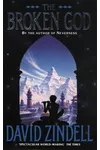
- The Broken God (1992): Set approximately ten years after the events of the first book, the focus shifts to Mallory's son, Danlo wi Soli Ringess. Raised by a Neanderthal-like tribe called the Alaloi on the ice-world of Icefall, Danlo is forced to travel to the city of Neverness after a manufactured plague ravages his people. He joins the Order, navigating a changing galaxy where a massive cult has formed around his missing father.
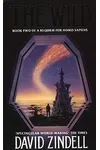
- The Wild (1995): Danlo leaves the city on a double quest: searching for a cure for the plague that killed his tribe, and finding the mysterious Architects of the Universal Cybernetic Church who are systematically detonating stars in a region of space known as the Vild.
- War in Heaven (1998): The explosive conclusion to the trilogy. A galaxy-spanning war breaks out over the nature of humanity's evolution and Hanuman li Tosh's attempt to enforce the Way of Ringess, bringing Danlo into conflict with his former friend.
The Prequel Short Story: Shanidar
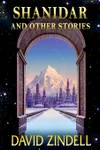
Before publishing Neverness, Zindell won the 1985 Writers of the Future contest with a novelette called Shanidar. This story is set in the same universe and serves as a foundational piece, introducing the icy planet of Icefall, the city of Neverness, and the primitive Alaloi. Zindell later integrated modified elements of this story directly into the early chapters of Neverness. You can read the original version in his collection, Shanidar: And Other Stories (2020), which is a great companion piece but not strictly necessary before starting the main novels.
The Ea Cycle: High Fantasy and Publishing Confusions
In the early 2000s, Zindell shifted from science fiction to high fantasy with The Ea Cycle. The series details a mythic quest undertaken by Valashu Elahad, a prince of the kingdom of Mesh, to retrieve the Lightstone—a sacred relic of ultimate goodness—to defeat the dark lord Morjin. Despite the fantasy setting, the series retains Zindell's hallmark focus on the evolution of consciousness, empathy, and cosmic destiny.
However, the series has a confusing publishing history that often frustrates readers looking for the right sequence. Due to the massive size of the opening book, publishers split the story differently across regions:
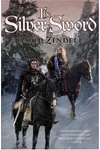
- The UK Editions: HarperVoyager published The Lightstone in 2001 as a single hardcover. In paperback, they divided it into two volumes: The Ninth Kingdom (Part One) and The Silver Sword (Part Two). This led to subsequent books being numbered differently depending on the format.
- The US Editions: Tor Books delayed the release of the series until 2006. They also split the first book into two paperbacks: The Ninth Kingdom (2006) and The Silver Sword (2007).
To avoid reading the first half of the book twice or skipping it entirely, follow this standard book-by-book order, keeping in mind that The Ninth Kingdom and The Silver Sword collectively represent the first novel, The Lightstone:
- The Lightstone (2001) (or read as The Ninth Kingdom and The Silver Sword)
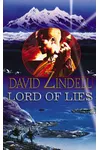
- Lord of Lies (2003)
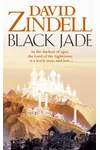
- Black Jade (2005)
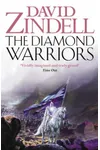
- The Diamond Warriors (2007)
The Xanayan Novels and Standalones
Outside of his two major cycles, Zindell has written standalone speculative fiction that continues to explore themes of consciousness and ecology.
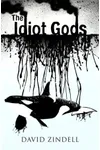
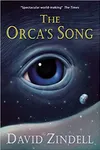
The Idiot Gods / The Orca's Song (2017)
This unique novel is written from the perspective of an intelligent killer whale named Caedmon. Caedmon goes on a quest across the oceans to understand human beings, whom the whales refer to as the "Idiot Gods" due to their self-destructive behavior and ecological devastation. The Orca's Song (published in 2021) is not a sequel, but rather a retitled reissue of The Idiot Gods. Zindell later expanded this world with a second Xanayan novel, If I Am God, in 2024.
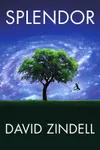
Splendor (2015)
For readers interested in the real-world philosophical foundations that influence Zindell's fiction, his memoir Splendor is a crucial read. It details his upbringing in the 1960s, his deep relationship with mathematics, and his personal spiritual journey, providing immense context for the themes of transcendence that dominate his novels.
What to Know Before You Start
David Zindell is not a writer of fast-paced, action-heavy space battles or traditional tavern-crawling fantasy. His prose is deeply poetic, philosophical, and dense. He utilizes advanced mathematics, linguistics, and anthropology to construct his worlds. If you enjoy authors who tackle massive existential questions—like Frank Herbert, Gene Wolfe, or Olaf Stapledon—you will find Zindell's bibliography to be an incredibly rewarding treasure trove.