
The Recommended Reading Path: Where to Start
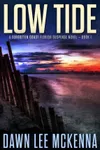
If you are new to the Southern suspense of Dawn Lee McKenna, the absolute best place to start is with her flagship series, The Forgotten Coast. Set in the historic coastal town of Apalachicola, Florida, this series blends small-town mystery, dry wit, and deeply human characters. To get the best experience, you should begin with the first novel, Low Tide (2015), rather than the chronologically earlier prequel novellas.
Why Start with Low Tide?
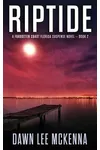
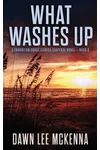
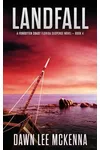
Although McKenna later penned prequel stories, the first four novels—Low Tide, Riptide, What Washes Up, and Landfall—were written as a continuous, interconnected story arc centered on Lt. Maggie Redmond. Reading these four in strict order is crucial to following Maggie's personal growth and the core mystery of her late husband's death, which resolves in the fourth book.
The Forgotten Coast: Publication vs. Chronological Order
For readers who want to explore the complete series, there are two ways to navigate the order: publication order (which we recommend) and chronological order.
Publication Order (Recommended)
Following the books in the order they were released allows you to experience the overarching mystery and character dynamics exactly as Dawn Lee McKenna developed them. The publication sequence is as follows:
- Low Tide (2015)
- Riptide (2015)
- What Washes Up (2015)
- Landfall (2015)
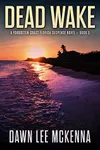
- Dead Wake (2015)
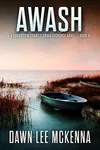
- Awash (2016)
- Apparent Wind (2017)
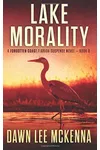
- Lake Morality (2018)
- Squall Line (2018)
- Overboard (2018)
- Ebb Tide (2019)
- Back of the Bayou (2019)
Chronological Order and Novella Caveats
If you prefer to read events in the order they happened historically, you will need to adjust your list. However, starting with the prequels might spoil elements of the main mystery or feel disjointed because they were written later as companion pieces.
- Back of the Bayou (Novella): Chronologically, this is the earliest story in the universe. Set during the 1950s and 1960s, it focuses on the backstory of Miss Evangeline (the Creole nanny) and a young Cajun boy.
- Ebb Tide (Novella): This prequel novella is set approximately four years before the events of Low Tide, providing early backstory on Lt. Maggie Redmond and the town of Apalachicola.
- The Main Series (Books 1–10): Follows Maggie Redmond's career and struggles in Apalachicola, starting from Low Tide and running through Overboard.
Dawn Lee McKenna's Other Series and Spin-offs
Beyond her main series, McKenna expanded her Southern universe with co-authored projects and historical suspense before her passing in 2021.
The Still Waters Series (Co-authored with Axel Blackwell)
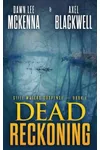
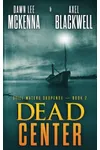
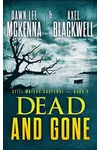
Co-written with Axel Blackwell, this three-book spin-off series is set in nearby Port St. Joe, Florida. It features Evan Caldwell, an investigator who takes on the role of interim sheriff. While it has a slightly darker, grittier tone than the main Maggie Redmond books, it serves as a wonderful companion series for fans of Florida-based suspense. The reading order is straightforward:
- Dead Reckoning (2017)
- Dead Center (2018)
- Dead and Gone (2019)
Dismal, Florida Series
This series takes a step back in time, setting a historical suspense story in the Florida Panhandle during 1973. The town of Dismal is a fictional tapestry of various small towns McKenna grew up around. The series consists of only one published book:
- Black and White (2019)
A second book, titled Son of a Preacher Man, was planned but was officially canceled due to the author's declining health, leaving Black and White as a standalone entry in this setting.
Standalone Novel: See You
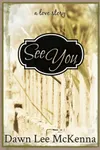
McKenna's debut novel, See You (2014), is a poignant Southern contemporary romance and drama. Set in rural Alabama, it tells the story of two childhood friends reconnecting in adulthood. It does not connect to any of the suspense series and can be read at any point.
What to Know Before You Start
McKenna's books are often classified as "clean suspense," meaning they feature engaging mysteries, detailed coastal atmospheres, and deep character development without relying on graphic violence, explicit content, or excessive language. Her writing process was heavily dialogue-driven; she often noted that she built scenes around the natural cadences of Southern speech that played in her head. This technique gives the dialogue a highly cinematic and authentic feel, bringing Apalachicola and its quirky residents to life.