


How to Read Dawn Turner's Books: The Recommended Reading Path
Dawn Turner (who has also published under the name Dawn Turner Trice) is a celebrated novelist and award-winning journalist. While her catalog is compact—consisting of two novels and a memoir—her writing carries immense narrative power, exploring themes of race, class, fate, and sisterhood in America. Because all of her books are standalone works, there are no chronological timeline issues or character cliffhangers to navigate. However, to fully appreciate how her life experiences informed her fiction, we recommend reading them in the following order:
1. Start Here: Three Girls from Bronzeville: A Uniquely American Memoir of Race, Fate, and Sisterhood (2021)
Starting with Turner's memoir, Three Girls from Bronzeville, is the ideal entry point. Released by Simon & Schuster in 2021, this deeply personal book acts as the real-life foundation for the themes and geography found in her fiction. The memoir traces the divergent paths of Dawn, her younger sister Kim, and their childhood best friend Debra as they grow up in the historic, vibrant Black neighborhood of Bronzeville on Chicago's South Side during the 1970s. By reading this first, you gain immediate insight into the social divisions, the maternal support structures, and the systemic challenges that Turner later mirrors and explores within her novels.
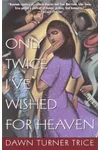
2. Next: Only Twice I've Wished for Heaven (1997)
After grounding yourself in Turner's real-life history, move on to her debut novel, Only Twice I've Wished for Heaven, published by Crown. Set in 1970s Chicago, this book serves as a perfect fictional companion to her memoir. It centers on eleven-year-old Tempestt "Temmy" Saville, whose family moves into "Lakeland," a gated, upscale apartment enclave for the Black elite designed to isolate its residents from the surrounding struggles of the neighborhood. Temmy's curiosity draws her outside the gates to the vibrant, raw world of 35th Street, initiating a sequence of events that challenges the community's illusions of safety. The novel won an Alex Award and a Black Caucus Literary Award, and it beautifully illustrates the class dynamics of Black Chicago that Turner experienced firsthand.
3. Finish With: An Eighth of August (2000)
Conclude your reading journey with Turner's second novel, An Eighth of August, also published by Crown. In this book, Turner shifts the setting away from urban Chicago to Halley's Landing, a small, close-knit Midwestern town in Illinois. The story centers on the community's annual Emancipation Festival, which commemorates the Emancipation Proclamation. Through a rich chorus of multiple narrators—including characters like Flossie Jo Penticott and her daughter Sweet Alma—the book slowly uncovers family secrets, generational trauma, and long-held resentments that resurface around the festival. It is a brilliant showcase of Turner's versatility, applying her journalistic precision and deep empathy to a multi-character rural drama.
Dawn Turner Books in Publication Order
If you prefer to read Dawn Turner's bibliography in the order she released them to track her progression as an author, you should follow this sequence:
- Only Twice I've Wished for Heaven (1997) – Novel
- An Eighth of August (2000) – Novel
- Three Girls from Bronzeville: A Uniquely American Memoir of Race, Fate, and Sisterhood (2021) – Memoir
Chronological Caveats and Thematic Connections
As standalone projects, none of Turner's works share recurring characters or linear plots. Instead, the continuity is purely thematic. Readers will find common threads running through both the fiction and the non-fiction, notably:
- The Geography of Division: The physical gates of Lakeland in Only Twice I've Wished for Heaven mirror the socioeconomic redlining and boundaries described in Three Girls from Bronzeville.
- Fate vs. Choice: Turner frequently grapples with how much of an individual's path is determined by systemic factors, local environment, and simple luck versus personal agency.
- Emancipation and Celebration: Historical memory, cultural heritage, and the power of communal rituals (like the Emancipation Festival in An Eighth of August) are central to how her characters define themselves.
What to Know Before You Start
Dawn Turner spent over a decade as a reporter and columnist for the Chicago Tribune and was a Nieman Journalism Fellow at Harvard University. This background is evident in her writing, which features meticulous attention to detail, highly realistic dialogue, and a refusal to shy away from difficult realities such as addiction, loss, and systemic racism. While her works handle heavy and sometimes tragic subjects, her tone remains warm, friendly, and ultimately hopeful, making her books highly accessible and popular choices for book clubs.