
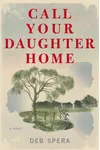
Deb Spera's Reading Order & Path
For readers looking to dive into the writing of Deb Spera, the path is straightforward but deeply rewarding. Currently, Spera is best known for her singular, bestselling debut novel, Call Your Daughter Home. Officially released in June 2019 (with early registrations dating to 2018), this book serves as the core of her literary catalog. It is a standalone work, meaning you can jump right in without worrying about prequels, sequels, or complicated series timelines.
Because Spera’s background is rooted in television production and playwrighting, her novel features a highly cinematic, multi-perspective structure that keeps readers engaged. If you want to experience the story in its most immersive format, the audiobook edition features a full cast of talented voice actors who bring the three main characters to life.
The Core Novel: Call Your Daughter Home
Set in the sweltering, unforgiving landscape of 1924 Branchville, South Carolina, Call Your Daughter Home tells the story of three starkly different women who are brought together by shared trials of motherhood, survival, and societal oppression. The region has been completely devastated by the boll weevil infestation, leaving the agricultural economy in ruins and intensifying the harsh realities of poverty and racial division.
Meet the Main Characters
- Gertrude: A mother of four young girls living in extreme poverty, Gertrude must make impossible, desperate choices to protect her children from her abusive, neglectful husband.
- Retta: A first-generation freed Black woman and a domestic worker, Retta is mourning the loss of her own daughter while providing emotional support for the wealthy family she works for, all while navigating the systemic racism of the Jim Crow South.
- Annie: The wealthy matriarch of a prominent local family, Annie has spent her life managing expectations and keeping dark family secrets hidden, only to find herself facing a moral crossroads as her children grow and make their own choices.
The novel explores heavy, resonant themes of domestic abuse, class inequality, racial prejudice, and the fierce bonds of maternal love. The characters' voices are distinct, alternating chapter by chapter to create a rich tapestry of perspectives that highlights the strength and resilience of Southern women.
Historical Background: Branchville and the Boll Weevil Blight
To fully appreciate the world Spera builds, it helps to understand the historical realities of 1920s South Carolina. The town of Branchville serves as more than just a setting; it acts as an active force in the narrative. In the early 1920s, the Southern United States was ravaged by the boll weevil, a beetle that feeds on cotton buds and flowers. This insect decimated the cotton industry, which was the backbone of the Southern agricultural economy.
For characters like Gertrude, the infestation meant absolute destitution, as sharecropping and farm labor opportunities vanished overnight. For Retta, it exacerbated the structural injustices of a post-slavery South, where economic freedom was already hard-won and fragile. For Annie, the blight threatened the wealth and status that her family had maintained for generations. By layering these historical details into the narrative, Spera creates a realistic depiction of a society on the brink of collapse, years before the Great Depression officially began.
From Short Draft to Completed Novel
Fascinatingly, Call Your Daughter Home did not start out as a novel. Deb Spera originally set out to write a collection of short stories that would span five generations of women in the same Southern family. Her initial draft for the first segment was titled Alligator. However, after presenting the draft to a literary agent, she was encouraged to expand this specific story into a full-length book. The result was her debut novel, which was eventually translated into multiple languages, including German (published as Alligatoren) and French (published as Le Chant de nos filles).
Short Stories, Essays, and Plays
Beyond her main novel, Spera has written several short stories and essays published in prominent literary journals and magazines. While these are not direct tie-ins to Call Your Daughter Home, they carry her signature Southern tone, vivid characterizations, and focus on human resilience. You can find her shorter works in the following publications:
- Sixfold: A writer-voted literary journal featuring Spera's early short fiction.
- The Wascana Review: A respected Canadian literary journal that has hosted her prose.
- Pennsylvania English: An academic journal publishing creative writing.
- Garden & Gun: A lifestyle magazine dedicated to the art, food, and literature of the American South.
- L.A. Yoga Journal: Where she has shared reflective personal essays.
Theatrical Work: On the Road to Kitty Hawk
Deb Spera is also a playwright. She co-authored the play On the Road to Kitty Hawk, which was produced and staged by the Actors Theatre of Louisville. This work demonstrates her versatility as a dramatic storyteller, blending historical details with intense, character-driven dialogue.
The TV Connection: How Production Shaped Her Writing
Before she ever published a novel, Deb Spera built a highly successful career in the television industry, working as a producer and executive. She worked on the production team for the classic film What's Eating Gilbert Grape and spent eight years as a development executive at Showtime, overseeing high-profile projects like 12 Angry Men. Later, she founded One-Two Punch Productions and served as an executive producer on major series including Criminal Minds, Army Wives, Reaper, and Finding Carter.
This extensive television background directly informs her literary style. Readers will notice that her scenes are structurally tight, her dialogue feels highly natural, and her character-building uses the close-up focus typical of television scripts. This blend of Hollywood narrative structure and authentic Southern storytelling gives her writing a unique, fast-paced momentum.
Practical Reader Advice
Is There a Specific Reading Order?
Since Spera has one main novel, there is no complex reading order. Simply start with Call Your Daughter Home. If you enjoy her writing style, seek out her short fiction in literary archives or look into her play production notes.
Should I Listen to the Audiobook?
Absolutely. The audiobook is highly regarded because it features a full-cast performance by three acclaimed narrators: Robin Miles, Adenrele Ojo, and Brittany Pressley. Each narrator voices one of the three main characters (Gertrude, Retta, and Annie), ensuring that the distinct regional dialects, emotional ranges, and personal voices are delivered with absolute authenticity.
What to Read Next
If you have finished Call Your Daughter Home and are looking for similar books, we suggest looking into Southern Gothic and historical fiction authors such as Sue Monk Kidd (The Secret Life of Bees), Kathryn Stockett (The Help), or Alice Walker (The Color Purple). Like Spera, these authors focus on female relationships, historical struggles in the American South, and strong character-driven plots.