
How to Start Reading Deepa Anappara
Deepa Anappara’s novels are currently standalone works, meaning there is no overlapping timeline or recurring cast of characters connecting them. However, they vary significantly in setting, tone, and genre. Depending on what kind of story you are looking for, we recommend starting with one of these two entry points:
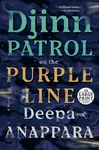
- For Contemporary Literary Mystery: Start with her award-winning debut, Djinn Patrol on the Purple Line (2020). Told through the eyes of a nine-year-old boy living in an Indian slum, this novel balances the grim reality of missing children with childhood innocence, humor, and community resilience.
- For Historical Epic & Espionage: Start with her second novel, The Last of Earth (2026). Set during the geopolitical rivalry of the late 19th-century "Great Game," it follows an Indian surveyor-spy and a mixed-heritage woman attempting a perilous journey into the forbidden territory of Tibet.
Deepa Anappara Books in Publication Order
For readers who want to follow the evolution of Anappara's writing style, she has published major novels, co-edited writing guides, and contributed award-winning short stories. Here is the order in which they were released:
- Bristol Short Story Prize Anthology: Volume 6 (2013) – Features her second-prize-winning short story, "The Breakdown."
- Djinn Patrol on the Purple Line (2020) – Her debut standalone novel.
- Letters to a Writer of Colour (2023) – An essay anthology on creative writing craft, co-edited with Taymour Soomro.
- The Last of Earth (2026) – Her second standalone novel, a historical epic.
Deepa Anappara’s Novels: An In-Depth Guide
Djinn Patrol on the Purple Line (2020)
Drawing on Anappara’s eleven years of reporting on child poverty and religious violence in India, her debut novel is a powerful literary mystery. The story is narrated by nine-year-old Jai, a kid living in a metropolitan basti (slum) who loves watching reality TV police shows. When one of his classmates goes missing, Jai recruits his friends Pari and Bahadur to form a detective agency. As more children disappear, the kids must navigate the crowded basti, cardamom-scented tea stalls, and local train tracks to search for the truth.
Anappara’s background in journalism shines through in the book's social commentary. Rather than treating the basti as a caricature of poverty, she paints a vibrant community full of hope, humor, and determination. Jai's child-eyed perspective allows the novel to address heavy issues like systemic neglect, corruption, and sectarian tension without losing its warmth. Notably, Anappara leaves local Hindi and Urdu terms untranslated and unitalicized, keeping the prose authentic to the characters' voice.
The Last of Earth (2026)
Her second novel shifts from modern India to the year 1869, at the height of the "Great Game" between the British and Russian empires. Because Tibet was closed to Westerners, the British trained Indian surveyors—known as "pundits"—to map the dangerous terrain in secret. The story follows two parallel perspectives:
- Balram: A veteran surveyor-spy disguised as a pilgrim, guiding a British officer to map a southern Tibetan river. Balram is driven by a secret personal mission: to find his dearest friend Gyan, who vanished on a previous mapping run.
- Katherine: A fifty-year-old Anglo-Indian woman who has been shut out of the Royal Geographical Society due to her gender. Passing as a local, she risks everything to travel to the forbidden city of Lhasa and the Potala Palace.
The Last of Earth subverts classic Victorian adventure stories by focusing on the local guides and mixed-heritage explorers whose achievements were historically erased by colonial powers. It is a slow-burn, atmospheric novel that deals with cartography, imperial boundaries, and the limits of loyalty.
Anthologies & Editorial Contributions
Letters to a Writer of Colour (2023)
Co-edited with novelist Taymour Soomro, this anthology features seventeen essays from writers of color around the globe. It serves as an alternative creative writing guide, challenging white, Western norms taught in standard writing workshops—such as the dogmatic insistence on "show, don't tell" or the pressure on non-white writers to translate their culture for white audiences. Contributors include Madeleine Thien, Tahmima Anam, and Amitava Kumar.
Bristol Short Story Prize Anthology: Volume 6 (2013)
Perfect for completionists, this anthology contains Anappara's award-winning short story "The Breakdown," which won second place in the 2013 Bristol Short Story Prize. It demonstrates her early focus on character-driven fiction and realistic social dynamics.
What to Know Before You Start
Journalistic Roots
Deepa Anappara was born in Kerala and worked as a journalist in Mumbai and Delhi, focusing on how poverty and sectarian violence affected the education of children. This firsthand experience grounds her fiction in authentic, thoroughly researched realities rather than melodrama.
Reading Without Glossaries
Anappara deliberately chooses not to include glossaries or italicize non-English words in her novels. If you encounter unfamiliar Hindi or Urdu words in Djinn Patrol on the Purple Line, try to infer their meanings through context clues, or simply look them up. This choice honors the language of her characters without treating it as an exotic anomaly.
Comparing the Novels: Key Similarities and Differences
While Djinn Patrol on the Purple Line is a contemporary mystery and The Last of Earth is a historical epic, both novels share Deepa Anappara's signature focus on subverting traditional narratives. In Djinn Patrol, she subverts the classic detective novel by showing that a child's innocent logic cannot solve the systemic, structural failures of adult society. In The Last of Earth, she subverts the classic Victorian adventure and espionage story. Instead of centering the white British officers who historically claimed credit for mapping the Himalayas, she centers the Indian surveyor-spies and a mixed-race woman whose contributions were erased or minimized by colonial institutions. Furthermore, both novels examine the theme of disappearance and searching, highlighting Anappara's interest in memory, erasure, and the lengths to which individuals will go to protect and remember those they love.